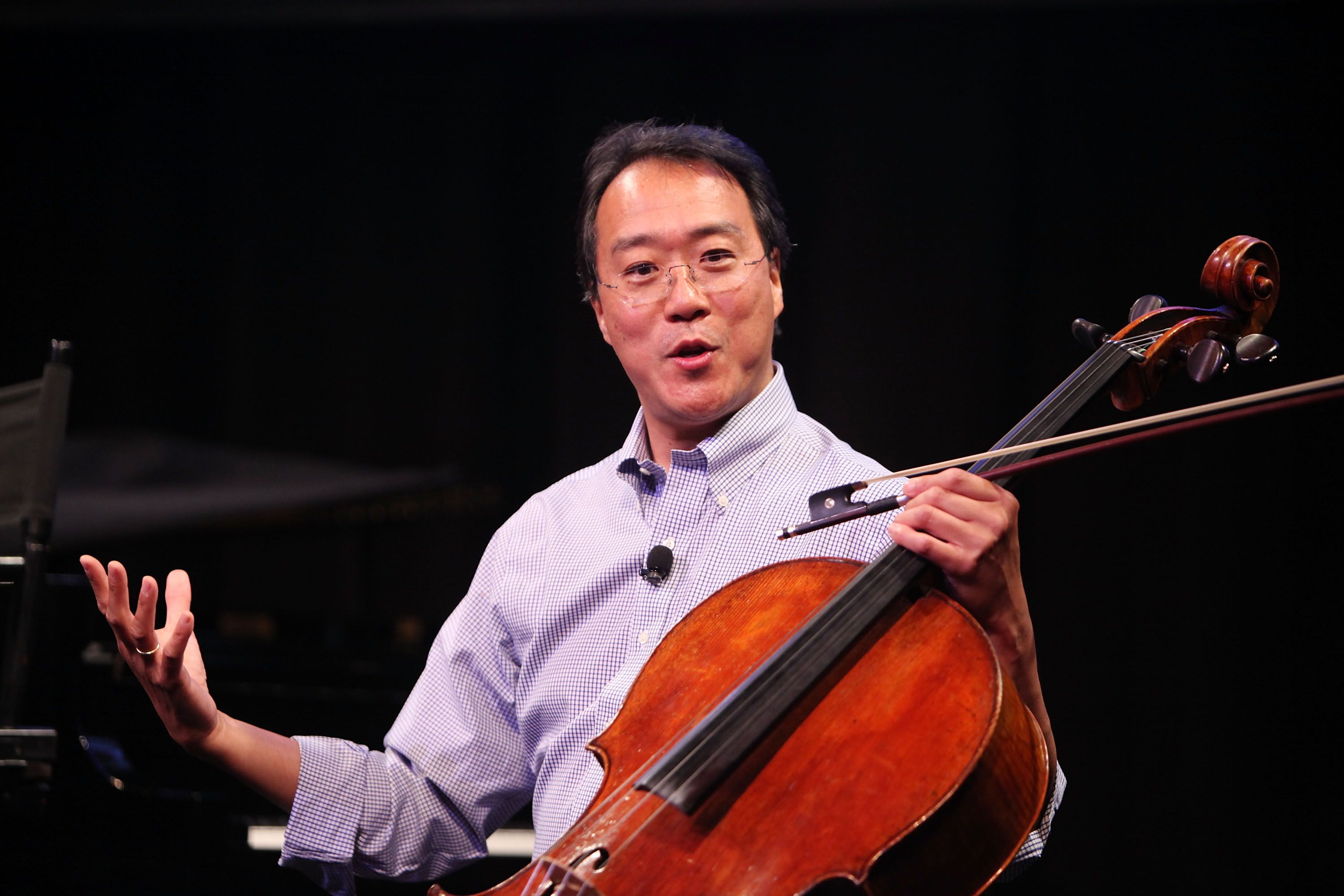
It sounds like a fever dream or a weird piece of internet fan fiction. You’ve got Yo-Yo Ma, arguably the greatest living cellist and a man who carries himself with the kind of grace that makes world leaders look clumsy. Then, you have Jojo—specifically JoJo’s Bizarre Adventure, a sprawling, hyper-masculine, neon-colored anime known for psychic punch-ghosts and poses that would snap a normal person’s spine.
The internet loves a crossover. But the Yo-Yo Ma Jojo connection isn't just a meme. It’s a weirdly specific intersection of high art and chaotic pop culture that actually exists in the source material.
Most people stumble onto this because they’re searching for the character named Yo-Yo Ma. Yes, Hirohiko Araki, the creator of JoJo’s Bizarre Adventure, is famous for naming his characters after western musical icons. We’ve had characters named after AC/DC, Steely Dan, and REO Speedwagon. So, when Part 6, Stone Ocean, rolled around, it was only a matter of time before the world's most famous cellist got his nod.
Who—or What—is the Yo-Yo Ma Jojo Reference?
If you're coming at this from the classical music side, prepare to be deeply confused. In the anime and manga, Yo-Yo Ma isn't a dignified musician. He’s a Stand.
For the uninitiated, a Stand is basically a physical manifestation of a person’s spirit. In Stone Ocean, the Yo-Yo Ma Stand belongs to an antagonist named D an G. But unlike other Stands that look like warriors or monsters, Yo-Yo Ma is a green, hunchbacked, bipedal creature with a weirdly polite but mocking personality.
He’s an "automatic" Stand. That means he doesn't just do what his user says; he has a mind of his own.
The contrast is hilarious. The real Yo-Yo Ma is known for the Silk Road Project and playing Bach in subway stations to bring peace to the world. The JoJo version? He’s an invincible, annoying stalker who swallows things and uses his own acidic saliva to melt his victims. It is, quite literally, the most bizarre tribute possible.
Why Araki Chose the Name
Araki doesn't just pick names out of a hat. Well, sometimes he does. But usually, there’s a vibe check.
Yo-Yo Ma (the human) represents a certain kind of perfection and ubiquity in the music world. By the time Part 6 was being written in the early 2000s, Ma was a household name. He was the face of classical music.
In the story, the Yo-Yo Ma Stand is described as "the ultimate assistant." He’s helpful to a fault, carrying luggage and acting subservient to the protagonists, Jolyne Cujoh and Narciso Anasui, even while he's secretly trying to kill them. This "polite servant" trope mirrors the public's perception of the real Yo-Yo Ma as the kindest, most accommodating man in show business.
It's a subversion. Araki takes the "nicest guy in music" and turns him into a terrifyingly polite biological weapon.
The Real Yo-Yo Ma: A Legacy Beyond the Meme
While anime fans are busy debating Stand stats, the actual Yo-Yo Ma is busy being a living legend. Born in Paris in 1955 to Chinese parents, he was a child prodigy. He played for Presidents Eisenhower and Kennedy at age seven.
Think about that.
Most of us were struggling with Legos at seven. He was performing for the leaders of the free world.
He’s won 19 Grammy Awards. He’s recorded over 90 albums. But Ma’s real contribution isn't just technical skill; it’s his refusal to stay in the "classical" box. He’s played bluegrass with Chris Thile. He’s recorded tangos by Astor Piazzolla. He’s collaborated with Bobby McFerrin.
This versatility is actually the strongest link to the JoJo universe. JoJo’s Bizarre Adventure is famous for its "genre-bending" nature. It starts as a Victorian horror story, turns into a globe-trotting adventure, then a murder mystery, and eventually a prison break drama.
Both Ma and Araki share a fundamental belief: Art shouldn't have borders.
Breaking Down the Silk Road Project
If you want to understand the depth of the real man, look at the Silk Road Project. Ma started this in 1998. The goal was to bring together musicians, artists, and storytellers from the cultures along the ancient Silk Road trade route.
It wasn't just a concert series. It was a massive ethnographic and artistic undertaking. He wanted to see how the "cross-pollination" of ideas happens.
This is exactly what Araki does with JoJo. He takes Italian fashion, American rock music, and Japanese supernatural tropes and blends them into something entirely new. When you look at Yo-Yo Ma Jojo through this lens, the connection feels less like a random name-drop and more like a meeting of two minds obsessed with cultural fusion.
The "Stone Ocean" Controversy
When Stone Ocean was finally animated and released on Netflix, the "Yo-Yo Ma" arc was one of the most anticipated.
Why? Because of trademark issues.
Usually, when JoJo characters are named after famous bands or musicians, the English dub has to change the name to avoid getting sued. "Sticky Fingers" becomes "Zipper Man." "Golden Experience" becomes "Golden Wind."
Fans were taking bets. What would they call Yo-Yo Ma? "Cello Fellow?" "String Boy?"
Surprisingly, they kept it.
Because "Yo-Yo Ma" is a person's name and not a trademarked band name like "Metallica," the localization team had more leeway. It stayed. Seeing the words "Yo-Yo Ma" flash across the screen in a high-octane anime fight was a surreal moment for classical music nerds and weebs alike.
The Mechanics of the Stand
Let's get technical for a second. If you're a gamer or a manga reader, you know the Yo-Yo Ma fight is one of the "puzzle" fights.
The Stand is indestructible. You can't punch it to death. It just follows you around, being helpful, waiting for you to let your guard down. It uses mosquitoes to deliver its acidic saliva. It’s a slow-burn horror.
This is a far cry from the real Yo-Yo Ma’s 1712 Davidoff Stradivarius cello. That instrument is worth millions and sounds like an angel singing. The anime version sounds like... well, squelching.
The juxtaposition is the point. Araki loves taking something high-brow and dragging it into the dirt of a street fight.
Why the Internet Can't Stop Talking About This
The Yo-Yo Ma Jojo phenomenon persists because it's the ultimate "IYKYK" (If You Know, You Know) fact.
It’s a bridge between two worlds that usually don't talk. You have the older generation who respects Ma for his work with the Boston Symphony Orchestra. Then you have the Gen Z crowd who knows him as the weird green guy from Netflix.
Honestly, it’s kinda beautiful.
It leads to kids googling "Yo-Yo Ma" and discovering the Cello Suites by Johann Sebastian Bach. They come for the Stand, they stay for the 18th-century German masterpieces.
I’ve seen Reddit threads where people admit they started playing the cello because of this reference. That sounds insane, but it’s the power of modern media.
Nuance: Is it Disrespectful?
Some people wonder if naming a weird, spit-melting monster after a Presidential Medal of Freedom recipient is disrespectful.
Ma hasn't publicly commented on his JoJo counterpart. Given his track record of having a great sense of humor—he's appeared on Sesame Street and Arthur—he'd probably find it hilarious. He’s a man who once left his $2.5 million cello in the trunk of a taxi. He knows how to handle a "bizarre" situation.
The character isn't a parody of the man; it's a celebration of his fame. To be included in Araki’s "Musical Hall of Fame" is a badge of honor in the anime world. It means you’ve reached a level of cultural saturation where your name alone carries weight.
Practical Takeaways for Fans and Listeners
If you’ve landed here because of the anime, don't stop at the wiki page for the Stand. Take a second to actually listen to what the real Yo-Yo Ma can do.
Start with his recording of Bach: The Six Unaccompanied Cello Suites. It’s the gold standard. It’s meditative, complex, and deeply human.
If you’re a classical music fan who stumbled into the JoJo world, don’t be scared off by the green monster. JoJo’s Bizarre Adventure is a masterclass in visual storytelling and character design. It’s art, just a very different kind.
How to Engage With This Crossover:
- Listen to the "Inspired" Playlist: Create a playlist that mixes Yo-Yo Ma’s greatest hits with the Stone Ocean soundtrack. The transition from The Swan by Saint-Saëns to Jolyne’s Theme is a wild ride, but it works.
- Check the Manga: Read the Yo-Yo Ma Is Coming! chapters in Part 6 of the manga. The art style in these chapters is particularly gritty and showcases Araki's peak creative period.
- Explore Other Names: Look up other characters in the series. You'll find that the anime is basically a crash course in 70s, 80s, and 90s music history.
The world of Yo-Yo Ma Jojo is a reminder that culture isn't a silo. It’s a messy, overlapping web of influences. Whether it's a bow striking a string or a Stand striking a pose, it's all part of the same human desire to create something memorable.
Go listen to Ma’s Appalachian Journey. Then go watch the fight at the marsh in Stone Ocean. You’ll see the world a little differently after that.
Next Steps for Deep Diving:
- Watch the Performance: Find the video of Yo-Yo Ma playing at the 2021 Inauguration or his "Songs of Comfort" series on YouTube to see his real-world impact.
- Compare Localizations: Look at the original Japanese manga panels for the Yo-Yo Ma Stand and compare them to the Netflix English subtitles to see how the "assistance" dialogue was translated.
- Study the Discography: Look into the Obrigado Brazil album for a taste of how Ma integrates world music, mirroring the international flavor of the JoJo series.



