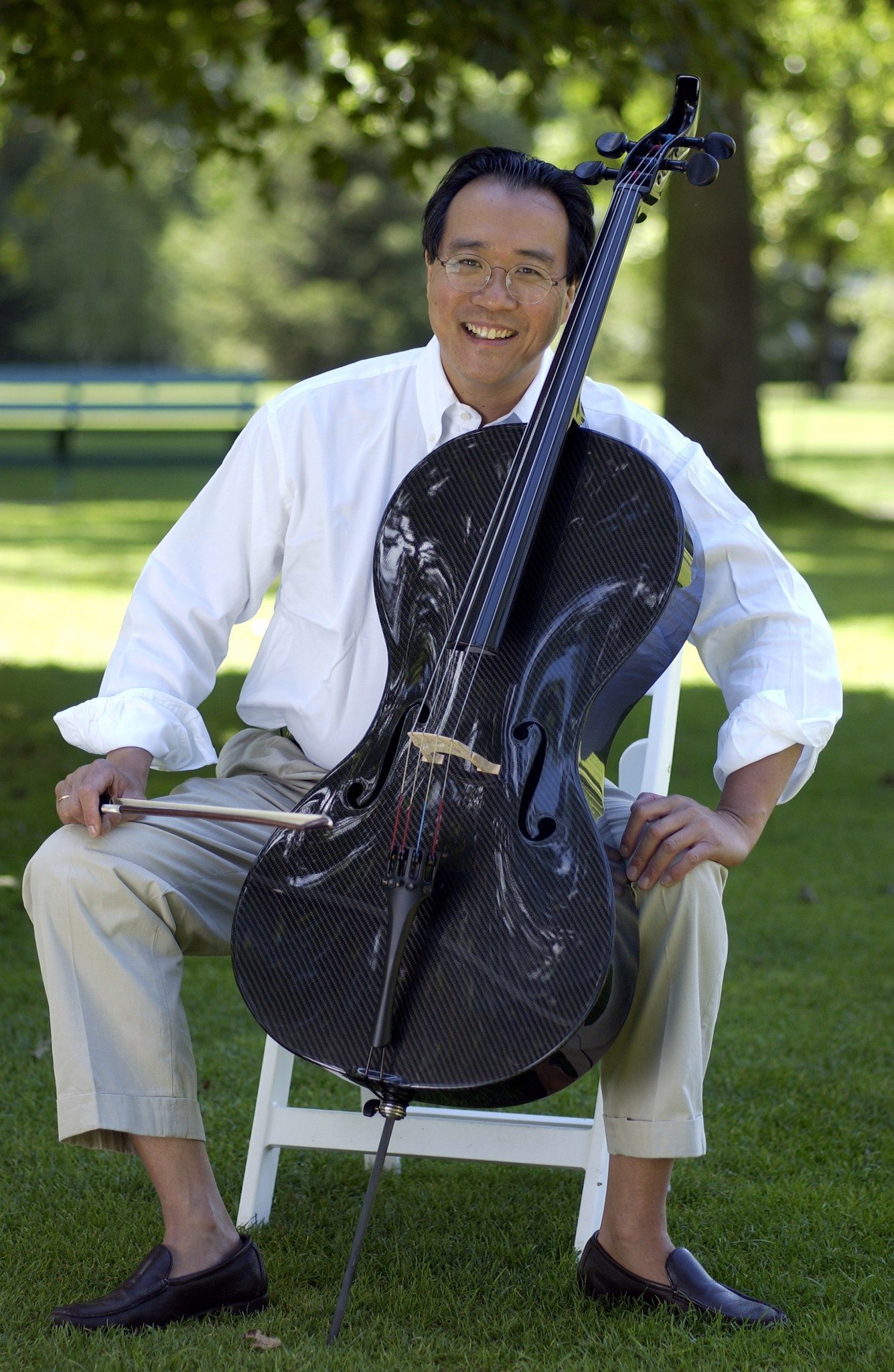
He has over 120 albums. That is a staggering, almost impossible number for a classical musician, but the Yo Yo Ma discography isn't just a list of credits; it’s a weird, winding map of a man trying to escape the "prodigy" cage. Most people know him as the guy who plays the cello with a permanent smile. But if you look at the actual recordings, you see someone who was clearly bored with just playing the hits. He went from the strict, rigid world of Bach to jamming with Kalahari bushmen and bluegrass fiddlers. It’s a lot to dig through.
Honestly, if you just search for his name on Spotify or Apple Music, you’ll get hit with a wall of "Best Of" compilations that all look the same. But the real meat of his work is in the specific eras where he decided to risk his reputation.
Why the Bach Cello Suites are the spine of his career
You can’t talk about the Yo Yo Ma discography without mentioning the Bach Cello Suites. He’s recorded them three times. Think about that. Most cellists dream of doing it once. Ma did it in 1983, then again in 1997, and finally in 2018.
The 1983 version? It’s technically perfect. He was young, under pressure, and playing it "by the book." It sounds like a man trying to prove he’s the best in the world. But the 1997 set, titled Inspired by Bach, is where things got strange. He collaborated with architects, garden designers, and ice skaters for a film series. The playing is looser. It’s more human. By the time he hit the 2018 Six Evolutions recording, he was basically playing them as a meditation on death and life. It’s slower. It’s grittier. He isn’t afraid of a little scratch in the bow hair anymore.
It’s rare to see an artist document their own aging process through the same pieces of music over forty years. It’s basically the Boyhood of classical music.
The crossover era that made purists mad
In the 90s, Ma started doing things that made the classical elite very nervous. He teamed up with Bobby McFerrin for Hush. You’ve probably heard "The Flight of the Bumblebee" from that record in a commercial or a waiting room. It was a massive hit. It was also deeply uncool in the eyes of the conservatory crowd.
Then came Appalachia Waltz in 1996.
He teamed up with Mark O'Connor and Edgar Meyer. Suddenly, this world-class cellist was trying to play like a back-porch fiddler. It didn’t always sound "authentic" in a bluegrass sense—he still sounds like a guy with a Harvard degree—but the joy was infectious. This period of the Yo Yo Ma discography is vital because it broke the glass ceiling for classical musicians. He proved you could sell millions of records without wearing a tuxedo on the cover. He followed this up with Appalachian Journey, which even grabbed a Grammy.
The Silk Road Project and the global pivot
Around the turn of the millennium, Ma’s interests shifted toward the East. He founded the Silk Road Ensemble. This wasn't just a "world music" gimmick. He was looking for the historical roots of the instruments we use today.
The albums like When Strangers Meet (2002) and Sing Me Home (2016) are dense. They feature instruments like the pipa, the kamancheh, and the sheng. If you’re coming from a purely Western background, these records might sound jarring at first. But they are arguably the most important part of his recorded legacy. They represent a rejection of the idea that Western classical music is the "center" of the musical universe.
- Beyond the Horizon (2005) is a standout here.
- It mixes traditional tunes from across Asia with modern arrangements.
- It feels less like a concert and more like a conversation.
The Tango and Brazil experiments
In 1997, Ma released Soul of the Tango, a tribute to Astor Piazzolla. This is arguably his best-sounding record from a production standpoint. The cello is aggressive. It’s sultry. It snarls. It’s a far cry from the polite chamber music people expected.
He did something similar with Obrigado Brazil in 2003. He worked with Rosa Passos and Egberto Gismonti. Critics sometimes claim these "exploration" albums are a bit touristy. Maybe. But Ma has a way of disappearing into the ensemble. He doesn't play "over" the Brazilian musicians; he plays with them. That’s a nuance a lot of classical stars miss when they try to go "pop."
The collaborative power of the Goat Rodeo Sessions
If you want to hear what he’s been up to lately, look at The Goat Rodeo Sessions (2011) and its follow-up Not Our First Goat Rodeo (2020).
These are weird. It’s a mix of bluegrass, jazz, and classical "new music." Along with Chris Thile, Stuart Duncan, and Edgar Meyer, Ma plays some of the most complex rhythmic stuff of his life. It’s fast. It’s funny. It’s a group of geniuses basically showing off, but in a way that’s actually fun to listen to while you’re cooking dinner.
The title "Goat Rodeo" refers to a situation where about a hundred things need to go right for it to avoid being a total disaster. That basically sums up Ma’s entire approach to recording. He likes the edge of the cliff.
Lesser-known gems in the Yo Yo Ma discography
Everyone knows the Crouching Tiger, Hidden Dragon soundtrack. It’s iconic. But have you heard his recording of the Elgar Cello Concerto with Daniel Barenboim?
It’s heartbreaking.
Recorded in the mid-80s, it captures a certain melancholy that he usually hides behind his public persona. There’s also the Vivaldi's Cello album with the Amsterdam Baroque Orchestra. He plays a "Baroque cello" with gut strings and no endpin. It sounds raw and earthy. It’s much different from the polished, vibrato-heavy sound he’s known for.
Then there is the Japanese Melodies record from the 80s. It’s short, simple, and incredibly beautiful. It doesn't get much radio play, but it shows his ability to be minimalist.
How to navigate this massive catalog
If you’re trying to build a collection or just understand the Yo Yo Ma discography, don't go chronologically. You’ll get whiplash. Instead, categorize them by "mood."
- The Deep Thinker: Stick to the 2018 Six Evolutions (Bach) or the Beethoven Cello Sonatas with Emanuel Ax. Ax and Ma have been playing together for decades, and their musical telepathy is spooky.
- The Adventurer: Go for Silk Road Journeys or Soul of the Tango.
- The Relaxed Listener: Appalachia Waltz or Songs of Joy & Peace.
- The Movie Buff: Obviously Crouching Tiger, but also his work on Memoirs of a Geisha and Seven Years in Tibet. John Williams wrote specific themes just for Ma’s "voice" on the cello.
Why he matters in 2026
Classical music is often seen as a dying art, or at least one trapped in amber. Ma’s discography is the strongest argument against that. He treated the cello like a passport. By looking at his credits, you see he’s worked with everyone from James Taylor to Ennio Morricone.
The sheer volume of his work means there are duds. Some of the "Lullaby" or "Holiday" albums feel a bit like corporate products. That’s the reality of being a global superstar. But the gems far outweigh the filler.
Actionable steps for the listener
If you want to actually experience the depth here, stop listening to the "Essential Yo-Yo Ma" playlists. They flatten his career into one long, boring cello note.
Instead, try this: Listen to Suite No. 1 from the 1983 Bach recording. Then immediately play the same piece from the 2018 album. You will hear a man go from being a perfect machine to a person who has seen the world and isn't afraid to let his instrument breathe, sigh, and even moan a little.
Next, find the Japanese Melodies album. It’s a palette cleanser. It reminds you that before the Grammys and the Presidential Medal of Freedom, he was just a guy who could make four strings sound like a human soul.
Finally, check out the Songs of Comfort and Hope released during the pandemic years. It’s stripped back. It’s just Ma and pianist Kathryn Stott. It reminds us that at its core, music isn't about "discography" or "sales" or "SEO keywords." It’s about not feeling alone in the dark.
Go find a physical copy of Soul of the Tango if you can. The liner notes alone are worth the price of admission. They explain the history of the music in a way that makes the listening experience ten times better. Don't just stream it in the background; sit down and actually listen to the way he hits the wood of the cello. That’s where the magic is.



