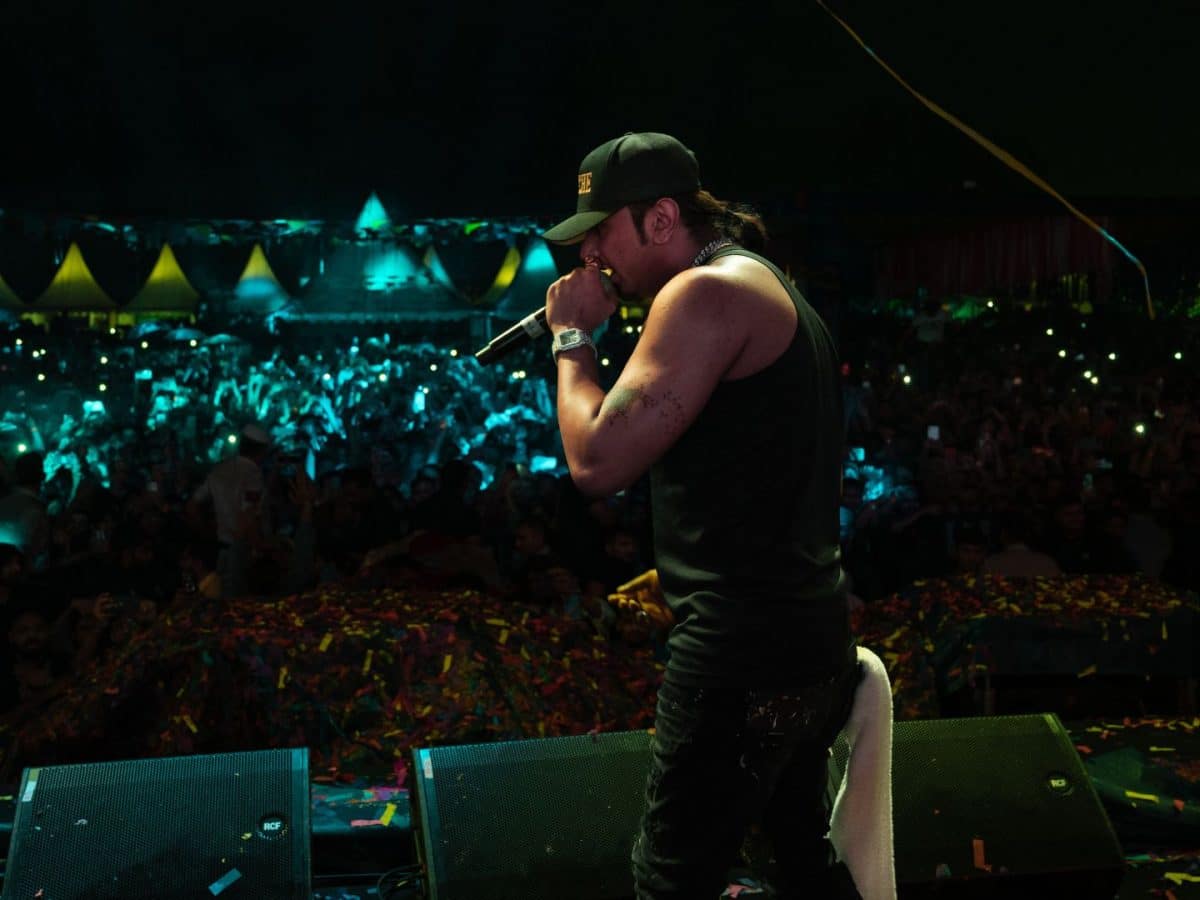
He vanished. At the absolute peak of the "Lungi Dance" and "Blue Eyes" era, when every club from Delhi to Dubai was shaking to his beat, Yo Yo Honey Singh just stopped. People talked. They whispered about rehab, about a massive fallout with Shah Rukh Khan, even about his death. It was wild. Then, years later, Netflix announced Yo Yo Honey Singh Famous, a raw look at the man behind the glasses.
Honestly, the documentary isn't just a highlight reel of his hits. It's a heavy, sometimes uncomfortable look at what happens when fame eats a person alive.
Produced by Guneet Monga Kapoor’s Sikhya Entertainment and directed by Mozez Singh, this film finally addresses the "disappearance." For a long time, the public only had rumors. We had that one grainy photo of him looking unrecognizable and tired. This documentary changes the narrative from "where is he?" to "what did he survive?" It’s a massive shift in how we view the most influential rapper in Indian history.
The Mental Health Reality Most Fans Missed
The core of Yo Yo Honey Singh Famous is his battle with Bipolar Disorder and Psychotic symptoms. This isn't just celebrity "burnout." Honey Singh, born Hirdesh Singh, describes a period where he couldn't even stand up. He was terrified of his own shadow.
Think about that for a second.
The guy who was telling everyone to "Party All Night" was sitting in a dark room in Noida, unable to face a crowd of ten people. The documentary doesn't sugarcoat the medical struggle. It shows the side effects of the heavy medication—the weight gain, the slurred speech, the loss of creative spark. It’s a cautionary tale about the music industry's relentless pace.
His mother plays a pivotal role in this telling. She was the one who saw the decline before the cameras did. Most people think celebrities have it easy because of the money, but Honey Singh’s story proves that your brain doesn't care about your bank balance. He talks about how the pressure to deliver "Number 1" hits every single month basically broke his psyche.
Why the "Comeback" Narrative is Complicated
We love a good comeback story. It’s a classic trope. But Honey Singh’s return hasn't been a straight line to the top. When he first reappeared with "Makhna" and later projects, the reception was mixed.
The documentary explores this friction. Is he the same artist? Probably not. The industry changed while he was gone. Badshah, Raftaar, and a whole new wave of underground rappers from "Gully Boy" fame took over the space he created. In Yo Yo Honey Singh Famous, we see the struggle of an alpha trying to reclaim a throne that might have moved.
He’s very open about his flaws. He admits to the arrogance of his early years. He doesn't shy away from the controversies regarding his lyrics, which many criticized as being misogynistic. While he doesn't exactly offer a groveling apology, the documentary provides the context of a young man caught in a whirlwind he couldn't control.
Technical Brilliance and Raw Footage
Mozez Singh did something smart here. He didn't just use talking heads. The film is packed with never-before-seen archival footage from the early Mafia Mundeer days. Seeing a young, skinny Honey Singh recording in makeshift studios is a trip.
It grounds the superstar. It reminds us he was a producer first.
- The transition from Punjabi pop to Bollywood dominance.
- The influence of 90s hip-hop on his sound.
- The sheer volume of ghostwriting and producing he did for others.
The cinematography switches between the glitz of his current life and the stark, almost clinical reality of his recovery phases. It feels intimate. You feel like a fly on the wall during his vulnerable moments. This isn't a PR exercise like many celebrity documentaries; it feels more like a confession.
The Impact on the Indian Music Industry
Before Honey Singh, "Urban Punjabi" music was a niche. He brought it to the front row of Bollywood. Every major star wanted a "Honey Singh track" to ensure a hit. The documentary features interviews with industry peers who acknowledge that he changed the "formula" for film music.
But there was a cost.
He speaks about the "dark energy" he felt around him. Whether you believe in that or not, it's clear he felt hunted by his own success. The film suggests that the industry is a meat grinder that takes what it needs and discards the rest. Watching him navigate the "aftermath" of his peak is the most compelling part of the story.
What Most People Get Wrong About Honey Singh
There is a common misconception that his downfall was purely due to drug abuse. While he has been open about his past struggles, the documentary clarifies that the clinical mental health diagnosis was the primary reason for his long hiatus.
- It wasn't just a "break." It was a total system shutdown.
- The SRK "slap" rumor? He addresses the tensions and the exhaustion of that era, clarifying the nature of his relationships with Bollywood's elite.
- His relationship with his fans. He felt he let them down, and that guilt fueled his depression.
He's not the "International Villager" anymore. He's a man in his 40s trying to find a new frequency. The music he's making now, like in the Honey 3.0 album, is different. It’s more experimental, less "club-banger-on-repeat." The documentary shows his frustration when people expect him to just "be 2012 Honey Singh" again. You can't go back to a version of yourself that almost killed you.
Actionable Takeaways for Fans and Creators
If you are watching Yo Yo Honey Singh Famous, there are some serious lessons to be learned about the creative life.
Protect your mental health above the brand. Honey Singh’s story is a vivid reminder that success is worthless if you aren't there to enjoy it. If you're a creator, set boundaries early. Don't wait for a breakdown to realize you're human.
Understand the power of a support system. Without his family, it's unlikely Honey Singh would have survived his darkest years. The documentary highlights that your "yes-men" will disappear the moment the hits stop. Invest in people who knew you before the fame.
Embrace evolution. You cannot stay the same person forever. Honey Singh is trying to reinvent himself, and while it's hard, it's necessary. If you're an artist, don't get trapped by your own "greatest hits."
Check the sources. In the age of social media, rumors spread faster than truth. This documentary serves as a reminder to look for the human story behind the headlines. Don't believe every "blind item" you read on Reddit or Twitter.
The film leaves us with a sense of cautious optimism. He’s back, he’s healthy, and he’s making music. He might never reach the "Dope Shope" levels of cultural saturation again, but maybe he doesn't want to. Being "Famous" is a double-edged sword, and Honey Singh has finally learned how to hold it without cutting himself.
To truly understand the modern landscape of Indian pop culture, you have to understand the rise, fall, and plateau of this man. It’s a wild ride. Watch it with an open mind, and you’ll see more than just a rapper; you’ll see a survivor.
The next step is to actually watch the documentary on Netflix and pay close attention to the interviews with his father. It provides a grounded perspective that balances out Honey's own intense narrative. After that, listen to his latest tracks with the knowledge of his journey—you’ll hear the production choices in a completely different light.



