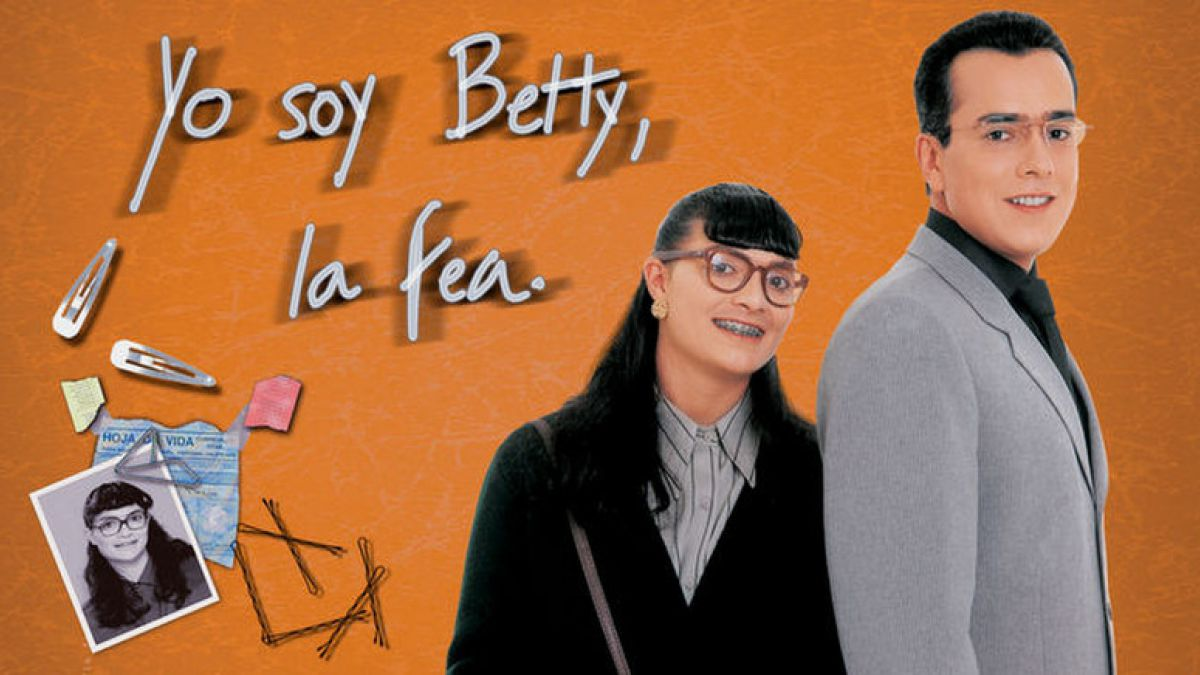
It was 1999 when Beatriz Aurora Pinzón Solano first walked into the sleek, intimidating offices of Ecomoda. She had a master’s degree in finance, a brilliant mind, and a laugh that sounded like a dying engine. She was also "ugly." Or at least, that’s what the show’s universe wanted us to believe. Yo Soy Betty, la Fea wasn't just another telenovela; it was a cultural earthquake that started in Colombia and eventually shook the entire planet. Honestly, if you haven’t seen it, you’re missing out on the blueprint for modern television dramedy.
Most soaps back then were about a poor, beautiful girl who marries a rich guy. Standard stuff. But Fernando Gaitán, the creator, flipped the script. He made the protagonist genuinely unattractive by conventional standards—thick glasses, braces, and a fringe that looked like it had a mind of its own. It worked. People didn't just watch it; they obsessed over it. In Bogotá, during the show’s peak, it’s said that the streets would go quiet when an episode aired. Even the Colombian President at the time, Andrés Pastrana, reportedly adjusted his schedule so he wouldn't miss the drama.
The Secret Sauce of Ecomoda
What makes Yo Soy Betty, la Fea so enduring? It’s the relatability. Betty wasn't a victim; she was a professional powerhouse. We’ve all felt like the smartest person in the room who gets ignored because we don't fit the "look." Gaitán tapped into a universal insecurity. He also populated Ecomoda with a cast of characters that felt painfully real. You had the Cuartel de las Feas (the "ugly" squad), a group of secretaries who represented the working class, and then you had the "beautiful" people who were often miserable, insecure, or morally bankrupt.
Armando Mendoza, the lead male, is a fascinating mess. He isn't your typical Prince Charming. He’s impulsive, loud, and frankly, a bit of a jerk for the first 200 episodes. Watching his slow realization that he is actually in love with Betty—not despite her looks, but because of her soul—is the slowest of slow burns. It’s messy. It’s complicated. It’s human.
Guinness World Records and Global Dominance
You might think calling it the "most successful telenovela" is hyperbole. It's not. In 2010, the Guinness World Records officially gave it that title. The show has been aired in over 180 countries and dubbed into 25 languages. But the real kicker? The remakes.
There are over 20 different versions of this story. You probably know Ugly Betty in the US, starring America Ferrera. But did you know there’s a Chinese version called Chou Nu Wu Di? Or a German one titled Verliebt in Berlin? India has Jassi Jaissi Koi Nahin. Each culture takes the core "Betty" myth and adapts it to their own beauty standards and workplace politics. It’s a franchise that never sleeps.
Breaking Down the "Transformation" Controversy
If you talk to any hardcore fan of Yo Soy Betty, la Fea today, they’ll probably have a bone to pick with the ending. For years, the buildup was all about Betty’s "makeover." When it finally happened, it was a major TV event. But looking back through a 2026 lens, the message feels a bit "meh." Does she have to be pretty to be happy?
The show tries to balance this by making Betty’s internal growth more important than the haircut. She learns to value herself. She stops letting Armando walk all over her. By the time she takes over Ecomoda, her power doesn't come from her new wardrobe; it comes from her financial genius. Still, some fans argue the show would have been more revolutionary if she had stayed exactly as she was and still won the day. It’s a valid critique. Nuance matters.
The 2024 Sequel: Does the Magic Still Work?
In a move that surprised absolutely no one but delighted everyone, Amazon Prime Video released Betty la Fea, the Story Continues recently. Bringing back Ana María Orozco and Jorge Enrique Abello was a stroke of genius. It picks up decades later. Betty and Armando are dealing with a crumbling marriage and a daughter who doesn't really know them.
It’s darker. It’s more cynical. The nostalgia is heavy, but it addresses the fact that "happily ever after" is hard work. Seeing the Cuartel older and wiser—well, maybe just older—hits home for the fans who grew up with the original. It proves that Betty isn't just a character; she’s a life-long companion for millions of viewers.
Why You Should Rewatch the Original Right Now
- The Humor: It’s actually funny. The physical comedy from Hugo Lombardi (the flamboyant designer) and the slapstick office antics still hold up.
- The Fashion: The late 90s/early 2000s business attire is a time capsule. It’s gloriously tacky.
- The Social Commentary: It deals with classism and sexism in the Latin American workplace in a way that was way ahead of its time.
- The Length: Okay, 300+ episodes is a commitment. But it’s the perfect "background" show that eventually sucks you in until you’re screaming at the TV at 2 AM.
Misconceptions People Have About Betty
A lot of people think the show is just a comedy. It’s actually a corporate thriller. Seriously. A huge chunk of the plot revolves around "Terra Moda," a shell company Betty creates to save Ecomoda from financial ruin. The scenes involving balance sheets and board meetings are intense. It’s like Succession, but with more shouting and better music.
Another myth? That it’s just for women. In Colombia, men were just as obsessed. The office politics resonated with anyone who had ever dealt with a bad boss or a toxic coworker. It’s a workplace drama disguised as a romance.
How to Experience Betty Today
If you want to dive into the world of Yo Soy Betty, la Fea, start with the 1999 original. Don't skip to the remakes. You need to see the chemistry between Orozco and Abello to understand why this property is worth billions.
- Find the original Colombian version on streaming platforms like Prime Video or Peacock.
- Watch it in the original Spanish with subtitles if you can. The slang and the specific "Bogotano" accents add a layer of charm that dubbing often loses.
- Pay attention to the secondary characters like Patricia Fernández ("La Peliteñida"). She’s the villain you love to hate, constantly reminding everyone she studied "six semesters of public relations at the San Marino University."
- Check out the 2024 sequel once you’ve finished the original run to see how the characters aged.
Yo Soy Betty, la Fea is a reminder that being an outsider is a universal experience. We are all Betty in some part of our lives. That’s why, nearly thirty years later, we’re still talking about her.
Next Steps for Fans:
- Audit the Remakes: Compare the US Ugly Betty with the Mexican La Fea Más Bella to see how different cultures handle the "transformation" trope.
- Deep Dive into Fernando Gaitán: Look up his other works, like Café, con aroma de mujer, to see how he revolutionized the telenovela genre by focusing on professional environments rather than just domestic ones.
- Track the Fashion Cycle: Notice how "Betty-core"—the nerdy, eclectic look—periodically returns to high-fashion runways, proving Betty was a trendsetter without even trying.



