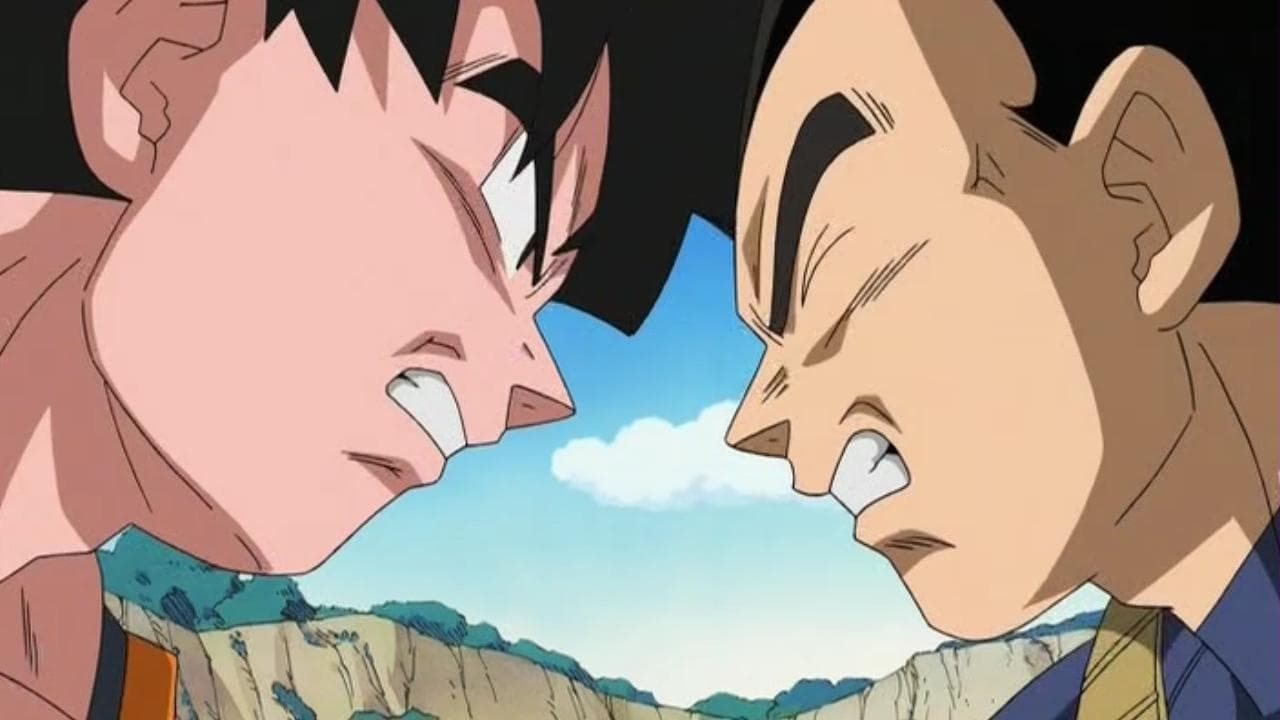
It was 2008. The Dragon Ball franchise felt like a fossil, a relic of the 90s that had finally settled into its grave after the polarizing run of Dragon Ball GT. Fans were subsisting on nothing but video game rehashes. Then, out of nowhere, Jump Super Anime Tour premiered Yo! Son Goku and His Friends Return!!. It was a total shock to the system. Most people didn't even know how to react to seeing the Z-Fighters in a modern digital aesthetic for the first time in over a decade.
Honestly, it’s the most "Dragon Ball" thing ever made because it doesn’t take itself seriously. It’s light. It’s airy. It’s basically a massive backyard BBQ with a few punches thrown in for flavor. While everyone obsessed over the high-stakes planetary destruction of the Frieza or Cell sagas, this special decided to focus on what happens when the universe isn't actually ending.
Why Yo! Son Goku and His Friends Return Changed the Franchise
If you look at the timeline of the series, this 35-minute special is actually the "Ground Zero" for everything we see in Dragon Ball Super. Before Beerus showed up to slap around a Super Saiyan 3, this special was the proof of concept. Toei Animation needed to see if people still cared about Goku’s appetite. They did.
The animation style was a massive departure. It moved away from the sharp, jagged ink lines of the 90s and toward a cleaner, more fluid look. It felt vibrant. For some, it was a bit too "soft," but it set the visual stage for the movies that followed. The special takes place two years after the defeat of Kid Buu. Peace has settled in. Satan has built a massive hotel. Everyone is just... chilling.
The Tarble Complication
Then we get the curveball. A tiny Saiyan pod lands. Out pops Tarble.
Vegeta having a younger brother was a massive lore bomb that most fans initially thought was a non-canon joke. But here’s the kicker: Tarble is mentioned in Battle of Gods. He’s technically "official," even if the series mostly ignores him now. Tarble wasn't a warrior. He was sent away because he lacked the Saiyan bloodlust, which is a fascinating bit of world-building. It shows that the Saiyan race wasn't just a monolith of meathead conquerors; there were "failures" who were just normal, decent people.
Tarble brings news of two remnants of Frieza’s army: Abo and Kado. These guys aren't exactly world-enders. Vegeta even scoffs at them. The special treats the villains as a nuisance rather than a threat, which allows the writing to lean into the comedy.
The Raditz Problem and Power Scaling
One of the funniest things about Yo! Son Goku and His Friends Return!! is how it handles power levels. By this point, Goku and Vegeta are literal gods compared to the rest of the universe. When Abo and Kado show up, they are stated to be "around the level of Frieza."
Think about that for a second.
In 1991, Frieza was the peak of terror. In 2008, being "Frieza level" makes you a joke that Goten and Trunks can handle during their playtime. It’s a hilarious meta-commentary on how far the series had progressed. The boys end up fighting them, and even then, it’s mostly just a comedy of errors. They mess up the Fusion Dance. They bump into each other. It’s a far cry from the life-or-death struggle against Super Buu.
The villains eventually fuse into "Aka." Even then, the stakes never feel high. The highlight isn't the fight; it's the fact that the battle ends up destroying Mr. Satan’s hotel, and Goku has to use a "serious" punch just to make sure the food doesn't get ruined. It prioritizes the gag over the gore.
A Family Reunion First, An Action Movie Second
What makes this special stick in the mind of long-term fans is the character interaction. We see Videl and Pan (as a baby), Krillin with his family, and Master Roshi doing his usual routine. It feels like a high school reunion.
The banquet scene is legendary. You have Vegeta getting competitive over food, Goku being oblivious, and the whole gang just laughing. This DNA—this specific "slice of life" energy—is exactly what makes the first half of Dragon Ball Super work. Without the success of this special, we probably wouldn't have the famous "Bingo Dance" or the baseball episode. It proved that Dragon Ball works best when the characters are allowed to breathe.
Technical Details You Might Have Missed
- Direction: It was directed by Yoshihiro Ueda, a veteran who understood the comedic timing of the early Dragon Ball era.
- The Intro: The special featured a re-recorded version of "Cha-La Head-Cha-La," which sent waves of nostalgia through the Japanese audience.
- The Ending: The ending credits show a montage of the characters' history, cementing the idea that this was a "welcome back" party for the fans.
It’s easy to dismiss this as "filler," but that’s a mistake. In the grand scheme of the Akira Toriyama universe, this was the bridge. It bridged the gap between the Z era and the modern era. It reintroduced the concept of the Saiyan diaspora through Tarble. It also reinforced that Goku will always be a country boy at heart, no matter how many gods he outranks.
What Most Fans Get Wrong About the Canon Status
There is a lot of heated debate on Reddit and Kanzenshuu about whether this special "counts." Here is the reality: while Akira Toriyama didn't write the script word-for-word, he provided the character designs and the basic plot outline.
When Battle of Gods came out in 2013, it didn't overwrite this special. In fact, it leaned into it. When the Z-Fighters are trying to figure out how to reach the Super Saiyan God state, they need six righteous Saiyans. Bulma suggests calling Vegeta’s brother. This is a direct nod to Yo! Son Goku and His Friends Return!!. It exists in a sort of "soft canon" space.
Even if you don't care about the timeline, the special is a masterclass in tone. It manages to be funny without being cringy, and it brings back the adventurous spirit of the original Dragon Ball (1986) while keeping the power of Dragon Ball Z.
How to Watch It Today
Finding this special can be a bit of a hunt. Because it was part of a touring festival, it didn't get a standard wide release in the West for a long time.
- Check the "Dragon Ball Z: Battle of Gods" special edition Blu-rays; some regions included it as a bonus feature.
- Look for the official Jump Super Anime Tour DVD releases (often found on secondary markets like eBay or Mandarake).
- Many fans end up finding it on archival sites since it was never dubbed into English by Funimation or Crunchyroll.
The lack of a dub is actually a blessing in disguise. Hearing Masako Nozawa (Goku) and Ryo Horikawa (Vegeta) slip back into these roles after a long hiatus is pure magic. You can hear the joy in their voices. They weren't just recording lines; they were coming home.
Actionable Steps for the Dragon Ball Completist
If you want to truly appreciate the lineage of the series, don't just skip to Super.
- Watch the Special Before Battle of Gods: It provides the perfect emotional "on-ramp" for the modern movies. It helps explain why everyone is so relaxed at the start of the Beerus arc.
- Pay Attention to the Background Characters: The special is packed with cameos and small gags featuring the Tier-2 cast (Yamcha, Puar, Oolong) that later series often ignore.
- Look for the "Aka" Reference in Video Games: Characters like Aka and Tarble frequently appear in the Dragon Ball Heroes and Raging Blast games. Knowing their origin makes those rosters much more interesting.
- Appreciate the Transition: Observe the lighting and color palettes. You are seeing the exact moment Dragon Ball transitioned from celluloid-style aesthetics to the modern digital era.
The special isn't about the fight. It’s about the fact that no matter how many years pass, Goku and his friends will always find a way back to each other—usually because there's a free buffet involved. It's a short, sweet, and essential piece of history that deserves more than being a footnote in a wiki.



