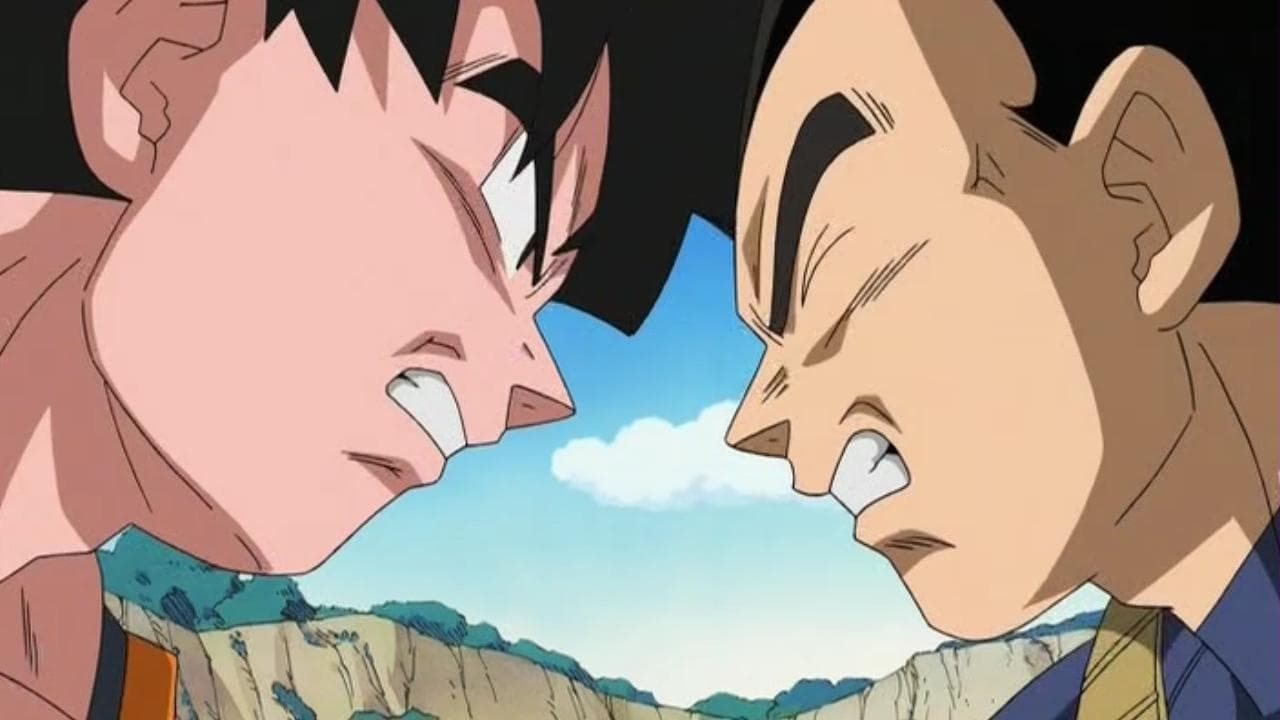
Man, looking back at 2008 feels like a lifetime ago. Anime was in a weird spot. Dragon Ball Z had been "over" for what felt like an eternity, and the only thing fans had to chew on was the polarizing Dragon Ball GT or rewatching the Frieza Saga for the fiftieth time. Then, out of nowhere, Jump Super Anime Tour happened. We got Yo! Son Goku and His Friends Return!!, a 35-minute special that basically acted as the spark for everything we see now in Dragon Ball Super.
It wasn't just a random reunion. Honestly, it was a litmus test.
Most people dismiss this special as a "lighthearted romp" or "just a bit of fanservice." They're wrong. It’s actually the architectural blueprint for the modern era of the franchise. It brought Akira Toriyama back into the creative fold in a meaningful way, shifting the tone from the grim, high-stakes apocalypse of the Buu Saga to something that felt more like the original Dragon Ball’s whimsical roots. If this special had flopped, we probably wouldn't have Battle of Gods, Super, or Daima.
The Forgotten Brother and the Post-Buu Peace
Let’s talk about Tarble. You've probably seen him in a video game or a random wiki entry and wondered why Vegeta has a brother who looks like he couldn't lift a grocery bag. Yo Son Goku and His Friends Return introduced him, and it was a shock. For years, we thought Vegeta and Goku were the last pure-blooded Saiyans. Suddenly, here’s this polite, weak kid showing up at Capsule Corp asking for help.
It’s a weird dynamic.
Vegeta’s reaction to Tarble tells us everything about his character development post-Kid Buu. He’s not disgusted by Tarble’s lack of fighting spirit—well, okay, he’s a little annoyed—but he accepts him. He even lets Trunks take the lead in the fight against Abo and Kado. This was the first time we saw the "Family Man Vegeta" archetype really take hold. It wasn't about saving the universe from a bio-engineered bug or a pink genie; it was about a family dinner being interrupted by two remnants of Frieza’s army who were, frankly, kind of losers.
Abo and Kado are interesting because they represent the power scaling "reset" the series desperately needed. They weren't stronger than Super Buu. They were roughly Frieza-level. By bringing the stakes down, the special allowed for more character interactions. We got to see Goten and Trunks mess up the Fusion Dance again. We saw Videl and Bulma just hanging out. It felt like a neighborhood BBQ where someone occasionally threw a ki blast.
Why the Animation Style Changed the Game
You can’t talk about this special without mentioning the visuals. Produced by Toei Animation, it looked different. It was crisp. It was vibrant. It moved away from the heavy shadows and gritty line work of the late 90s.
Some fans hated it. They thought it looked "too soft."
But here’s the thing: that softness was intentional. It mirrored Toriyama’s evolving art style. If you look at his manga work from the mid-2000s, like Nekomajin or Jaco the Galactic Patrolman, his lines got rounder and simpler. Yo Son Goku and His Friends Return was the first time that specific aesthetic was translated into animation. It paved the way for the look of Dragon Ball Z: Battle of Gods. Without this experiment, the transition to the modern digital look would have been even more jarring than it already was for some old-school fans.
The special also utilized a lot of nostalgic callbacks. The opening sequence is literally a love letter to the original series’ transitions. It felt like a warm hug before the franchise decided to punch us in the face again with the intensity of Super.
The Canon Dilemma: Does Tarble Even Exist?
This is where things get nerdy. For a long time, people argued about whether Yo Son Goku and His Friends Return was "canon."
The short answer? Yes.
The long answer? It’s complicated but ultimately confirmed. Tarble is mentioned by name in Battle of Gods (the movie version) when they’re trying to find a sixth Saiyan for the Super Saiyan God ritual. Even though he’s scrubbed from some later retellings, his existence is a fixed point in the lore. He even gets a shout-out in Dragon Ball Super: Broly.
That’s the power of this 35-minute special. It introduced a character that changed the royal Saiyan lineage forever. It also solidified the idea that Frieza’s army was massive and scattered, a plot point that has been milked for nearly two decades since.
The Raditz Problem
One thing that bugs me—and it bugs a lot of the hardcore community—is how this special treats the concept of Saiyan siblings. We spend 35 minutes learning about Tarble, a gentle soul who was sent away because he was too weak. Yet, in the same breath, Goku’s own brother, Raditz, is basically never mentioned. It’s a fascinating look into how Toriyama views his characters. He’s more interested in new, quirky additions than revisiting the grimness of the Saiyan Saga.
This special was the moment the series decided to stop being a "battle manga" exclusively and started being a "universe" again. It prioritized humor. The climax of the fight isn't a massive Spirit Bomb; it’s a gag where Goku tricks Vegeta so he can be the one to finish the fight. It’s petty. It’s hilarious. It’s exactly who these characters are when the world isn't ending.
Where to Find it and What to Watch For
If you’re trying to find this special today, it’s actually a bit of a hunt. It never got a wide-scale international release like the major films. It was mostly bundled with limited-edition DVDs or shown at festivals. If you do track it down, keep your eyes peeled for the cameos. Almost every minor character from the end of Dragon Ball Z shows up at Hercule’s hotel.
Pay attention to:
- The way Goten and Trunks fight. It’s a precursor to their "lazy" training habits in Super.
- The dinner scene. It’s some of the best character writing in the series.
- The "Table" and "Vegetable" pun. Toriyama hasn't lost his touch with the naming conventions.
Actionable Steps for the Dedicated Fan
If you want to truly appreciate the legacy of Yo Son Goku and His Friends Return, don't just watch it in a vacuum.
- Watch it right before Battle of Gods. You’ll see the immediate jump in production value and how the "God" concept was a massive escalation from the low-stakes fun of Tarble's arrival.
- Read Jaco the Galactic Patrolman. It’s a short manga by Toriyama that captures this exact same "return to roots" energy and actually ties into the wider Saiyan history.
- Analyze the Fusion. Note how the special treats Gotenks. It’s one of the last times the fusion feels like a genuine "secret weapon" before it becomes a recurring joke in later series.
- Check out the 2008 Jump Super Anime Tour merchandising. The figures released for this special are now rare collector's items because they represent such a specific, transitional moment in the franchise's history.
This special wasn't a comeback; it was a rehearsal. It proved that there was still an audience hungry for Goku’s adventures, even if there wasn't a galaxy-ending threat on the horizon. It reminded us why we liked these people in the first place. They’re a mess. They’re competitive. They’re obsessed with food. And occasionally, they save the world.
The Return of Goku and his friends wasn't about the fight; it was about the family. It set the stage for the massive global juggernaut that Dragon Ball is today. Without that 2008 spark, the fire might have stayed out for good.



