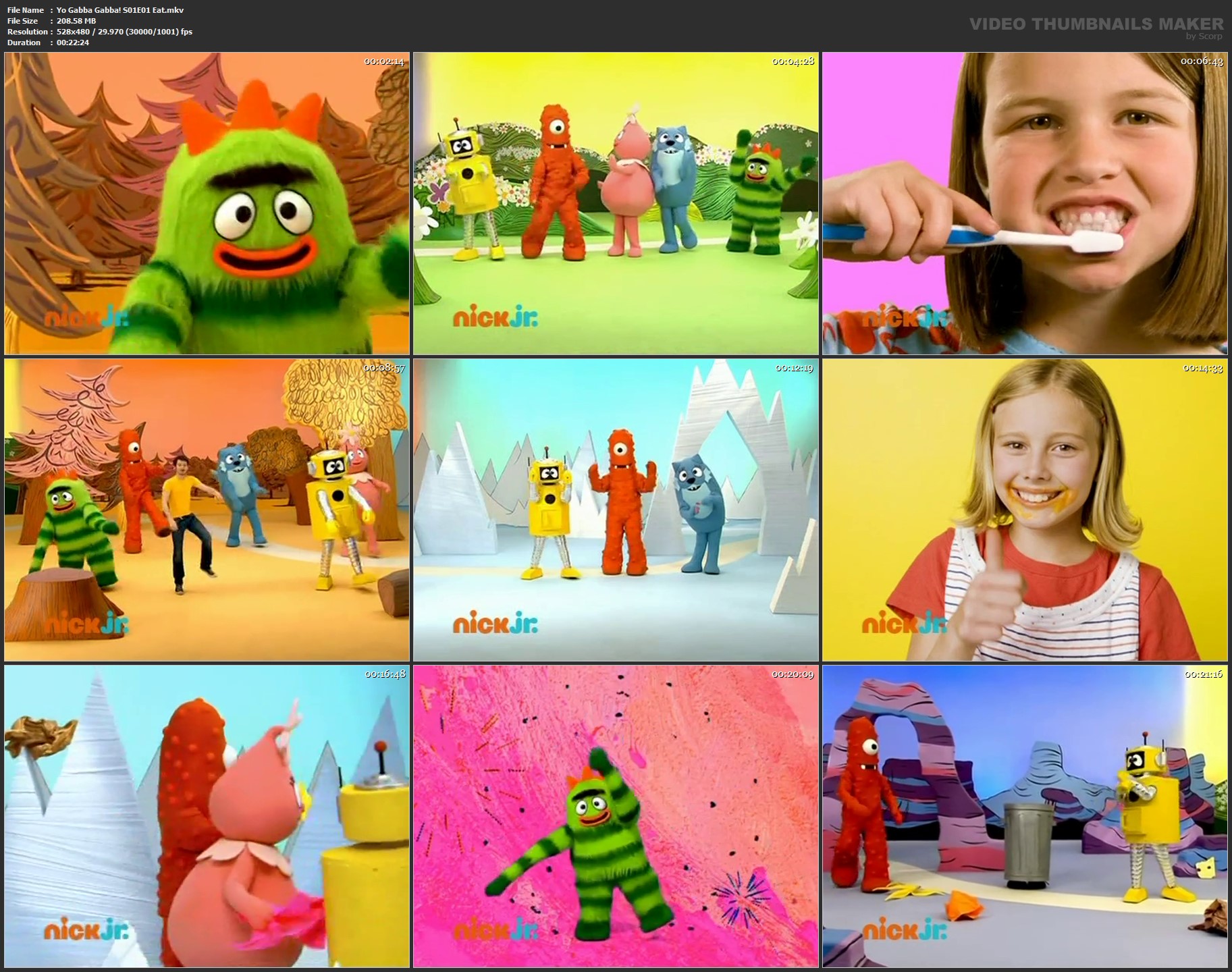
You remember the first time you saw it. Maybe you were a parent bleary-eyed from a 3:00 AM feeding, or maybe you were just flipping through channels and saw a giant, bumpy orange creature named Muno singing about not biting your friends. It felt like a fever dream. It felt like Coachella for toddlers. Honestly, Yo Gabba Gabba! shouldn't have worked on paper, yet it became a cultural juggernaut that redefined what kids' TV could actually be.
Christian Jacobs and Scott Schultz, the creators, didn't come from the standard "educational television" background. Jacobs was the lead singer of the The Aquabats. That’s a ska-punk band. Let that sink in for a second. They wanted to make a show that didn't treat parents like they were brain-dead while also keeping kids absolutely mesmerized by bright colors and "Biz’s Beat of the Day." It was a gamble. It paid off.
The Magic (and Chaos) of Yo Gabba Gabba!
Most kids' shows are saccharine. They’re safe. Yo Gabba Gabba! was definitely safe, but it was also undeniably cool. You had DJ Lance Rock in his fuzzy orange hat and tracksuits, carrying a boombox that literally breathed life into five distinct toys. Each character represented a different vibe or personality trait, from the shy Foofa to the somewhat neurotic Brobee.
The show broke the fourth wall constantly. It used 8-bit animation that felt like a love letter to the NES era. It wasn't just about teaching colors or numbers; it was about teaching emotional intelligence through the lens of indie rock and hip-hop culture. Think about the "Super Music Friends Show." You’d have The Shins, Chromeo, or even My Chemical Romance showing up in costumes to sing about pajamas or spaceship adventures. It was bizarre. It was brilliant.
Why the Guests Mattered
It wasn't just "celebrity for the sake of celebrity." When Jack Black showed up in a jumpsuit, he wasn't phoning it in for a paycheck. He was sweating. He was dancing. He was fully committed to the bit. The show had this weird gravity that pulled in the coolest people in the industry because it felt authentic.
- Biz Markie: The late, great "Clown Prince of Hip Hop" taught children how to beatbox. This wasn't some polished, over-produced segment. It was raw and fun.
- Mark Mothersbaugh: The DEVO frontman had a recurring segment called "Mark’s Magic Pictures." It taught kids that drawing wasn't about being a perfect artist; it was about the joy of the line.
- The Killers: They literally performed a song about being a skeleton. For toddlers.
People often forget how much of a risk this was. In the mid-2000s, Nickelodeon’s Nick Jr. was the land of Dora the Explorer. Bringing in a show influenced by skateboard culture and low-budget public access TV felt like a glitch in the matrix.
Deconstructing the "Gabba" Formula
There’s a specific rhythm to the show that psychologists actually found quite effective. It uses a "call and response" technique that dates back to traditional folk music and early hip-hop. When DJ Lance says "Yo Gabba Gabba!", the response is baked into the viewer's psyche.
The pacing is relentless but structured. You have a central theme—like "Summer" or "Share"—and then you pivot to a flurry of short-form segments. Animation, live-action dance-alongs, and "Cool Tricks" where real kids showed off things like hula-hooping or playing the drums. It kept the attention span of a three-year-old locked in because the stimulus changed every 120 seconds.
Emotional Intelligence Before it Was a Buzzword
We talk a lot about "gentle parenting" and "social-emotional learning" now. Back in 2007, Yo Gabba Gabba! was already doing the heavy lifting. The song "It’s Okay, Try Again" is basically a mantra for resilience. They tackled things like the fear of the dark or the frustration of being "the little one" without being condescending. They used monsters to humanize big feelings. Muno gets his feelings hurt? We talk about it. Brobee is sad because he’s small? There’s a song for that.
It's actually kind of wild how much the show influenced current aesthetics. Look at the "Kidcore" trend on TikTok or the resurgence of bright, chunky, retro-futuristic fashion. You can see the DNA of Gabba-land in the visual language of Gen Z.
The 2024 Revival: Yo Gabba Gabba! Land!
Apple TV+ recently brought the franchise back with Yo Gabba Gabba! Land!, and honestly, the biggest surprise was how little they changed the soul of the show. Kamryn Smith took over the hosting duties, but the vibe remained intact.
The question everyone asked was: Can it work without DJ Lance Rock? Lance Robertson (the actor) is synonymous with the brand. But the transition worked because the show’s philosophy is bigger than any one person. It’s about the boombox. It’s about the transition from the "real world" to the "imaginary world."
The new iteration keeps the guest star tradition alive. We’re talking Anderson .Paak, Flea from the Red Hot Chili Peppers, and The Linda Lindas. It proves that the "indie-dad" energy that fueled the original show is still very much alive in the current parenting generation.
Why Does It Still Rank as a Top Show?
- Non-Linear Learning: It doesn't follow a rigid curriculum. It teaches "how to be" rather than just "how to count."
- Visual Literacy: The mix of stop-motion, hand-drawn, and CGI animation exposes kids to different artistic mediums early on.
- Parental Sanity: It is one of the few shows that doesn't make adults want to pull their hair out. The music is actually good.
Critics sometimes argued the show was "too hipster" or "too weird." They missed the point. Kids are naturally weird. They live in a world where a giant green monster and a robot with a glass head are perfectly logical best friends. The show met kids on their level instead of forcing them to act like "mini-adults."
What We Get Wrong About the Show's Legacy
A common misconception is that Yo Gabba Gabba! was just a "stoner show" that happened to be for kids. That's a lazy take. While the visuals are trippy, the production was incredibly intentional. They worked with child development experts to ensure the messaging was age-appropriate.
The show also championed diversity before it was a corporate requirement. DJ Lance was a Black man in a lead role on a major children’s network, presenting a version of masculinity that was joyful, nurturing, and creative. The "Cool Tricks" segments featured kids from every imaginable background. It wasn't "performative"—it was just the world as the creators saw it.
The Business of Gabba
At its peak, the brand was a monster. The live tours sold out arenas. If you've never been to a Gabba Live show, imagine a mosh pit but everyone is three feet tall and smells like apple juice. It was high-energy. It was loud. It was a communal experience for families that felt more like a concert than a puppet show.
The merchandise also stayed true to the aesthetic. They weren't just slapping logos on cheap plastic. They did collaborations with brands like Vans and Kidrobot. They understood that the parents were the ones buying the stuff, and parents wanted things that didn't look like "toddler trash" in their living rooms.
Real Insights for Today’s Parents
If you’re just discovering the show now through the revival or old clips on YouTube, there are a few things to look for. Notice how the characters deal with conflict. It’s rarely about a "villain." The conflict is usually internal—someone feels jealous, or someone is afraid.
The "Next Big Thing" in children’s media is often just a recycled version of what Yo Gabba Gabba! did nearly twenty years ago. It pioneered the "variety show" format for the digital age.
Actionable Ways to Use Gabba Energy at Home
Don't just park your kid in front of the screen. The show is designed to be interactive.
- The "Dancey Dance" Break: Use the show’s format to transition between activities. When it’s time to clean up, put on a high-energy track. When it’s time to wind down, use the "Sleepytime" songs.
- Artistic Exploration: Follow Mark Mothersbaugh's lead. Give your kid a crayon and tell them to "make a line and see where it goes." No pressure for it to look like a house or a cat.
- Try New Foods: The "Party in My Tummy" song is a legitimate psychological hack for picky eaters. "So good! So good!" actually works when you’re trying to get a toddler to eat a green bean.
The legacy of the show isn't just the catchy songs or the celebrity cameos. It’s the permission it gave children—and parents—to be weird, to be loud, and to be themselves. It proved that "educational" doesn't have to mean "boring."
If you want to dive deeper, start with the "Family" episode from the original series. It’s the perfect distillation of what made the show special. It’s heartfelt, slightly chaotic, and features a musical guest that will probably end up on your own Spotify playlist.
Check out the official YouTube channel for the classic "Biz’s Beat of the Day" segments if you want a nostalgia hit that actually holds up. Then, transition to the new Apple TV+ series to see how the world of Gabba-land has expanded for a new generation. The colors are brighter, the tech is better, but the heart is exactly where DJ Lance left it.



