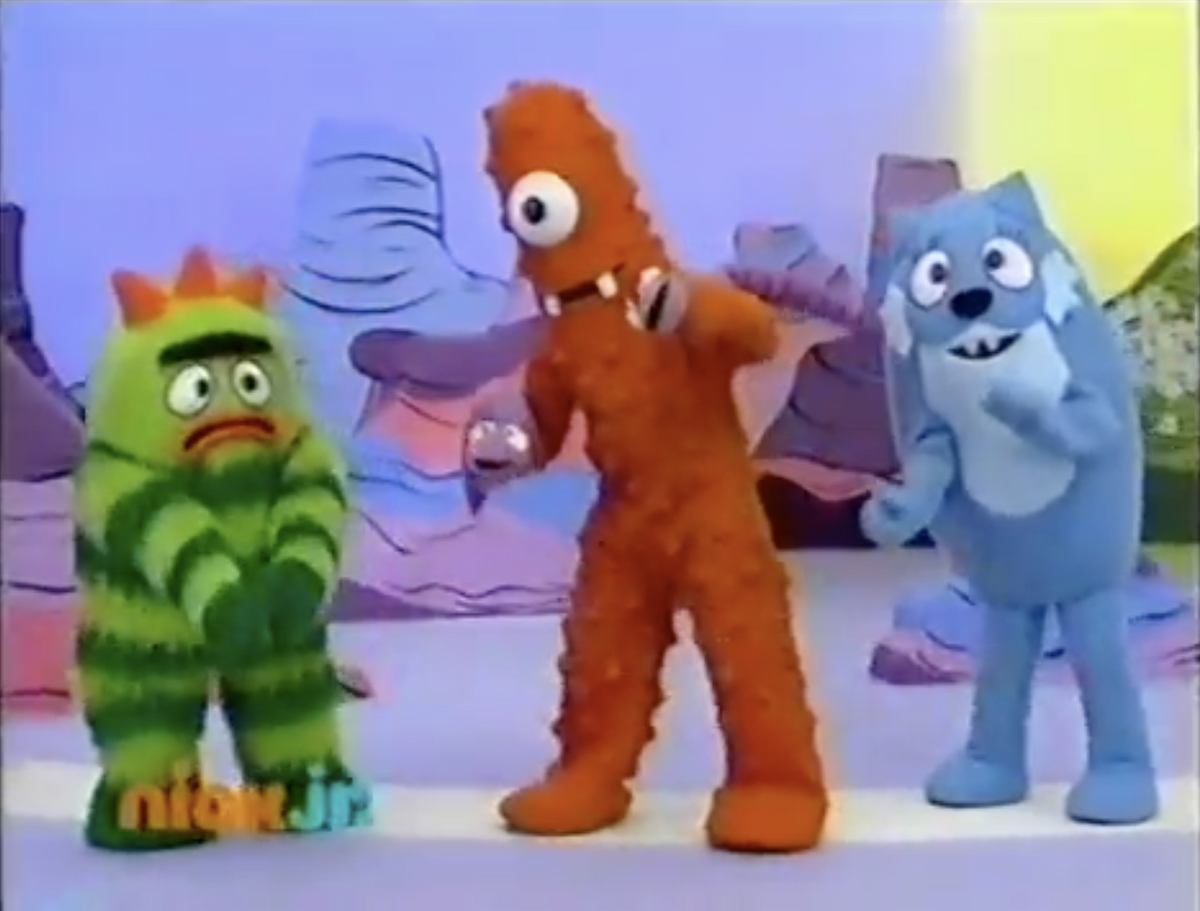
Honestly, if you tried to pitch a show today about a giant orange-clad DJ who keeps five mutant toys in a neon-colored suitcase, you’d probably get laughed out of the room. But in 2007, that’s exactly what happened. Yo Gabba Gabba on Nick Jr didn't just premiere; it exploded. It was weird. It was loud. It looked like a 1980s 8-bit video game had a baby with H.R. Pufnstuf.
Parents didn't know what to make of it at first. Neither did the kids. But then the music started.
The Punk Rock Roots of Gabbaland
Most people don't realize that the show wasn't born in a corporate boardroom. It started with two dads, Christian Jacobs and Scott Schultz, who were tired of the "talking down" tone of most preschool TV. Jacobs wasn't a TV executive; he was the lead singer of the comedy-punk band The Aquabats. You can see that DIY energy in every frame of the original episodes.
They basically maxed out their credit cards and took out loans to film a pilot because every major network passed on the idea. It was "too indie." It was "too strange." It wasn't until the pilot started circulating online—back when "going viral" was still a new concept—that Nickelodeon took notice. Brown Johnson, then the EVP of Nick Jr., saw the potential in the chaos.
The show officially landed on Nickelodeon in August 2007 and later moved specifically to the Nick Jr. Channel for its fourth season. It wasn't just a show; it was a cultural shift.
Why the Characters Felt Different
Every character was designed to represent a different "vibe" or musical subculture. You had:
- Muno: The red cyclops (who arguably has the most famous "party in his tummy").
- Foofa: The pink flower bubble who brought the "girly" but cool aesthetic.
- Brobee: A green little forest creature who was perpetually confused or emotional.
- Toodee: The blue cat-dragon who brought the punk-rock attitude.
- Plex: The yellow robot who acted as the logic center (and the one who could teleport).
These weren't just costumes. They were icons of a new kind of "cool" parenting. Suddenly, it was okay to like the same show your toddler liked.
The "Super Music Friends Show" Was a Secret Weapon
If you mention yo gabba gabba on nick jr to a Millennial or Gen X parent, they won't talk about the lessons on sharing. They’ll talk about the bands.
The show became a legitimate "must-stop" for indie royalty. We're talking about My Chemical Romance performing "Every Snowflake Is Different" in full snowy gear. We’re talking about Weezer dressing up as bugs to sing "All My Friends Are Insects."
The guest list was genuinely insane for a preschool program:
- The Roots (showing kids how to "Lovely, Love My Family").
- MGMT (getting weird with "Art is Everywhere").
- Jack Black (literally the best guest appearance in the history of the show).
- The Killers (bringing a full stadium-rock vibe to a tiny set).
It wasn't just music, either. Mark Mothersbaugh from Devo had a recurring segment called "Mark’s Magic Pictures." He’d teach kids to draw simple shapes that turned into monsters or cars. Then you had the late, great Biz Markie with "Biz’s Beat of the Day." He taught a whole generation of four-year-olds how to beatbox. It was "street," it was authentic, and it never felt like it was "teaching" in a boring way.
What Most People Get Wrong About the Nick Jr. Era
There's a common misconception that the show was just a trippy visual experience for kids (and maybe their "herbal-inclined" older brothers). That’s a total surface-level take.
In reality, the curriculum was surprisingly deep. They tackled things other shows avoided. "Don’t Bite Your Friends" became a legitimate anthem for parents dealing with toddler aggression. "Try It, You'll Like It" solved more dinner-time vegetable standoffs than any parenting book ever written.
The show used a "magazine format," meaning it jumped from live-action to animation to "Cool Tricks" (where real kids showed off hobbies) to "Storytime." This kept the pace fast. It matched the shorter attention spans of the digital age without feeling frantic.
The Transition to Apple TV+ and the Legacy
Fast forward to 2026, and the landscape has changed. While the original run of yo gabba gabba on nick jr ended in 2015, the brand refused to stay in the suitcase.
In 2024, the "revival" happened with Yo Gabba GabbaLand! on Apple TV+. While it’s the same creative team (Jacobs and Schultz), things are a bit different. DJ Lance Rock—the legendary Lance Robertson—passed the torch to Kamryn Smith (Kammy Kam).
The legacy, though? It’s untouched. The original episodes are now being discovered by a new generation of parents who grew up watching it themselves. It's a weird full-circle moment. The "Gabba" sound is now part of the DNA of modern kids' media. You see its influence in everything from Bluey's musicality to the DIY aesthetic of YouTube creators.
Essential Lessons We Still Use
- Emotional Literacy: Brobee being "sad" wasn't something to be fixed immediately; it was something to be felt and understood.
- Physicality: The "Dancey Dance" segments weren't just for show. They were designed by experts to get kids moving and developing gross motor skills.
- Diversity of Sound: By exposing kids to synth-pop, hip-hop, and punk, the show literally "rewired" how kids perceive music.
How to Revisit the Magic
If you’re looking to find the original yo gabba gabba on nick jr episodes today, they aren't as buried as you'd think. While the new series lives on Apple TV+, many of the classic 66 episodes have been integrated into that platform too.
Next Steps for Parents and Fans:
- Check the Catalog: Most streaming services that carry Nick Jr. "legacy" content or Apple TV+ will have the original four seasons. Look for the "classic" label.
- The Playlist Strategy: If you're tired of "Baby Shark," look up the Yo Gabba Gabba! soundtracks on Spotify. They feature the actual bands (The Shins, Of Montreal, Jimmy Eat World) and are genuinely good music for the car.
- The "Try It" Rule: Use the "Try It, You'll Like It" song at dinner tonight. It’s a 15-year-old hack that still works on 90% of picky eaters.
- Watch the Jack Black Episode: If you only watch one "legacy" episode to understand the hype, make it "New Friends" from Season 2. It's the gold standard of what the show was trying to achieve.
The orange suit might be in a museum somewhere, but the "Gabba" vibe is pretty much eternal. It proved that you don't have to be boring to be educational. You just have to have a really good beat.



