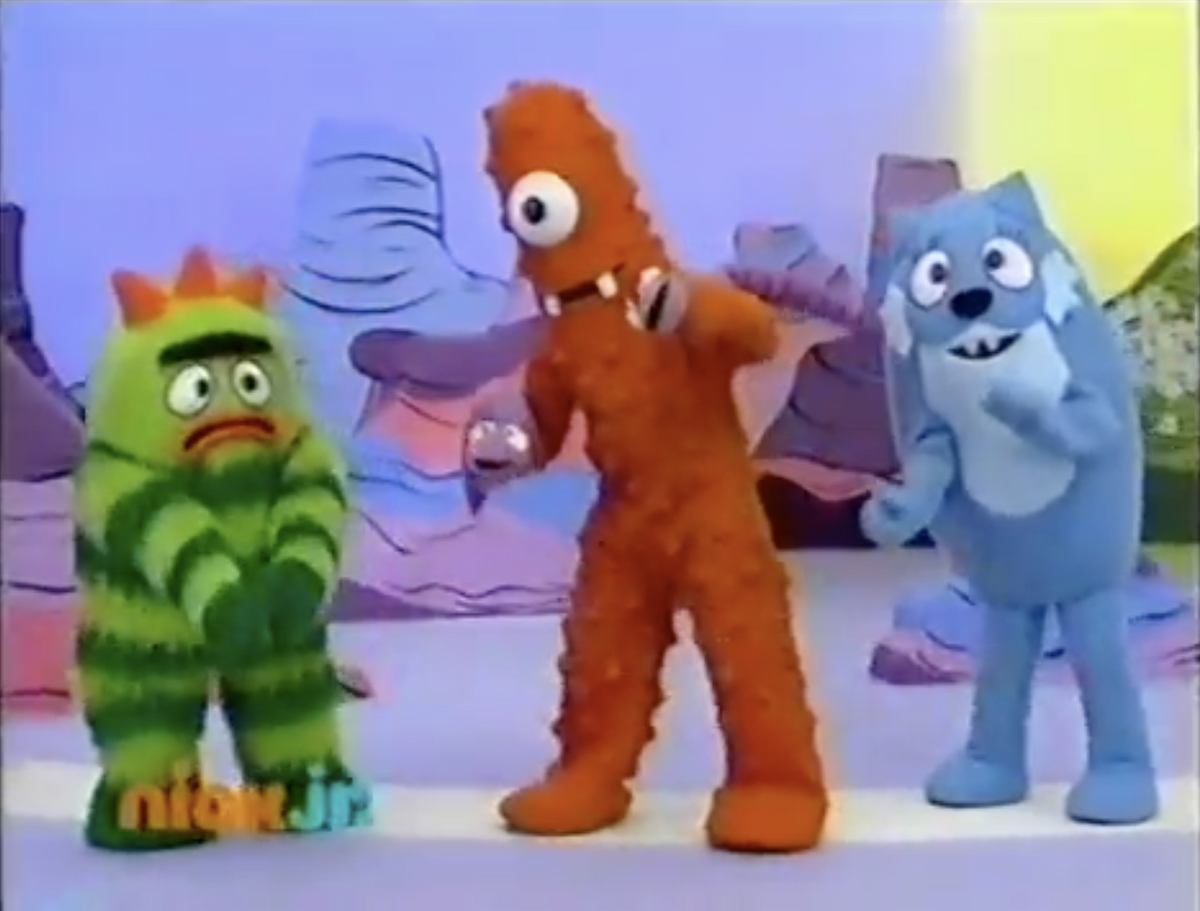
If you were a parent in 2007, or maybe just a college student with a late-night TV habit, you probably remember the first time you saw a giant orange-clad man named DJ Lance Rock pull a tiny boombox out of thin air. It was weird. It was bright. Honestly, it was a little bit trippy.
Yo Gabba Gabba Nick Jr was the specific era of a show that shouldn't have worked on paper. Two dads from Southern California—Christian Jacobs and Scott Schultz—decided they were tired of the "purple dinosaur" style of kids' TV. They wanted something that didn't treat children like they had zero taste in music. Jacobs, who also happens to be the lead singer of the ska-punk band The Aquabats, brought a DIY, indie-rock energy to the project that fundamentally changed how we look at "educational" programming.
The Nick Jr Era: A Cultural Fever Dream
When the show landed on Nickelodeon’s Nick Jr. block in August 2007, it felt like a glitch in the matrix. Most preschool shows were doing the slow, enunciated "Can... you... find... the... circle?" routine. Suddenly, you had Muno, a red, bumpy cyclops, and Brobee, a green "broccoli bee," dancing to lo-fi synth-pop.
It wasn't just for the kids. That's the secret.
Parents actually wanted to watch it. You’d be sitting there with your toddler and suddenly The Shins or The Roots would pop up to sing about taking a nap or eating vegetables. It was "TRL for kids," but with better fashion. The show leaned heavily on a variety-show format, pulling inspiration from 8-bit video games, Sesame Street, and 1970s psychedelic classics like H.R. Pufnstuf.
The Guest List Nobody Could Believe
The "Super Music Friends Show" segment became legendary. We aren't talking about generic kid-performers. We are talking about:
- My Chemical Romance performing "Every Snowflake is Different" in weird costumes.
- Weezer dressing up as bugs to sing "All My Friends are Insects."
- Jack Black showing up for an entire episode and basically becoming a permanent part of the Gabba-verse lore.
- Biz Markie teaching "Biz's Beat of the Day," which unironically taught a generation of four-year-olds how to beatbox before they could tie their shoes.
It was cool. It was inclusive. Most importantly, it was authentic.
Why Did It Disappear from Nickelodeon?
For years, the show was the crown jewel of the Yo Gabba Gabba Nick Jr lineup. However, television is a business, and even the "coolest" shows face hurdles. Production on new episodes effectively stalled around 2011, though the show moved over to the dedicated Nick Jr. Channel and ran in heavy rotation for years after.
The funding model shifted. Rights became complicated.
By 2015, the original run had officially ended with 66 episodes. For a long time, fans were left in a weird limbo. You could find clips on YouTube, but the high-definition, full-episode experience was scattered across different streaming platforms or locked away in digital vaults. The "Gabba Gang" went quiet, save for the occasional live tour that continued to sell out theaters across the country.
The Move to Apple TV+: Yo Gabba GabbaLand!
Fast forward to late 2021, and the news broke that Apple TV+ had officially acquired the rights to the entire catalog and ordered a revival. This wasn't just a reboot; it was an expansion.
The new series, titled Yo Gabba GabbaLand!, finally premiered on August 9, 2024.
While DJ Lance Rock (Lance Robertson) handed over the "host" duties to a new character named Kammy Kam (played by the incredibly talented Kamryn Smith), the original spirit remains. Christian Jacobs and Scott Schultz are still at the helm. All the original characters—Muno, Foofa, Plex, Brobee, and Toodee—returned with their original voice actors.
What's Different in 2026?
If you're looking for the show today, it's basically an Apple exclusive. As of January 2026, Season 2 of Yo Gabba GabbaLand! is the big talk in the parenting world. They’ve managed to keep the guest star magic alive, featuring artists like Santigold, Anderson .Paak, and even The Linda Lindas.
The production value is higher, the colors are sharper, and the lessons have evolved slightly to match modern social-emotional learning standards. But at its core? It’s still a bunch of weird monsters dancing in a neon wasteland.
Navigating the Seasons: A Quick Reality Check
If you're a nostalgic parent trying to show your kids the original Yo Gabba Gabba Nick Jr episodes, be warned: the "streaming wars" have made it a bit annoying.
Currently, Apple TV+ is the primary home for both the legacy episodes and the new revival. You might find random episodes for purchase on Amazon or Vudu, but the days of just flipping on Nick Jr. and seeing Brobee lose his "balloon" are mostly over.
- Check your subscriptions: Most of the original 66 episodes are now under the Apple TV+ banner.
- YouTube is a goldmine: The official Yo Gabba Gabba YouTube channel still hosts "Biz's Beat of the Day" and many of the "Super Music Friends" segments for free.
- Physical Media: If you can find the old DVDs at a thrift store, grab them. They are becoming rare "relics" for fans who want the original Nickelodeon-era experience without a monthly sub.
The Impact of the "Gabba" Philosophy
Why does this show still have a "cult-like" following nearly 20 years after it started?
It’s because it respected kids. It didn't assume they were dumb. It used real synthesizers, real drums, and real artists. It taught us that "it's okay to be different" without being preachy.
Whether you're watching the vintage Yo Gabba Gabba Nick Jr reruns or the new Apple TV+ episodes, the takeaway is the same: Music is a universal language, and sometimes, the best way to learn about life is to just stand up and do a "Dancey Dance."
To get the most out of the Gabba experience today, start by exploring the Yo Gabba GabbaLand! soundtrack on streaming platforms; it features high-fidelity versions of the new songs that carry the same indie-pop DNA as the original 2007 run. If you are looking for the classic "Nick Jr." feel, search for the original "Music is Awesome!" compilations, which remain the best curated entry point for the show's most iconic musical moments.



