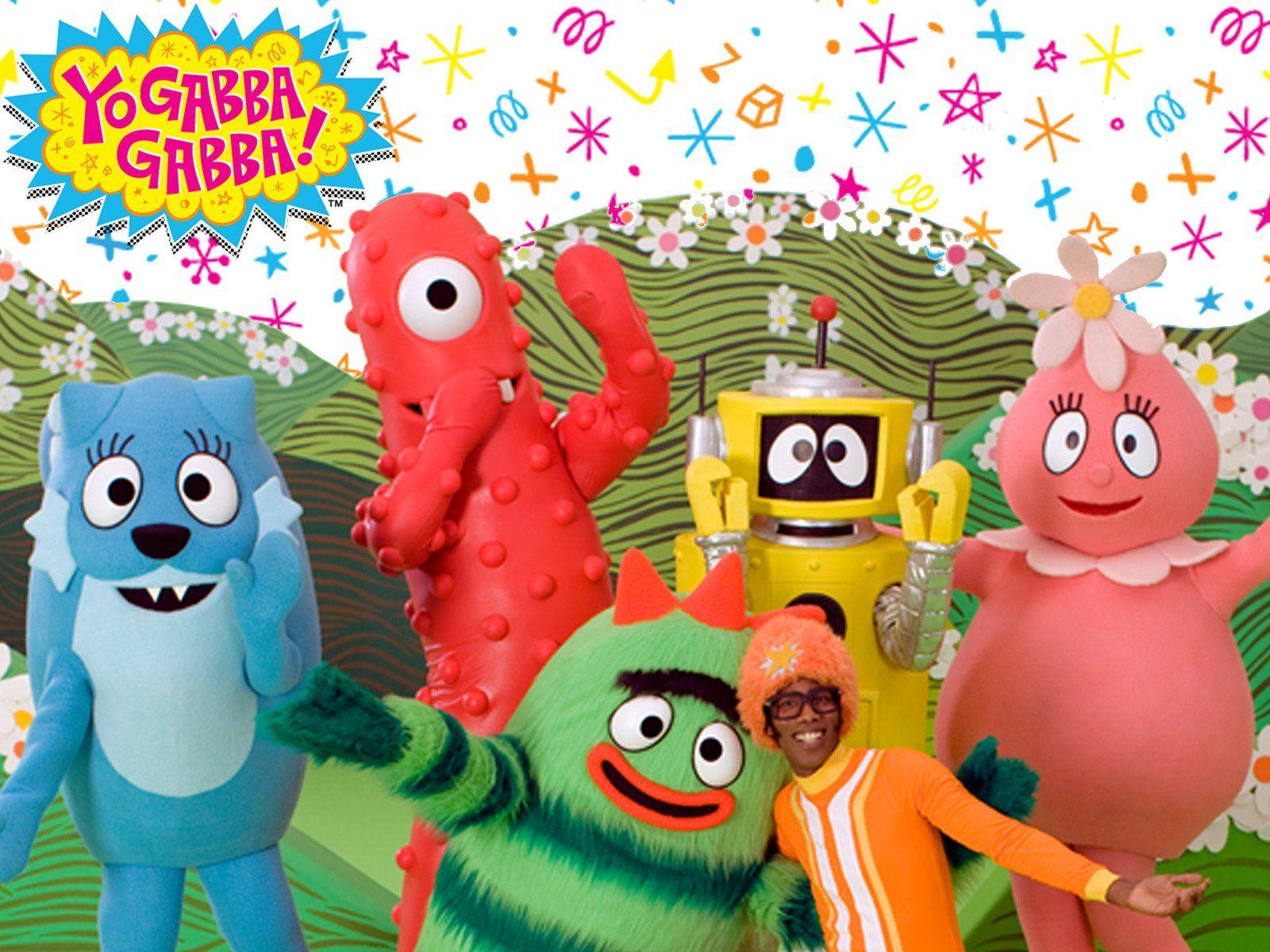
If you were a parent, a stoner, or just a sentient human with a television between 2007 and 2015, you definitely remember the neon-soaked, synth-heavy fever dream that was Yo Gabba Gabba!. It didn't look like anything else. It didn't sound like anything else. Honestly, it felt like something that shouldn't have been allowed on Nickelodeon, yet there it was, featuring a man in a bright orange jump suit named DJ Lance Rock.
He’d place five colorful toys on a table, shout "Yo Gabba Gabba!", and suddenly we were in a landscape of 8-bit clouds and dancing monsters.
It was weird. It was beautiful. And surprisingly, it changed how we think about "educational" media forever.
Why Yo Gabba Gabba! broke all the rules
Most kids' shows are boring. There, I said it. They usually rely on slow pacing, repetitive songs about brushing your teeth, and a certain kind of condescending tone that assumes children have the intellectual depth of a teaspoon. Christian Jacobs and Scott Schultz, the creators, didn't want that. Jacobs was the lead singer of the ska-punk band The Aquabats, so he brought a DIY, subculture-heavy energy to the production. They weren't looking at Barney; they were looking at H.R. Pufnstuf and old Devo music videos.
They basically treated kids like small people with actual taste.
Instead of stock nursery rhymes, they brought in The Shins. They had Biz Markie teaching "Biz's Beat of the Day," showing toddlers how to beatbox before they could even tie their shoes. It was the first time a "toddler show" felt like a variety hour at a cool indie club.
The cast that shouldn't have worked
Think about the character designs. You have Muno, the red cyclops who is basically a giant bumpy noodle. Foofa is a pink flower-bubble thing. Brobee is a green, hairy little guy with long arms who is perpetually worried about something. Toodee is a blue cat-dragon hybrid, and Plex is a yellow robot who looks like he was built from spare parts in a 1970s garage.
It’s an island of misfit toys.
But it worked because they dealt with real emotions. When Brobee gets sad because he's small, he doesn't just get a lecture; he sings a song about it that actually slaps. The emotional intelligence of the show was surprisingly high. It tackled things like sharing, trying new foods ("There's a Party in My Tummy"), and being careful with friends without being preachy.
The "Super Music Friends Show" was a cultural reset
If you want to understand why Yo Gabba Gabba! has such a massive cult following among adults, you have to look at the musical guests. This wasn't just "celebrity cameos for the sake of it." It was a curated list of the coolest artists on the planet.
We're talking about:
- The Killers dressing up as aliens to sing "A Spaceship Adventure."
- MGMT performing "Art is Everywhere."
- The Roots dropping "Lovely, Love My Family."
- Erykah Badu as a puppet-like character.
- Solange Knowles dancing with the Gabba gang.
Even Jack Black showed up in an episode titled "New Friends," arriving on a dirt bike and wearing a mini orange jumpsuit that matched DJ Lance. It was a bridge between the "cool" world of parents and the "safe" world of children. You weren't just "enduring" the show as a parent; you were actually waiting for the next segment.
The weird truth about the show’s hiatus and the 2024 revival
For a long time, it felt like the show just vanished. Production stopped, and while the live tours continued to sell out arenas, the screen went dark. Fans were left wondering if the magic was over. Then came the news that Apple TV+ was bringing it back as Yo Gabba GabbaLand!.
There was a lot of skepticism. Could you capture that same lo-fi, indie-rock magic in the age of high-definition streaming?
Kamryn Smith stepped in as the new host, Kammy Kam, and while DJ Lance Rock passed the torch, the DNA of the show remained largely intact. The revival proved that the "Gabba" formula—bright colors, weird creatures, and incredible music—is timeless. It turns out that kids in 2026 still want to see a giant red cyclops dance to a synth-pop beat. Who knew?
It wasn't just about the "Cool Factor"
Critics sometimes argued the show was all style and no substance. They were wrong. The show followed a strict pedagogical framework, even if it was hidden under layers of glitter and fuzz. Each episode focused on a "Social-Emotional Learning" (SEL) goal.
Take the "Don't Bite Your Friends" song. It became a genuine cultural touchstone for parents struggling with the "terrible twos." It wasn't a complex metaphor. It was a direct, catchy command set to a punk-rock beat. It worked because it was simple and didn't talk down to the audience.
The legacy of the orange jumpsuit
DJ Lance Rock (Lance Robertson) became an unlikely icon. He wasn't a traditional "actor." He was a DJ from Los Angeles who happened to be friends with the creators. His genuine, wide-eyed enthusiasm was the anchor of the show. When he said, "I'm Lance, and I like to dance," you believed him.
He didn't have that "creepy kids' show host" vibe. He just seemed like a guy who really liked music and really liked his monster friends.
The show also pioneered the use of "Cool Tricks," where real kids or celebrities would show off a weird talent. It encouraged the idea that being "different" or having a "weird" hobby was actually your superpower. This helped foster a generation of kids who grew up feeling like they didn't have to fit into a specific box.
What you can learn from the Gabba world today
Whether you are looking for nostalgia or introducing a new generation to the show, there is a lot to take away from the Gabba-verse. It reminds us that "educational" doesn't have to mean "boring."
If you're a parent today, don't just put on the first loud, flashing-light show you find on YouTube. Seek out the stuff that has a soul. Yo Gabba Gabba! was made by people who loved music, skating, art, and monsters. That passion bleeds through the screen.
How to bring the Gabba energy home:
- Stop over-explaining things. Kids understand music and emotion better than we give them credit for.
- Mix up the playlist. If your kid is only listening to Cocomelon, throw on some Devo or The Aquabats. See how they react to a different beat.
- Embrace the "Cool Trick." Encourage your kids to find one weird thing they can do—wiggling their ears, a funny dance, whatever—and celebrate it.
- Watch the original episodes. Most of the classic segments are available on YouTube or through various streaming platforms. Start with the "Eat" or "Dance" episodes. They are the gold standard.
The show was a lightning-in-a-bottle moment in television history. It was a time when the "alternative" became the mainstream for the preschool set. It taught us that we can all be friends, even if one of us is a robot and the other is a green monster with extremely long arms.
Go find an old clip of "Biz's Beat of the Day." Try to copy the sounds. You'll realize pretty quickly that it’s harder than it looks—and a lot more fun than most of the stuff on TV today.



