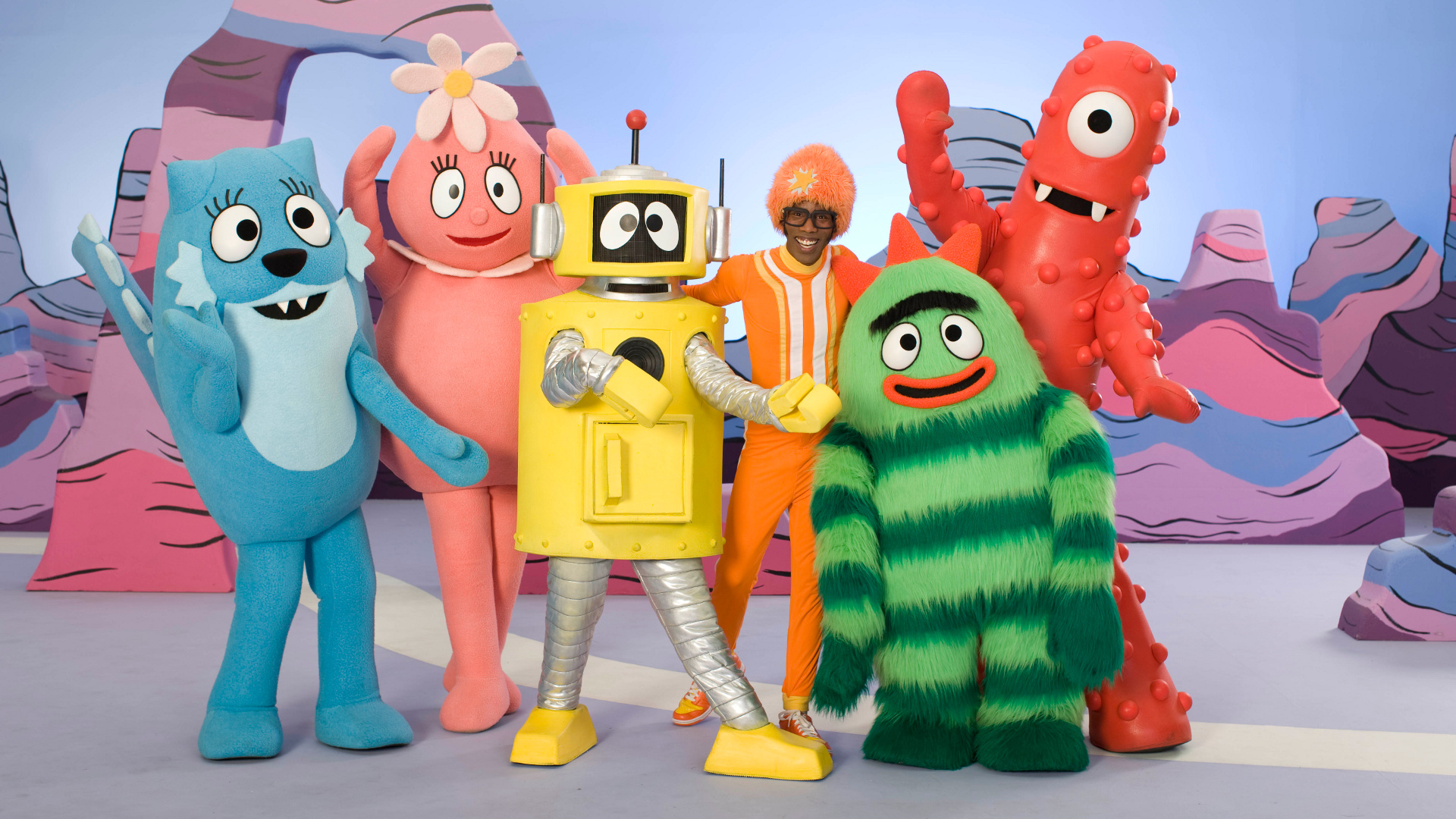
Magic happened in 2007. A tall man in an orange tracksuit placed a boombox on a table, and suddenly, the landscape of children's television shifted forever. If you grew up watching or parenting during the original run on Nick Jr., you know exactly what I’m talking about. Yo Gabba Gabba episodes weren't just "shows." They were psychedelic, indie-rock-infused fever dreams that somehow taught toddlers how to eat their vegetables without being annoying about it.
It’s weird.
Really weird. But that’s why it worked. Most kids' programming treats the audience like they have the intellectual capacity of a goldfish, but Christian Jacobs and Scott Schultz—the creators—decided to treat preschoolers like they were cool. They brought in DEVO’s Mark Mothersbaugh to draw. They had Biz Markie teach beatboxing. They turned "don't bite your friends" into a legit punk rock anthem.
The Anatomy of Yo Gabba Gabba Episodes
Every episode follows a strict, comforting rhythm, yet feels totally unpredictable. DJ Lance Rock wakes up the characters—Muno, Foofa, Brobee, Toodee, and Plex—and we dive into a specific theme. "Eat," "Sleep," "Friends," "Nature." It sounds basic. It isn't.
Take the "Eat" episode from Season 1. Most shows would just have a puppet point at a carrot. In Gabba land, we get the "Party in My Tummy" song. It’s an earworm that stays with you for decades. Seriously, if you hear someone whisper “so yummy, so yummy,” and you don’t immediately think of green beans and chicken, you didn’t live through the 2000s.
The structure is a bit of a variety show. You have the main plot in Gabba Land, sure. But then you’ve got "Mark’s Magic Pictures," "Biz’s Beat of the Day," and those bizarrely beautiful 8-bit animations that looked like they were ripped straight from a 1980s Nintendo cartridge. This wasn't accidental. The creators were part of the Southern California skate and ska scene (Jacobs is the lead singer of The Aquabats, FYI), and they baked that DIY aesthetic into every frame.
Why the Guests Mattered So Much
You haven't lived until you've seen Jack Black arrive in a flying saucer wearing a matching orange tracksuit. That happened in "New Friends." It wasn't just a cameo for the sake of a celebrity paycheck. He stayed for the whole episode. He danced. He looked like he was having the time of his life.
The musical guests—the "Super Music Friends Show" segment—are legendary. We’re talking The Shins, The Roots, The Killers, Weezer, and MGMT. Imagine being three years old and getting your first taste of indie synth-pop while a green monster named Brobee hops around. That’s high-level cultural education. It gave parents something to actually enjoy while their kids were occupied. It bridged the gap between "nursery rhyme" and "actual music."
The Lost Era and the 2024 Revival
For a while, the show felt like a relic. After the original run ended, there was a gap. A big one. Fans kept the spirit alive through YouTube clips and old DVDs, but the world felt a little less colorful without new lessons on "hugging too hard."
Then came Yo Gabba GabbaLand! on Apple TV+.
The revival changed the host—Kamryn Smith took over the mantle as Kammy—but the soul stayed the same. It's fascinating to watch how the new Yo Gabba Gabba episodes handle modern themes while staying true to the 2007 vibe. The costumes look sharper. The colors are more vibrant. But the characters? They haven't changed a bit. Muno is still a clumsy cyclops. Plex is still the robot who knows everything but still makes mistakes.
It’s a rare feat in TV. Usually, when you reboot a classic, you lose the "jank" that made it special. You clean it up too much. But because Jacobs and Schultz stayed involved, the new episodes feel like a continuation rather than a corporate replacement. They kept the "Cool Trick" segment. They kept the weirdness.
Analyzing the "Scary" Factor
Let's be honest. Some people find the show terrifying. There’s a segment of the internet dedicated to how "creepy" the character designs are. Muno is essentially a red, bumpy log with one eye.
But kids don't see it that way.
To a child, Muno isn't a monster; he’s just a guy who likes to play. The show leans into this. It teaches empathy for things that look different. In the episode "Scary," they literally tackle the concept of fear. They show that things that seem frightening are often just misunderstood or even funny once you get to know them. It’s a sophisticated psychological lesson wrapped in neon felt and catchy choruses.
Specific Episodes You Need to Revisit
If you’re looking to go down a rabbit hole, there are a few specific points in the series that define the whole project.
- "Circus" (Season 3): This one features Weird Al Yankovic. It’s peak Gabba. It’s chaotic, colorful, and the music is top-tier.
- "Bugs" (Season 2): Weezer performs "My Best Friend." It is arguably the most wholesome moment in the history of alternative rock.
- "Talent" (Season 1): This is where we see the legendary "Cool Trick" segments really shine. It celebrates the idea that everyone has a weird little skill, whether it’s wiggling your ears or spinning in circles.
The "Nature" episode is another standout. It manages to make the outdoors feel like a playground without being "preachy" about the environment. It focuses on the tactile sensations—the crunch of leaves, the smell of rain. It encourages kids to get off the couch and touch some dirt. Honestly, most adults could use that reminder too.
The Production Secret: It Was All Real
One reason the original Yo Gabba Gabba episodes look so different from stuff like Cocomelon is the lack of heavy CGI. Most of what you see on screen was physically there. The costumes are real. The sets are real. When a guest star interacts with Brobee, they are looking at a person in a suit, not a green screen.
This creates a "grounded" feeling despite the surreal content. You can sense the texture of the characters. You can see the way the light hits the fleece. In an era where everything is perfectly rendered by an algorithm, the tactile nature of Gabba Land feels like a warm hug. It has soul.
The Educational Philosophy
Don't let the dancing fool you; there’s some heavy-duty developmental psychology happening here. The show uses a "social-emotional" curriculum. Instead of focusing on ABCs and 123s, it focuses on how to handle being frustrated. How to share. How to say "I'm sorry" and actually mean it.
In the episode "Differences," the show explicitly talks about how everyone is different and that’s a good thing. It’s not a lecture. It’s a celebration. They use music to bypass the "resistance" kids have to being told what to do. You don't tell a kid to go to sleep; you play a Lullaby by Low or Solange and let the mood do the work.
How to Watch Them Today
Navigating where to find these episodes can be a bit of a headache because of licensing. Currently, the original four seasons live in various places, but YouTube is the primary hub for the classic clips that went viral. The full library is often cycled through streaming platforms like Paramount+ or Noggin, depending on your region.
The new series, Yo Gabba GabbaLand!, is an Apple TV+ exclusive. If you're a purist, you might be skeptical of the new host, but Kammy brings a fresh energy that really works for the current generation of "Alpha" kids.
Actionable Ways to Use the Show’s Lessons
Watching the show is one thing, but living it is another. If you have kids—or if you're just a fan of the aesthetic—here is how to actually apply the Gabba "method" to real life.
- The "Try It, You'll Like It" Rule: Use the song from the "Eat" episode when introducing new foods. It shifts the power dynamic from a struggle to a "tasting party."
- The Beatbox Break: Use Biz Markie’s segments to teach rhythm. It’s a great way to improve motor skills and speech development in toddlers without it feeling like "work."
- The "Goodbye" Routine: Transitions are hard for kids. The way the show ends—with the characters going back into the boombox—provides a clear, visual boundary. You can mirror this at home by having a specific "closing song" for playtime.
- Dancey Dance Time: Physical activity is baked into the show's DNA. Use the "Dancey Dance" segments as a 2-minute HIIT workout for your kids when they have too much energy.
The legacy of these episodes isn't just in the toys or the memes. It’s in the fact that a group of weirdos in California decided that children deserved better art. They decided that "kid-friendly" didn't have to mean "boring." Whether you’re watching a classic Season 1 episode or the 2024 revival, that spirit of radical kindness and indie-rock energy is still very much alive.
The boombox is still playing. You just have to listen.



