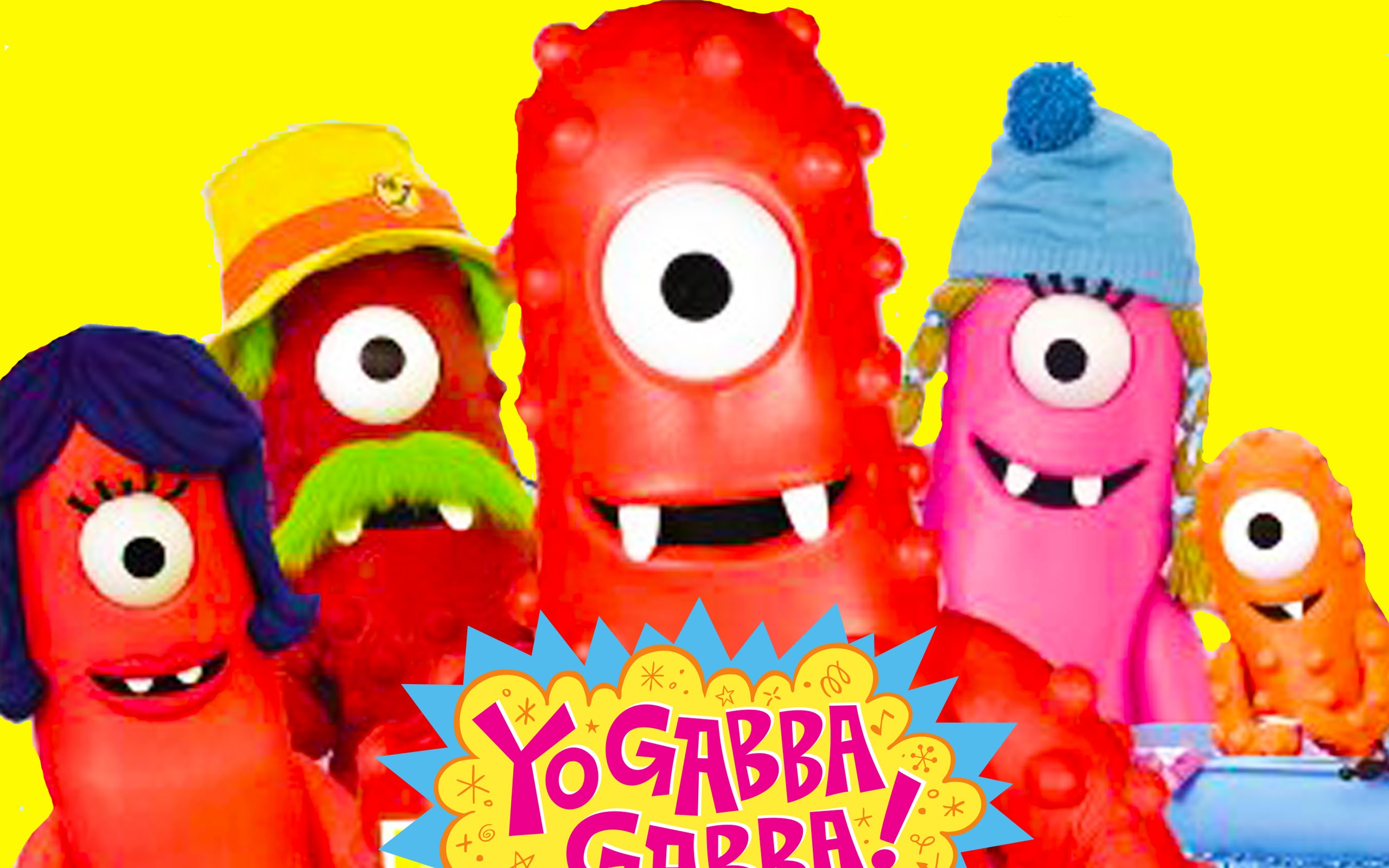
You remember the first time you saw it. Maybe you were a sleep-deprived parent or just flipping channels late at night. Suddenly, there’s a giant orange cyclops named Muno and a guy in a bright orange jumpsuit named DJ Lance Rock. It felt like a fever dream. But it wasn't. It was the yo gabba gabba cartoon era beginning, and honestly, children’s television hasn't been the same since.
Most people call it a "cartoon," but it’s actually this wild mix of live-action, puppetry, and animation. It’s weird. It’s loud. It’s surprisingly hip.
Created by Christian Jacobs and Scott Schultz, the show didn't come from a corporate boardroom at Nickelodeon. It came from two dads who were bored out of their minds by the "educational" shows their kids were watching. They wanted something that didn't treat toddlers like they had zero taste in music. They wanted Devo. They wanted Biz Markie. They got both.
The Secret Sauce of the Yo Gabba Gabba Cartoon
What most people get wrong about this show is thinking it’s just mindless colors. It’s actually built on a foundation of "indie" sensibility. If you look at the guests, it’s a who’s who of cool. Jack Black showed up in an orange jumpsuit. The Killers performed. Even My Chemical Romance did a song about snowy mountains.
It’s about the "Super Music Friends Show."
That segment alone changed how parents viewed kids' TV. Instead of "The Wheels on the Bus," you had real bands playing real instruments. It respected the audience. Kids aren't dumb. They like a good synth-pop beat just as much as an adult does.
The characters aren't just mascots either. Each one represents a specific personality trait or struggle that toddlers actually deal with.
- Muno: He’s the bumpy one. He’s tall. He represents that awkward, clumsy energy of growing too fast.
- Foofa: She’s pink and loves flowers. Typical? Maybe. But she’s the emotional heartbeat.
- Plex: The yellow robot. He’s the logic. He’s the one who beams everyone in and out of Gabba Land.
- Toodee: The blue cat-dragon. She’s the tomboy. She’s the one who wants to play ice games when everyone else is at the beach.
- Brobee: The little green one. He’s the "baby" of the group. His arms grow when he gets excited. It's a literal physical manifestation of a toddler’s mood swings.
Why the "Cool" Factor Actually Matters
There’s a reason this show won multiple Emmys and became a cultural touchstone. It didn't lecture. When the characters taught a lesson—like "Don't Bite Your Friends"—it was catchy. It was a banger.
Biz Markie’s "Biz’s Beat of the Day" taught kids how to beatbox. Think about that. Instead of learning how to color inside the lines, kids were learning rhythmic mouth sounds from a hip-hop legend. It was revolutionary. Markie brought a level of authentic joy to the screen that you just can't fake with a script.
Mark Mothersbaugh from Devo had a recurring segment called "Mark’s Magic Pictures." He’d draw something simple, and kids would follow along. It wasn't about being a "great artist." It was about the act of creation. The show stripped away the pretension of "learning" and replaced it with "doing."
The 2024 Revival: Yo Gabba GabbaLand!
Apple TV+ recently brought the franchise back under the name Yo Gabba GabbaLand!. There was a lot of skepticism. Could you capture that lighting in a bottle twice? Especially without the late Biz Markie?
Kammy Kam took over the hosting duties, and while the orange jumpsuit changed slightly, the soul stayed. The revival proved that the yo gabba gabba cartoon aesthetic is timeless. It still uses bright, saturated colors. It still uses practical sets. In an age where everything is cheap CGI, seeing real puppets in a real space feels grounded. It feels human.
The new series brought in guests like Anderson .Paak and Flea from the Red Hot Chili Peppers. It kept the DNA. It understood that the show is essentially a variety show for people who still use sippy cups.
Addressing the "Too Weird" Allegations
Some critics back in the day called the show "hipster bait." They weren't entirely wrong. But why is that bad? If a parent is engaged, the child is more likely to be engaged.
There’s this misconception that kids' media needs to be soft and quiet. Gabba is loud. It’s psychedelic. But it’s also incredibly structured. Every episode follows a rhythm. The "Dancey Dance" segments get kids moving. The "Cool Tricks" segments show real kids doing impressive things, like skating or playing the violin.
It balances the surrealism with very grounded, pro-social messages.
Wait. Let’s talk about the animation styles. The show isn't just one "look." It switches from 8-bit video game aesthetics to stop-motion to hand-drawn sketches. This constant visual shifting keeps the brain active. It mirrors how a child’s imagination actually works—it’s jumpy. It’s non-linear.
What You Can Actually Learn from Gabba Land
If you’re a creator, or just a parent trying to find the "good stuff" for your kids, there are some real takeaways here.
- Authenticity beats polish. The puppets aren't perfect. They look like they were made by hand. That’s why kids love them. They look like toys come to life.
- Respect your audience. Don't talk down. Use real music. Use real artists.
- Physicality is key. DJ Lance Rock didn't just stand there; he moved. The show encourages active participation, not passive scrolling.
Honestly, the yo gabba gabba cartoon legacy is about permission. It gave creators permission to be weird. It gave kids permission to be themselves. It’s a celebration of the "different."
How to Revisit the Magic Right Now
If you want to dive back in or introduce it to a new generation, start with the classics. Look for the "Family" episode or the "Christmas" special. You’ll see the guest stars, but you’ll stay for the vibe.
Actionable Steps for Gabba Fans:
- Check out the YouTube Archive: The official channel has high-quality uploads of the original "Super Music Friends Show" segments. It’s the best way to see the musical evolution of the show.
- Compare the Eras: Watch one episode of the original Nickelodeon run and one episode of the Apple TV+ Yo Gabba GabbaLand!. Notice how they kept the "low-fi" feel even with a bigger budget.
- Use the Music: If you’re a parent, the songs are actually functional. Use "Snackty Snack" to encourage eating or "Sleepytime" for the bedtime routine. They work better than most "baby" music because they have a legitimate groove.
- Look for the Art: Research the character designers. The aesthetic is heavily influenced by 1970s Japanese character design and indie comic book art. It’s a great rabbit hole for anyone interested in visual storytelling.
The show isn't just a memory. It’s a blueprint for how to make media that doesn't rot your brain. It’s colorful, it’s loud, and it’s exactly what we need more of. Keep dancing.



