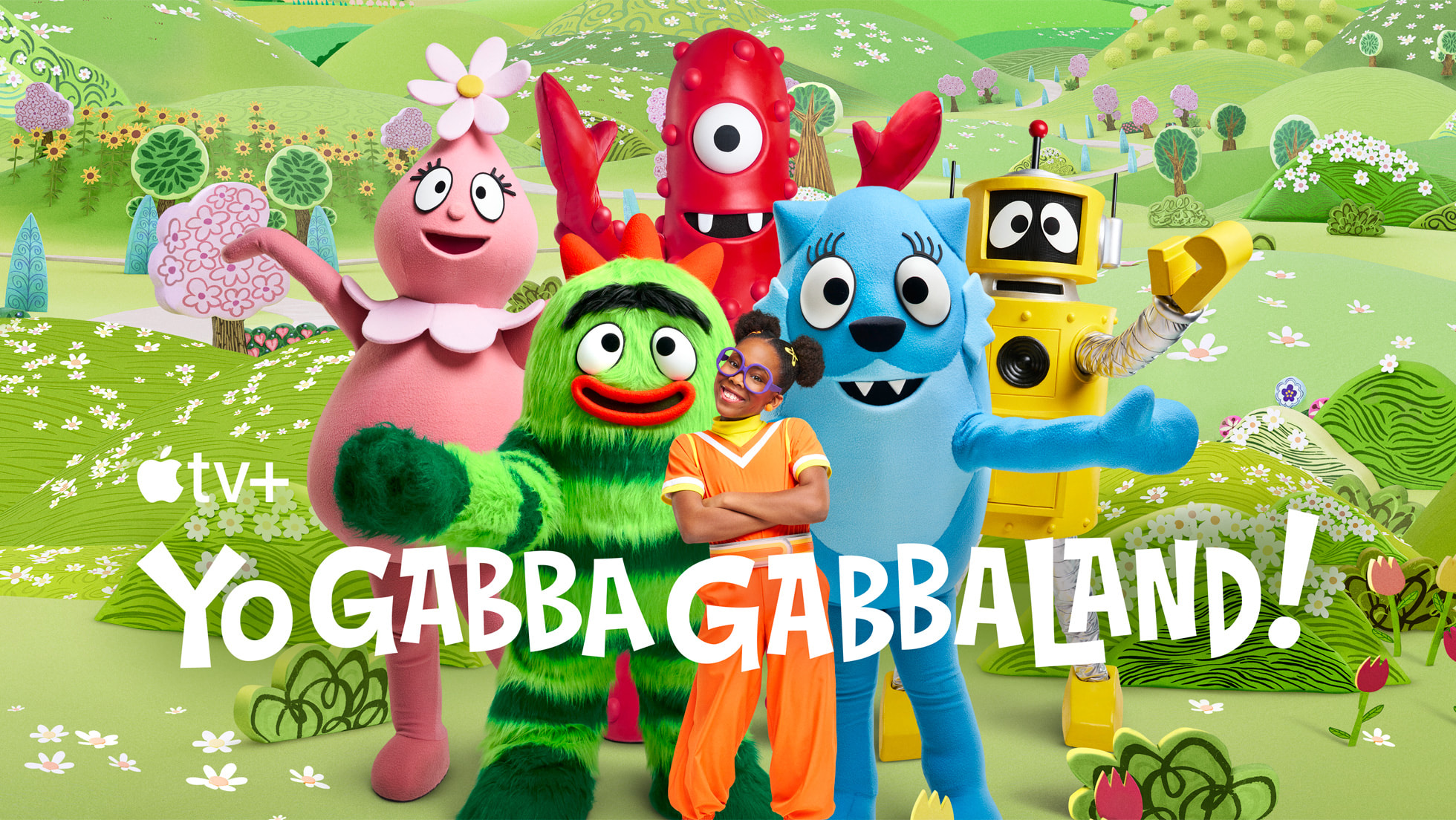
If you grew up in the late 2000s or had a toddler wandering around the living room back then, you remember the neon colors. You remember the dancing robots. Most of all, you probably remember wondering, "Who on earth came up with this?" Yo Gabba Gabba behind the scenes is a story that doesn't actually start in a corporate boardroom at Nickelodeon. It starts in a garage in Orange County with two dads who were frankly bored to tears by the children's programming available at the time.
Christian Jacobs and Scott Schultz weren't TV executives. They were musicians and skateboarders. Jacobs was actually the lead singer of the ska-punk band The Aquabats (you might know him better as the MC Bat Commander). They looked at the landscape of 2007 television and saw a lot of talking heads and slow-paced animation. They wanted something that felt like a DIY punk show mixed with H.R. Pufnstuf.
The Pilot That Almost Never Was
The industry didn't get it. Not at first.
When Jacobs and Schultz first started shopping the idea around, they were met with a lot of blank stares. Executives saw a giant orange cyclops named Muno and a green monster with long arms named Brobee and didn't see a hit—they saw a fever dream. Because they couldn't get traditional funding, they basically funded the pilot themselves. They leaned on their friends in the indie rock community. They used small sets. They kept it gritty.
Eventually, the pilot found its way onto the internet. It went viral before "going viral" was a formalized marketing strategy. It wasn't long before Nickelodeon’s Nick Jr. block realized that this weird, hyper-energetic show was exactly what parents (who were also Gen X and Millennials) actually wanted to watch with their kids.
Building the Magic: The Costumes and the Chaos
Working on Yo Gabba Gabba behind the scenes was nothing like working on Sesame Street. For starters, the costumes were incredibly hot. If you look closely at the early episodes, the performers inside those suits were often struggling with limited visibility and intense heat from the studio lights.
Muno’s suit, specifically, was a bit of a nightmare for the actor inside. Because Muno is a tall, thin cyclops, the performer's line of sight was extremely restricted. There’s a specific kind of physical comedy in the show that comes from the actors just trying to navigate the set without knocking over the props. It gave the show a tactile, "real" feeling that CGI simply can't replicate.
The set design was a deliberate throwback. They used "flats" and bright, saturated colors that felt like a 1970s variety show. They didn't want it to look perfect. They wanted it to look like something a kid could imagine in their own backyard.
Why the Guest Stars Actually Showed Up
One of the biggest mysteries for casual viewers was how a kids' show managed to book some of the coolest names in music and film. We’re talking about Jack Black, Solange, The Roots, MGMT, and even Anthony Bourdain.
The secret? It was the "cool factor" of Christian Jacobs.
Because the creators were part of the indie music scene, they reached out to people they actually knew or respected. Most of these celebrities were young parents themselves. They were tired of hearing the same three nursery rhymes on repeat. When they saw the pitch for Yo Gabba Gabba!, they realized they could go on TV, dress up in a weird costume, and perform a song that didn't sound like it was written for a toddler—even though the lyrics were about eating vegetables or not biting your friends.
Biz Markie’s involvement is a perfect example. "Biz’s Beat of the Day" wasn't some highly scripted corporate segment. It was just Biz being Biz. He would come in, get on the mic, and teach kids how to beatbox. It felt authentic because it was. He loved the kids, and the kids loved him.
The Mark Mothersbaugh Connection
You can't talk about the show's production without mentioning Mark Mothersbaugh of DEVO. He did the "Mark's Magic Pictures" segment. Having a New Wave legend on a daily kids' show was a massive flex, but for Mothersbaugh, it was a way to encourage actual creativity.
Behind the scenes, Mothersbaugh was incredibly involved in the aesthetic. He understood the "retro-futurism" the creators were going for. The show used a lot of analog synthesizers and 8-bit sounds. This wasn't an accident. They wanted the music to be "earworms" for the kids but also legitimately good tracks for the parents. If you find yourself humming "There's a Party in My Tummy" at 11:00 PM on a Tuesday, the producers have won.
The Mystery of DJ Lance Rock
Lance Robertson, known as DJ Lance Rock, was a real-life record store clerk before he became the face of the franchise. He wasn't a trained actor. Jacobs and Schultz knew him from the local music scene in Los Angeles.
His orange suit and "boombox" became iconic, but in reality, Lance is a pretty soft-spoken, low-key guy. On set, he was the glue that held the madness together. While the costumed characters were running around and the guest stars were trying to figure out their lines, Lance provided a calm, steady presence. He treated the characters as real people, which is a big reason why children connected with them so deeply. He never "winked" at the camera. He played it straight.
The Recent Revival: To Gabba and Beyond
After a long hiatus, the show saw a massive resurgence with Yo Gabba GabbaLand! on Apple TV+. Moving the production to a new era meant dealing with much higher technical standards, but the creators were adamant about keeping the "handmade" feel.
They still use practical suits. They still use bright, flat colors.
The big difference now? The kids who watched the original show are now the ones producing it, animating it, and guest-starring in it. It’s a full-circle moment for the "Gabba" family.
What You Can Learn from the Gabba Method
Looking back at the history of the show, it's clear that its success wasn't about a big budget. It was about a very specific point of view.
- Trust the "Weird" Ideas: If the creators had listened to the first ten people they pitched to, the show wouldn't exist.
- Respect the Audience: They never talked down to kids. They assumed kids could appreciate good music and interesting art.
- Niche is the New Scale: By making a show for "skater dads," they ended up making a show that the whole world loved.
If you’re looking to dive deeper into the history of the show, your best bet is to track down the original Aquabats pilots or look for the early "remix" videos the creators made before the Nickelodeon deal. You'll see the DNA of the show—messy, loud, and incredibly fun. To truly appreciate the craft, watch the episodes featuring "Super Music Friends Show" and pay attention to the lighting and camera angles; they often mimic 1960s rock documentaries more than modern television.
Stop looking for the "corporate" version of this story. There isn't one. It’s just a few guys with a boombox and a dream that actually worked.



