Walk into any thrift store or scroll through a vintage streetwear account, and you’ll eventually hit a wall of neon orange or a giant, cyclopean red monster. It’s unavoidable. For a show that premiered nearly two decades ago, Yo Gabba Gabba! has a weirdly ironclad grip on our collective consciousness. It wasn't just another bright, loud distraction for toddlers. It was a cultural anomaly. Created by Christian Jacobs (the lead singer of The Aquabats) and Scott Schultz, the show felt less like Barney and more like a fever dream curated by people who actually liked Devo and old-school hip-hop.
It was bold. It was loud. It was genuinely cool.
Most kids' shows are designed by committees of developmental psychologists. This one? It was born from two dads who were bored to tears by what was on TV. They wanted something they could actually watch with their kids without losing their minds. Honestly, they succeeded beyond anyone's wildest expectations. From the moment DJ Lance Rock stepped onto that white stage and placed his boombox down, the rules of children’s programming were essentially set on fire.
Why the Yo Gabba Gabba! Aesthetic Still Works
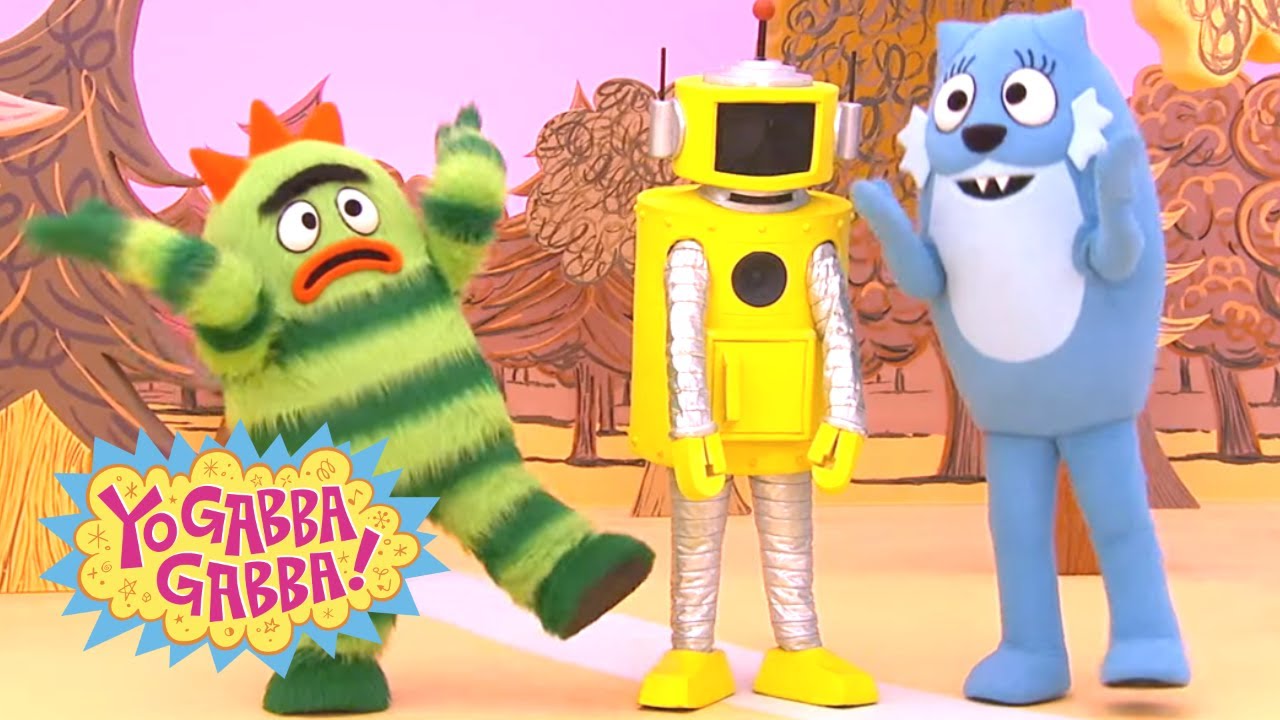
The visual language of the show is a massive part of why it stays relevant. You’ve got five creatures that shouldn't make sense together. Muno is a red cyclops. Foofa is a pink flower bubble. Brobee is a green striped thing with long arms. Toodee is a blue cat-dragon, and Plex is a yellow robot. It’s chaotic. Yet, it works because it draws from a very specific well of "Low-brow" art and 1970s Japanese "Kaiju" culture.
The colors are saturated. Everything vibrates with energy.
When you look at modern shows like Cocomelon, they feel sterile. They’re mathematically designed to hold attention. Yo Gabba Gabba! felt handcrafted. It had that indie-rock, DIY spirit where everything looked like it was made of felt, cardboard, and pure imagination. It didn’t talk down to kids. Instead, it invited them into a clubhouse where the music was actually good and the guests were people your cool older brother liked.
The Secret Sauce: Music That Didn't Suck
The "Super Music Friends Show" segment was a stroke of genius. Think about the lineup. You had The Shins, MGMT, The Roots, Weezer, and even Jack Black. These weren't just celebrities doing a cameo for a paycheck; they were artists performing original songs that fit their style while teaching kids about things like "brushing your teeth" or "not hitting your friends."
Biz Markie’s "Biz’s Beat of the Day" was another pillar. Watching a legendary hip-hop figure teach toddlers how to beatbox is objectively one of the greatest things to ever happen on Nickelodeon. It gave the show a level of street cred that no other preschool program could touch. It bridged the gap between generations. You had parents who grew up on 80s rap and 90s indie rock finally finding a common ground with their three-year-olds.
Mark Mothersbaugh of Devo doing "Mark’s Magic Pictures" was the cherry on top. He brought this eccentric, artsy energy that reminded everyone that being "weird" was actually a superpower.
The 2024 Revival: Yo Gabba GabbaLand!
For years, fans wondered if the magic could ever be captured again. Then Apple TV+ stepped in. Yo Gabba GabbaLand! premiered in 2024, and the biggest question was whether it would lose its soul in the transition to a modern streaming budget. Kamryn Smith took over the hosting duties as Kammy Harper, bringing a fresh but familiar energy to the land.
They kept the costumes. They kept the vibe.
The revival proved that the formula wasn't just a product of the mid-2000s indie-sleaze era. It was timeless. The new series brought in guests like Flea, Anderson .Paak, and Thundercat. It’s rare for a reboot to feel this authentic, but because Jacobs and Schultz stayed involved, it didn't feel like a corporate skin-suit version of the original. It felt like coming home.
Breaking the Fourth Wall and Teaching Real Lessons
Most shows teach "lessons." You know the drill. A character does something bad, they learn why it’s bad, and they sing a song about it. Yo Gabba Gabba! did this, but it felt less like a lecture and more like a mantra. "Don't Bite Your Friends" isn't just a song; it's a legitimate banger that parents still quote to this day.
The "Dancey Dance" segments encouraged physical movement in a way that felt like a party, not a gym class. It utilized a format of repetition that mimicked how kids actually learn—through rhythm and physical memory.
Lessons that stuck:
- Food choice: "Try it, you'll like it" helped a generation of parents get their kids to eat broccoli.
- Emotional intelligence: Highlighting that it's okay to be sad or angry, and providing "The Sneeze" or "The Hug" as physical outlets.
- Social cues: Understanding personal space and sharing without the heavy-handed moralizing found in Caillou.
The Legacy of DJ Lance Rock and the "Cool Dad" Era
Lance Robertson, the man behind DJ Lance Rock, became an overnight icon. He wasn't a traditional "actor." He was a DJ from Los Angeles who brought a sincere, gentle enthusiasm to the role. He wasn't wacky for the sake of being wacky. He was just... nice. His presence grounded the show.
This era of TV coincided with the rise of the "Brooklyn Parent"—the generation that didn't want to stop going to concerts just because they had a stroller. Yo Gabba Gabba! catered to them perfectly. It validated their identity. It said, "Hey, you can be a parent and still like The Flaming Lips."
Why We Still Care About Yo Gabba Gabba!
It’s about the soul of the production. In an age where AI-generated content is flooding YouTube Kids with weird, uncanny valley animations, the tactile nature of Yo Gabba Gabba! is a relief. You can see the texture of the costumes. You can see the real sweat on the guests' faces as they dance.
It represents a peak in creative children's media where the goal wasn't just "educational minutes per hour" but "joy per second."
It’s also surprisingly deep. There are theories about the Gabba gang being representations of different psychological archetypes, or the land itself being a metaphor for a child's developing brain. While that might be overthinking it, the fact that people bother to overthink it says everything. You don't write essays about Blippi. You write them about things that have layers.
Moving Forward With the Gabba Gang
If you’re a parent now, or just someone nostalgic for the days of "heebie-jeebies," there are actually things you can do to bring that energy back into your life. The show was always meant to be active, not passive.
- Check out the new episodes: Yo Gabba GabbaLand! on Apple TV+ is genuinely good. It’s not a hollow reboot.
- Dig into the soundtracks: The music stands on its own. Put on the Yo Gabba Gabba! Hey! compilation next time you're in the car. It’s better than 90% of what's on the radio.
- Support the artists: Many of the animators and musicians who worked on the show, like the late Biz Markie or the various indie bands, have huge bodies of work that carry that same spirit of fun and eccentricity.
- Embrace the DIY ethos: Use the show’s art style as inspiration for craft time. It was built on the idea that anyone can create something cool if they have enough felt and a good beat.
The world is a lot louder and more complicated than it was in 2007. But the simple message of the show—to be awesome, to be kind, and to dance—is probably more necessary now than it ever was. So, find your "Dancey Dance." Put on some bright colors. Just remember: don't bite your friends. It's really that simple.



