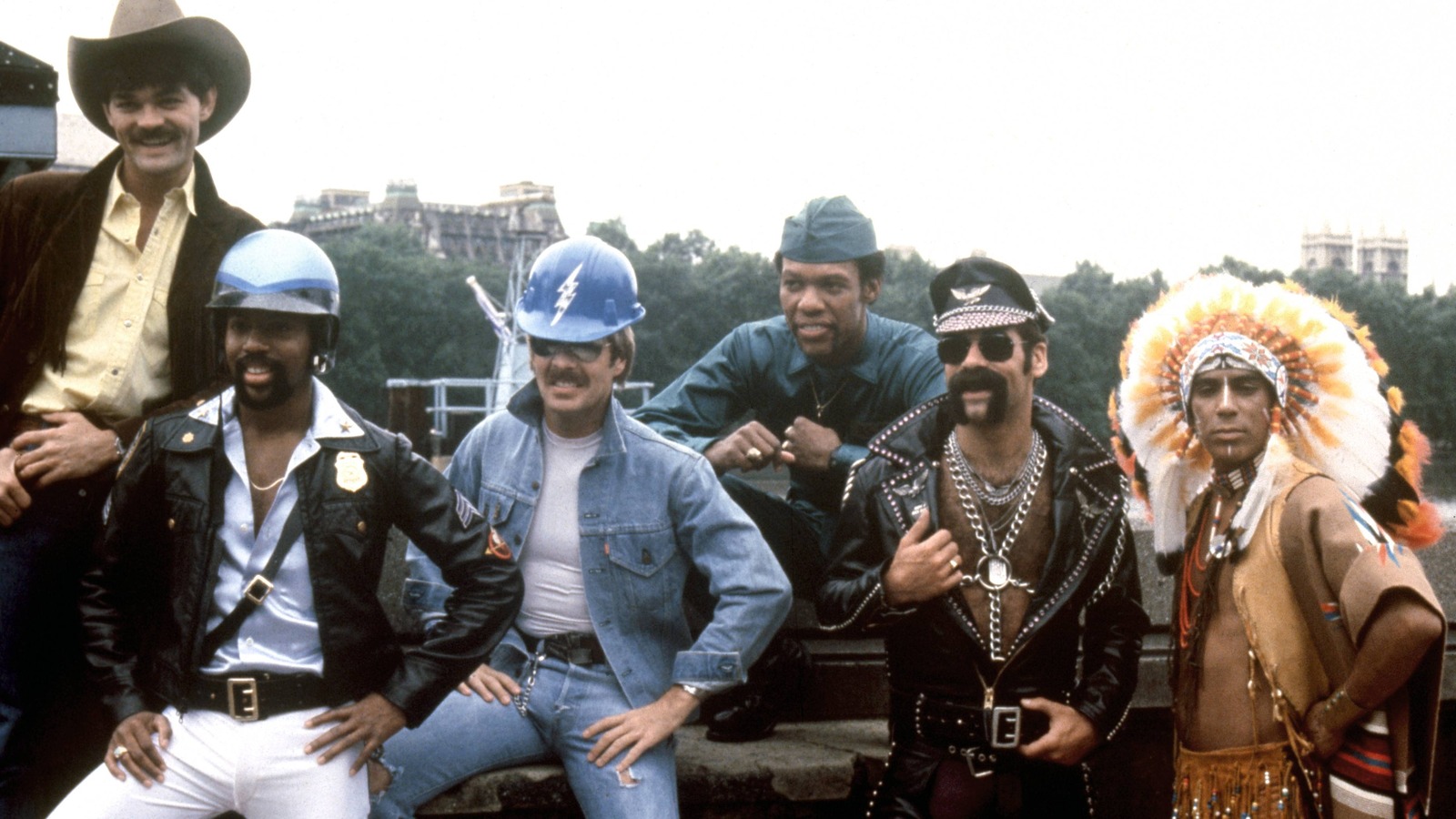
It is impossible to escape. You’ve heard it at every wedding, every baseball game, and every awkward corporate retreat since 1978. When those first brassy notes of the YMCA Village People hit, the dance floor magically fills with people of all ages frantically throwing their arms above their heads to form four specific letters. It’s a cultural phenomenon that has outlived the disco era, the AIDS crisis, and several shifts in how we consume music. But if you think this song is just a goofy track about staying at a gym, you’re missing the actual history of one of the most successful "hiding in plain sight" anthems ever recorded.
Honestly, the sheer ubiquity of the song has sort of sanitized it. We see it as a "family-friendly" party jam now. That’s pretty hilarious when you consider where it came from.
The song wasn't just some random fluke. It was a calculated piece of pop brilliance written by Jacques Morali and Victor Willis. Morali was the mastermind behind the Village People, a group specifically designed to play with American masculine archetypes—the Cowboy, the Construction Worker, the Biker. But the YMCA Village People track itself was born out of a very specific time and place: the gay subculture of late-70s New York City.
The Secret History of the YMCA Village People Hit
Let's get one thing straight: the Young Men's Christian Association was not exactly thrilled when the song first dropped. In fact, they sued. They eventually dropped the suit once they realized the song was basically a multi-million dollar global advertisement for their facilities, but the initial friction was real.
Why the tension? Because in the 1970s, the YMCA on 23rd Street and the McBurney YMCA in Manhattan were well-known hubs for gay men. It was a place where you could get a cheap room, a hot shower, and—crucially—meet other men in a relatively safe environment.
When Victor Willis wrote the lyrics, he always maintained a certain level of "plausible deniability." He’s often said the song was about the camaraderie of the streets and young Black youth finding a place to hang out. But Morali, who was gay, knew exactly what the subtext was. That’s the magic of the song. It’s a double entendre that lasts four minutes and forty-seven seconds. To a kid in the Midwest, it’s about basketball and swimming. To a gay man in Chelsea in 1978, it was about a specific kind of liberation.
It’s a masterclass in songwriting. Simple. Catchy. Relatable.
Why That Infamous Dance Didn't Even Start With the Band
You’d think the Village People choreographed the arm movements, right? Wrong. They didn't.
During an appearance on American Bandstand in 1979, the audience started doing the letters during the chorus. The band saw it from the stage and just rolled with it. It wasn’t a planned marketing stunt. It was an organic, weird moment of crowd participation that became the song's permanent shadow. You literally cannot hear the song now without your brain signaling your muscles to move.
It's one of the few songs in history where the dance is more famous than the actual lyrics. Do most people know the second verse? Probably not. They’re too busy waiting for the "Y."
The production on the track is also surprisingly sophisticated for what people dismiss as "disposable disco." The horns are tight. The bassline is driving but melodic. Willis’s lead vocal has a gospel-inflected grit that gives the song more soul than your average studio project. It’s a "wall of sound" approach that makes it feel massive even on a tinny radio speaker.
The Trump Era and the Song’s Bizarre Second Life
One of the weirdest chapters in the history of the YMCA Village People legacy is its recent adoption by Donald Trump. For years, he used it as his closing rally song.
Think about that for a second.
A song deeply rooted in 1970s gay culture, written by a French-Moroccan gay man and a Black lead singer, became the anthem for a conservative political movement. Victor Willis eventually took legal action to stop the use of the music, but the irony was lost on most of the crowds. It proves that the song has reached a level of "folk music" status. It no longer belongs to the creators; it belongs to the public. It’s a blank canvas where people project whatever meaning they want.
The Numbers Don't Lie
If you want to talk impact, look at the data.
- The single sold over 10 million physical copies worldwide.
- It reached number 2 on the Billboard Hot 100 (kept off the top spot by Rod Stewart and Chic).
- It has been covered by everyone from the Muppets to the Royal Philharmonic Orchestra.
But the real success isn't in the sales. It's in the endurance. Most disco tracks from 1978 are artifacts. They sound dated. They feel like a costume party. But "Y.M.C.A." feels oddly timeless because it taps into a universal human need: the desire to find a place where you belong when you're "short on your dough."
How to Actually Appreciate the Song Today
If you want to get the most out of the YMCA Village People experience, you have to look past the wedding reception cheese.
Listen to the 12-inch extended version. Pay attention to the percussion. The song is actually a very tight piece of funk-disco fusion. Also, look at the lyrics through the lens of 1970s urban decay. It’s actually a song about being broke and lonely in a city that doesn't care about you.
"No man does it all by himself."
That's a heavy line for a song we usually associate with drunk uncles. It’s about community. It’s about the fact that even in the grittiest parts of New York, there was a sanctuary where you could get a "clean meal" and "do whatever you feel."
Practical Steps for Music Buffs and Creators
To truly understand the impact of the Village People, don't just stop at the hits.
- Listen to "Macho Man" and "In the Navy" back-to-back. You'll notice the formula Morali used: a driving 4/4 beat, a hyper-masculine vocal delivery, and a chorus designed for shouting.
- Watch the 1980 film Can't Stop the Music. It is widely considered one of the worst movies ever made, but it’s an incredible time capsule of the band's peak and the eventual death of the disco movement.
- Research the McBurney YMCA. Understanding the geography of the song changes how you hear it. It moves from a generic gym to a specific landmark in the history of civil rights and social subcultures.
- Analyze the vocal range. Victor Willis wasn't just a "character." He was a powerhouse vocalist. Try singing "Y.M.C.A." in the original key—it’s higher and more demanding than most people realize.
The song is a paradox. It’s the most overplayed track in history, yet its true meaning is still largely misunderstood by the general public. It’s a celebratory anthem for everyone, built on the foundations of a specific community's struggle for a place to exist. Next time you see a room full of people throwing their hands up, remember that you’re witnessing a piece of social history, disguised as a three-chord pop song.
Stop treating it like a joke. Start treating it like the landmark of 20th-century pop culture that it actually is. Understanding the context doesn't ruin the fun; it makes the joy of the song feel a lot more earned.



