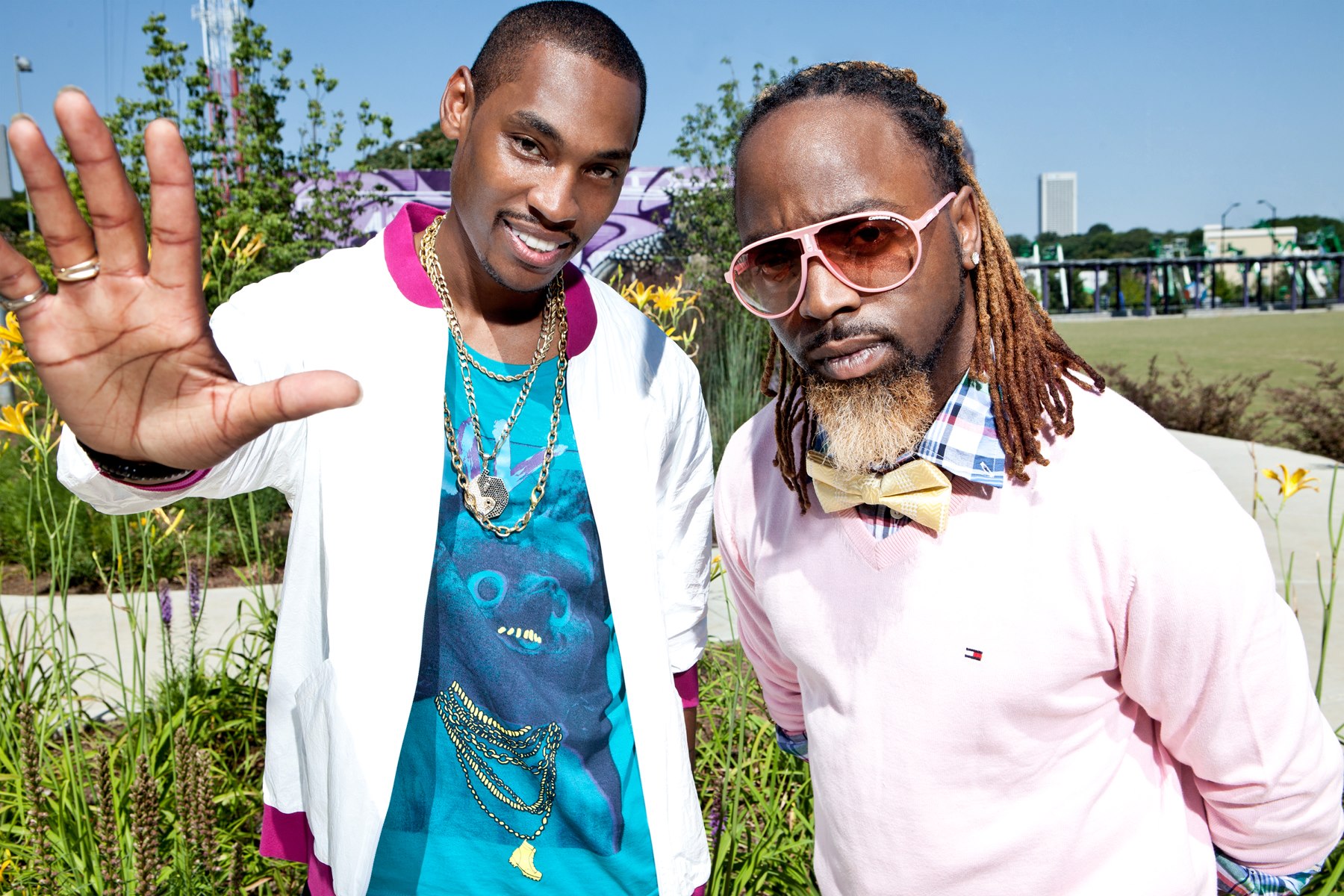
If you stepped into a club anywhere in the United States between 2003 and 2006, you didn't just hear the Ying Yang Twins. You felt them. The floorboards rattled, the windows shook, and usually, someone was whispering very loudly into your ear about a "whisper song."
D-Roc and Kaine—the duo behind the name—weren't actually twins, but they shared a chemistry that basically defined the crunk era. People often dismiss them as just "party music," but when you look back at the Ying Yang Twins albums, there’s a weirdly brilliant architecture to their chaos. They weren’t trying to be Nas. They were trying to be the loudest thing in your trunk. And for a solid five years, they were.
The Raw Energy of the Early Years
Most people think the story starts with Lil Jon, but it actually starts in 2000 with Thug Walkin’. This was Atlanta before it became the undisputed center of the rap universe. The album was rough. It was gritty. It had "Whistle While You Twurk," which was basically the national anthem for Magic City and every other strip club in the A.
They weren't polished. D-Roc was born with an underdeveloped left hand, and Kaine had a mild case of cerebral palsy that gave him a distinct limp. They leaned into it. They called themselves the Ying Yang Twins because they were two "imperfect" pieces making a whole. Honestly, that kind of vulnerability is rare in an era that was all about hyper-masculine posturing.
Then came Alley: The Return of the Ying Yang Twins in 2002. It didn’t set the world on fire immediately, but it had "Say I Yi Yi." If you haven't heard that track in a while, go back and listen. The energy is frantic. It’s the sound of a basement party getting out of hand. It sold about 440,000 copies—not quite gold, but enough to make the industry realize these guys weren't going away.
Me & My Brother: The Platinum Peak
Everything changed on April 12, 2005. That was the day Me & My Brother was officially certified Platinum by the RIAA. This is the one. If you only own one of the Ying Yang Twins albums, it’s probably this one.
Released in late 2003, it was the perfect storm. You had Mr. Collipark’s production, which was basically the sonic equivalent of a caffeine overdose. Then you had the Lil Jon collaboration "Salt Shaker."
"We took bass music and slowed it down and continued on with what was already going on, but the labels didn't know how to promote it." — Kaine, via Encyclopedia.com.
The tracklisting on Me & My Brother is a relentless assault of hits:
- "Naggin’" – A song about exactly what you think it’s about.
- "What’s Happnin!" – Featuring Trick Daddy, which added some Florida grit to the mix.
- "Georgia Dome" – The spiritual successor to "Get Low."
The album peaked at number 11 on the Billboard 200. Not bad for two guys who recorded their debut in a single week. It was loud, it was obnoxious, and it was exactly what the culture wanted.
The Whisper that Changed Everything: U.S.A. (United State of Atlanta)
By 2005, crunk was the biggest thing in the world. But instead of going louder, the Twins went quiet. "Wait (The Whisper Song)" is one of the weirdest hits in hip-hop history. It’s just a minimal beat and two guys whispering some of the most suggestive lyrics ever to hit Top 40 radio.
It was the lead single for U.S.A. (United State of Atlanta). This album was their commercial high-water mark, debuting at number 2 on the Billboard 200. It felt like a victory lap. They had Pitbull on "Shake," Mike Jones on "Badd," and even Anthony Hamilton for a bit of soul on "Long Time."
It’s a massive record. 23 tracks. It’s bloated, sure, but that was the style at the time. You weren't supposed to listen to it front-to-back in a quiet room; you were supposed to cherry-pick the bangers for your mixtape.
A Quick Breakdown of Their Discography
If you're looking to dive back in, here is how the studio albums stack up:
- Thug Walkin' (2000): The indie roots. Essential for "Whistle While You Twurk."
- Alley: The Return of the Ying Yang Twins (2002): The transition phase.
- Me & My Brother (2003): The masterpiece. This is the peak of the Collipark sound.
- U.S.A. (United State of Atlanta) (2005): The blockbuster. Most polished and guest-heavy.
- Chemically Imbalanced (2006): The experimental shift. Produced largely by Wyclef Jean, it was a weird departure that fans didn't quite vibe with at the time.
- Ying Yang Forever (2009): The final major studio effort. By this point, the crunk wave had mostly crashed.
The Decline and the Legacy
Why did it stop? Honestly, music moves fast. By 2007, the "snap" music of Soulja Boy and the futuristic "ringtone rap" era were taking over. The raw, distorted bass of the Ying Yang Twins albums started to feel like a relic of the early 2000s.
Chemically Imbalanced was a strange move. Working with Wyclef Jean gave them tracks like "Dangerous," but it lacked that specific "stink" that Mr. Collipark brought to the table. Critics at the time, like the folks at RapReviews, noted that the duo's simplistic rhymes couldn't always carry a whole album without those massive, hypnotic beats.
But here’s the thing: they won. They defined a specific era of Atlanta culture. You can’t talk about the history of Southern Rap without mentioning the Twins. They brought a sense of humor and a chaotic, high-energy performance style that influenced a whole generation of "party" rappers.
Even now, in 2026, you'll still hear "Salt Shaker" or "Wait" at every wedding, sporting event, or throwback night. It’s timeless in its own specific, rowdy way.
Actionable Insights for the Modern Listener
If you’re revisiting the Ying Yang Twins albums today, don’t look for lyrical miracles. Look for the pocket.
- Start with the "My Brother & Me" Remix Album: It actually contains some of the best versions of their hits and shows how well their sound worked with other artists.
- Check out the B-Sides on U.S.A. (Still United): There are some gems there, like "Bedroom Boom," that often get overlooked.
- Watch the Live Performances: If you can find old footage from 2004, watch it. Their energy was unmatched.
- Focus on the Production: Listen to what Mr. Collipark was doing with 808s. It was ahead of its time and laid the groundwork for the trap music that would eventually dominate the world.
The Twins might not be topping the charts anymore, but their fingerprints are all over the current state of hip-hop. They proved that you don't need a "perfect" image or complex metaphors to move a crowd. Sometimes, you just need a big beat and the confidence to whisper in someone's ear.



