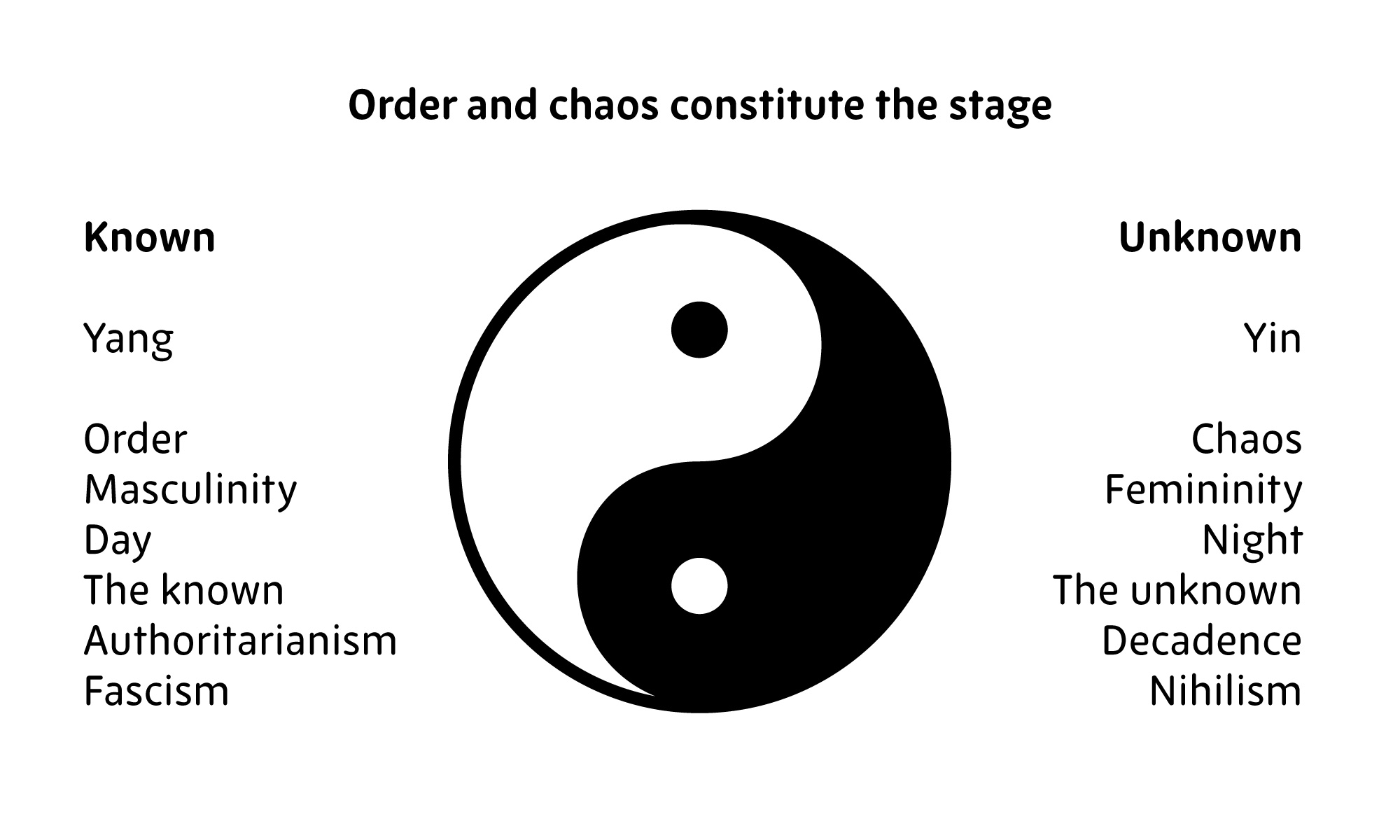
You’ve seen it on t-shirts, tattoos, and cheap plastic keychains in every gift shop from San Francisco to Shanghai. That swirling black-and-white circle usually gets summed up as "good vs. evil" or "light vs. dark." But honestly? If you think the yin yang is just a Chinese version of a Star Wars Force battle, you’re missing the point entirely.
It isn't a struggle. It's a dance.
Ancient Chinese philosophy doesn't view the world as a battlefield where one side has to win. That’s a very Western way of looking at things. Instead, the concept of yin yang suggests that everything in the universe is made of two opposing but deeply interconnected forces. They don't just tolerate each other; they literally cannot exist without each other.
Think about it. You can't have a "high" without a "low." You don't know what "hot" is unless you've felt "cold." It’s basically the ultimate operating system for reality.
The Reality of What Yin Yang Mean in Daily Life
When we ask what do yin yang mean, we have to look back at the I Ching and the early Taoist thinkers like Lao Tzu. They weren't just being poetic. They were observing how nature actually works. They saw that the sun goes down (yin) so the moon can rise (yang). They saw that winter’s stillness is what allows spring’s growth to happen.
Yang is the sunny side of the mountain. It’s active, bright, hard, and fast. Think of a thunderstorm, a sprint, or the midday heat. Yin is the shady side. It’s receptive, dark, soft, and slow. Think of a quiet lake, a deep breath, or the cold soil in January.
Most people get tripped up here because they want to assign moral values to these traits. They think yang is "good" because it's bright and yin is "bad" because it's dark. That's a huge mistake. Too much yang is a forest fire; too much yin is a stagnant swamp. Balance is the only "good" in this system.
Why the Dots Matter So Much
Look closely at the symbol—technically called the Taijitu. You’ll notice a white dot in the black swirl and a black dot in the white one. That’s the most important part of the whole design. It signifies that nothing is ever 100% one thing.
Deep inside the coldest winter (yin), the seed of summer’s heat (yang) is already starting to stir. In the middle of a frantic, high-energy work day (yang), you eventually feel the pull of exhaustion and the need for sleep (yin). One always flows into the other. It’s a circle, not a line.
The Five Elements and the Rhythm of Health
In Traditional Chinese Medicine (TCM), practitioners don't just look at symptoms; they look at your yin yang balance. Dr. Keh-Chung Lin and other researchers in integrative medicine often discuss how the body maintains homeostasis through these polarities. If you’re constantly stressed, "wired but tired," and running on caffeine, you have an excess of yang. Your body is literally burning up.
To fix it, a TCM doctor wouldn't just give you a pill. They might suggest yin-nourishing foods like cucumber or melon, or lifestyle changes that force you to slow down.
- Yang excess symptoms: Inflammation, high blood pressure, irritability, insomnia.
- Yin excess symptoms: Lethargy, cold limbs, bloating, depression.
It’s all about the pivot. Life is a constant adjustment. You aren't "balanced" once and for all; you are balancing every single second. Like riding a bike. You're always leaning a little left or right to stay upright.
Modern Misconceptions and the Gender Trap
We need to talk about the male/female thing. Historically, yang was associated with the masculine and yin with the feminine. In the context of ancient agrarian societies, this was a way to categorize social roles and physicalities.
In a modern context, it’s much more useful to view these as energies that every single person possesses, regardless of gender. A "masculine" person needs yin (empathy, rest, intuition) to be a functional human. A "feminine" person needs yang (logic, drive, boundaries) to navigate the world. When we strictly gender these forces, we lose the nuance of the philosophy. It becomes a cage instead of a map.
How to Use Yin Yang to Fix Your Schedule
Most of us are yang-obsessed. We live in a culture that prizes "the grind," "hustle," and constant "growth." But eternal growth is the logic of a cancer cell. It isn't sustainable.
If you want to actually apply what do yin yang mean to your life, look at your calendar. Do you have "input" time to match your "output" time? If you spend eight hours staring at a screen and talking (yang), you need a few hours of silence or reading (yin) to reset. If you don't, you hit burnout. Burnout is just your body forcing yin because you refused to choose it.
Actionable Steps for Real-World Balance
- Identify your current state. Are you feeling scattered and frantic (too much yang)? Or are you feeling stuck, heavy, and unmotivated (too much yin)?
- Apply the opposite. If you're too yang, go for a slow walk without a podcast. Eat something "cool" like leafy greens. If you're too yin, do twenty jumping jacks, take a cold shower, or tackle a difficult task you've been avoiding.
- Watch the transitions. Notice how you feel at sunset and sunrise. These are the "liminal" spaces where the energy shifts. Instead of rushing through them, try to just exist in the transition for five minutes.
- Stop labeling feelings. Instead of saying "I feel bad," try "I feel a bit too much yin today." It takes the judgment out of it and turns it into a physics problem you can solve.
The beauty of this philosophy is its total lack of guilt. There is no "sin" in being out of balance; there is only the natural consequence of it. The universe is always trying to return to the center. You can either fight that movement or learn to ride the wave.
Understanding what do yin yang mean isn't about memorizing ancient texts. It's about looking at your own life and realizing that the "bad" times are often just the necessary shadow that makes the "good" times visible. Everything changes. The circle keeps turning. The only thing you can really control is how gracefully you move with it.
Next Steps for Deepening Your Practice:
- Audit your environment: Check your living space. Is it all bright lights and hard surfaces (Yang)? Add some soft textures or plants (Yin).
- Track your energy cycles: Spend one week noting when your energy peaks and when it craters. Don't fight the craters; plan your low-intensity tasks for those times.
- Practice "Non-Doing": Spend ten minutes a day doing absolutely nothing productive. This strengthens your "Yin" muscle, which is usually the weakest part of a modern person's psyche.



