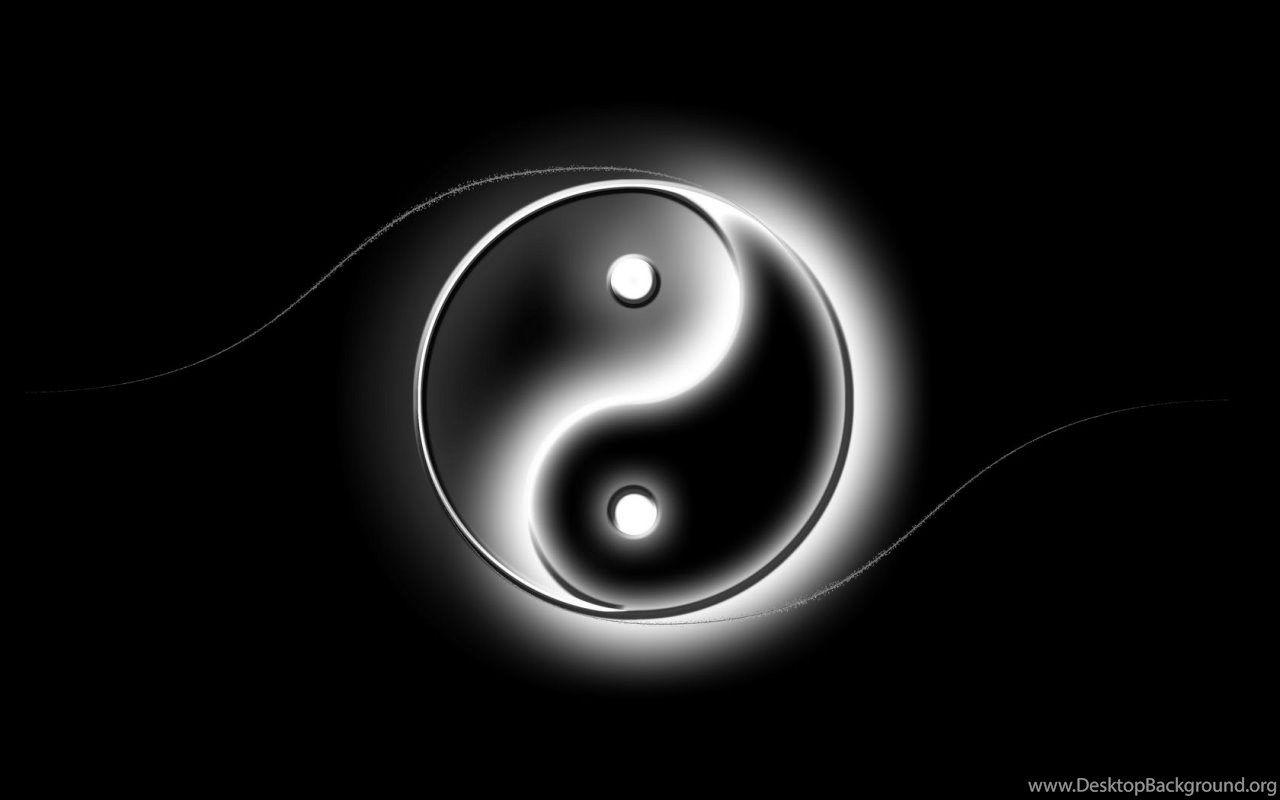
You’ve seen it everywhere. The little black-and-white circle on a wrist, a neck, or tucked behind an ear. It’s one of the most recognizable icons on the planet, but honestly, most people getting a yin yang tattoo—or what some search for as a "jing and jang" tattoo—don't actually know the depth of what they’re putting on their skin. It’s not just about "good vs. evil" or "dark vs. light" in the way Western movies like to portray it. It is way more complex than that.
The symbol is called the Taijitu.
It represents a philosophy that has been around since at least the 3rd century BCE, spearheaded by thinkers like Zou Yan. The idea is simple but heavy: everything in the universe is made of two opposite but complementary forces. One cannot exist without the other. Period.
The Real Philosophy Behind Your Ink
Forget the idea that the black side is "bad" and the white side is "good." That is a massive misconception. In Taoism, neither side is superior. They are two halves of a whole.
Think about it this way. You can’t have a mountain without a valley. You can’t have the heat of summer without the cold of winter. They aren't fighting; they're dancing. This is why the line between them is a curve, not a straight wall. It’s meant to show movement. It’s an "S" curve because yin is always turning into yang, and yang is always turning into yin.
What the Dots Actually Mean
Those little dots? They’re the most important part. They represent the "seed" of the opposite.
- The white dot in the black section means there is always a glimmer of light in the deepest darkness.
- The black dot in the white section means even in the most perfect, bright moments, there’s a bit of shadow.
Nothing is ever 100% one thing. That’s why a yin yang tattoo is so popular for people who have gone through some serious life changes. It’s a reminder that your "dark" phases aren't permanent and your "light" phases need to be appreciated because life is constantly shifting.
Popular Designs and Why They Work
If you're looking for a yin yang tattoo, you don't have to stick to the basic circle. People are getting really creative with this lately.
One of the coolest versions is the Koi Fish Yin Yang. In Chinese culture, koi represent perseverance and luck. When two koi are tattooed swimming in a circle, they naturally form the shape of the Taijitu. One is usually dark and one is light. It’s a gorgeous way to show that life is a flow.
Then you have the Dragon and Tiger. This is a powerhouse of a design. The dragon represents the "yang" (active, masculine, sky energy), while the tiger represents "yin" (passive, feminine, earth energy). When they’re together, it’s about balancing raw power with internal spirit. It’s a big, bold choice, usually seen on back pieces or sleeves.
Don't ignore the Sun and Moon version either. This is a classic for a reason. It maps the philosophy directly onto the sky. It’s literally the most basic human experience of duality: day and night.
Trends to Watch in 2026
Lately, we’re seeing a shift toward "negative space" designs. Instead of using heavy black ink for the yin side, artists are using the natural skin tone for one half and just outlining the other. It looks incredibly clean. There’s also a rise in "Cybersigilism" takes on the symbol—sharp, thin, bio-mechanical lines that make the ancient symbol look like something out of a sci-fi movie.
Where Should You Put It?
Placement is everything. Since the symbol is circular, it fits perfectly on "flat" areas of the body where it won't warp too much.
- The Inner Wrist: Perfect for small, minimalist versions. You can look down and see it whenever you need a reminder to stay centered.
- The Sternum: A very popular spot for women. It sits right over the heart, symbolizing internal balance.
- The Nape of the Neck: It’s subtle. You can hide it with hair or show it off with an updo.
- The Calf or Forearm: Better for the more detailed versions like the koi or the dragon/tiger combo.
A quick word of advice from someone who has seen a lot of these: make sure your artist is good with circles. A wobbly circle is the fastest way to ruin a yin yang tattoo. It’s a geometric shape at its core, and if the symmetry is off, the whole "balance" vibe is gone.
Why This Tattoo Still Matters
People sometimes call these "cliché," but honestly, a symbol that has survived for thousands of years isn't a "trend." It’s a fundamental truth. We all struggle with balance. We all have moments where we feel too "yang" (stressed, aggressive, burnt out) or too "yin" (unmotivated, sad, stagnant).
Wearing this symbol is like carrying a compass. It tells you that the goal isn't to be "perfect" or to get rid of the "bad" parts of yourself. The goal is to make sure the two sides are talking to each other.
Before You Get Inked
- Research the History: Read up on the I Ching or the Tao Te Ching. It’ll make the tattoo feel more like a part of you and less like something you saw on Pinterest.
- Think About Color: While black and white is traditional, blue and red or gold and silver are becoming huge. Just make sure the contrast is high enough so the "duality" isn't lost.
- Talk to Your Artist: Tell them why you’re getting it. They might have a way to customize the "seed" dots into something personal, like a tiny star or a specific flower.
When you finally get your yin yang tattoo, remember that it’s a living symbol. It’s a reminder that life is a cycle. You’re never stuck in one place forever. Everything is moving, everything is changing, and as long as you have that balance, you’re doing just fine.
To get the most out of your design, spend some time looking at different art styles—like fine-line, traditional, or even watercolor—to see which one matches your personal energy before you book your appointment. Check the artist’s portfolio specifically for geometric work to ensure they can handle the circular symmetry required for a clean finish. Once you have your design, prioritize aftercare with a high-quality, fragrance-free moisturizer to keep the contrast between the black and white sections sharp for years to come.



