You’ve seen it on the back of a leather jacket, etched into a surfer’s forearm, or dangling from a rearview mirror. That swirling black-and-white circle is everywhere. But when people start searching for yin yang chinese letters, things get messy. They’re usually looking for a specific way to write the concept in calligraphy, but the reality is that "letters" don't really exist in Chinese. It's about characters. Symbols. Ideograms that carry thousands of years of baggage.
If you’re looking to get a tattoo or just understand what you’re looking at in a museum, you need to know that the symbol and the script are two different beasts.
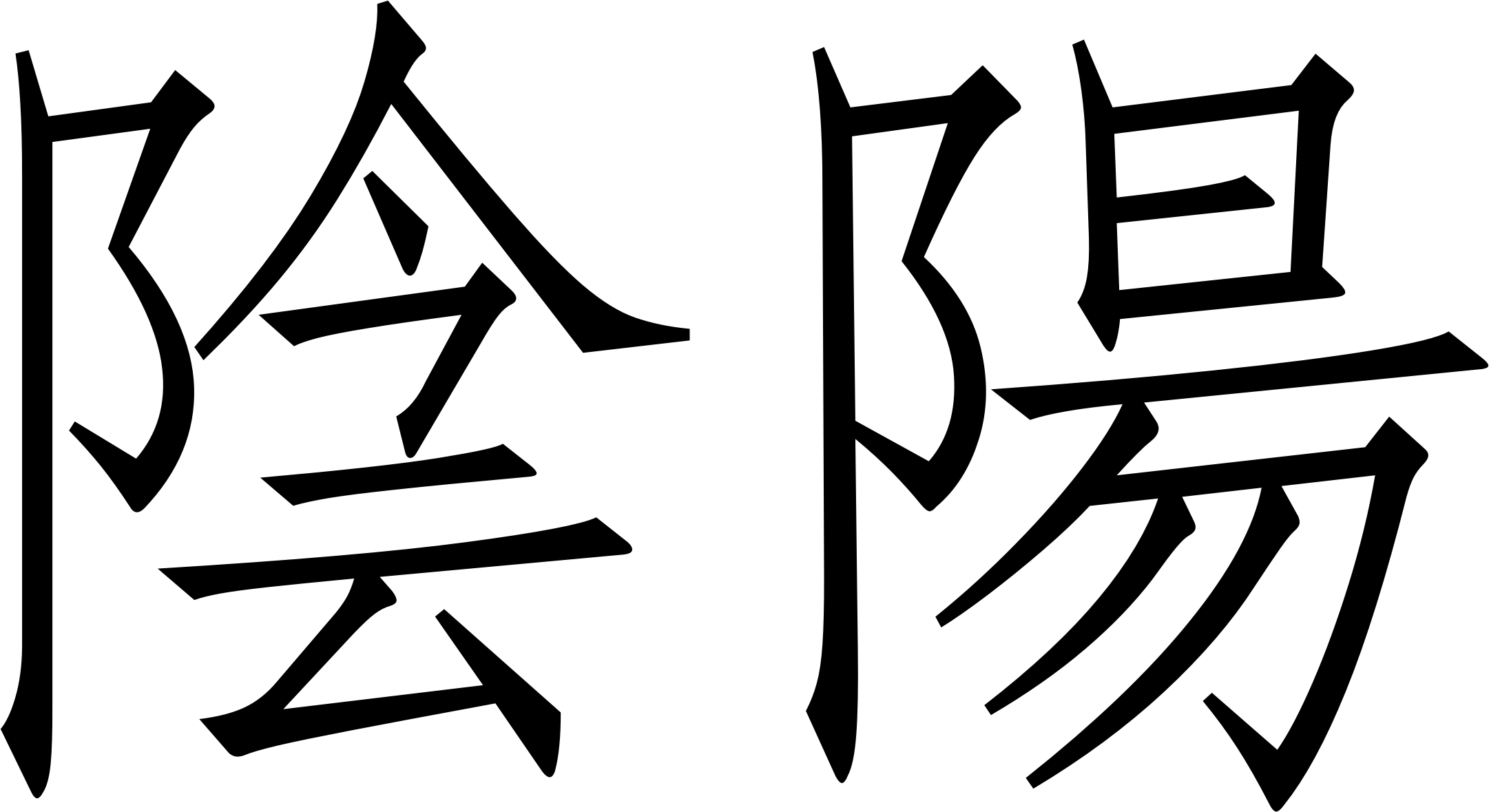
The symbol itself—the Taijitu—is iconic. But the actual yin yang chinese letters used in writing are 陰 and 陽. Or, if you’re using the simplified version used in mainland China today, they look like 阴 and 阳. They aren't just "letters" in an alphabet like A, B, or C. They are blocks of meaning. Each stroke tells a story about a mountain, a sun, and a shadow.
What the Characters Actually Mean (And Why it Matters)
Let’s get nerdy for a second. In Mandarin, the characters for Yin and Yang are fascinating because they’re basically a weather report. Seriously.
The traditional character for Yin (陰) contains the radical for a "mound" or "hill" on the left. The right side represents clouds and shade. It’s the shady side of the hill. Yang (陽) also has that "hill" radical, but the right side shows the sun with rays beaming down. It's the sunny side. That’s it. It’s a literal description of how light hits the earth.
Think about that.
Ancient Chinese philosophers, like those who wrote the I Ching (Book of Changes) around 1000 BCE, didn't see these as "good vs. evil." They saw them as "light vs. shadow." You can't have a hill with only one side. If the sun moves, the shadow moves. They are inseparable. When people try to translate yin yang chinese letters as "darkness" and "light" in a moral sense, they’re missing the point entirely. It's more about physics than religion.
The Breakdown of the Scripts
If you’re looking for the "letters," you’re likely choosing between three main styles:
- Traditional (Traditional Chinese): 陰陽. These are beautiful, complex, and carry the most historical weight. They look great in art.
- Simplified (Mainland China): 阴阳. These were created in the 1950s to increase literacy. They’re cleaner, but some purists think they lose the "soul" of the original meaning.
- Seal Script (Zhuanshu): This is the ancient, curvy style you see on red stone stamps. If you want something that looks truly "ancient," this is the one.
It's kinda funny how Westerners obsess over the "letters" when the symbol does most of the talking. But if you’re going for a specific aesthetic, the script matters. A lot.
Common Misconceptions About Yin Yang Chinese Letters
Most people get it wrong. Honestly.
I’ve seen people get tattoos where the characters are upside down or, even worse, they use a font that looks like "Chop Suey" lettering—that weird, fake-Asian font from the 1920s. Please, don't do that.
Another big mistake? Thinking that Yin is "female" and Yang is "male" in a way that implies one is weaker. In Chinese philosophy, these are energies, not biological mandates. While Yin is associated with the feminine, the moon, and passivity, it’s also the force of the earth and the ocean. It’s powerful. Yang is the sun, the masculine, and the active, but without Yin to ground it, Yang is just a destructive fire.
Dr. Robin R. Wang, a leading scholar on this stuff and author of Yin Yang: The Way of Heaven and Earth in Chinese Thought, points out that Yin and Yang are "relational." Nothing is ever 100% one or the other. This is why there’s a little white dot in the black swirl and a black dot in the white swirl.
The yin yang chinese letters represent this fluidity. Even in the characters themselves, the "hill" radical is shared. They come from the same place.
Why Is Everyone Searching for "Letters"?
Usually, it’s for aesthetics. People want the "look" of the Orient without necessarily wanting to learn Mandarin. And that's fine, but you've gotta be careful with the calligraphy.
Chinese calligraphy is an art form called Shufa. It's not just writing; it's a performance. The way the ink hits the paper—the "dryness" of the brush, the speed of the stroke—it all conveys emotion. When you search for yin yang chinese letters, what you’re often actually seeing in high-end art is "Cursive Script" (Caoshu). It’s messy. It’s wild. It looks like abstract art.
If you just copy a random JPEG from Google Images, you might be getting a version that says "shady side" and "sunny side" in a font that looks like it was made in Microsoft Word 97.
The Difference Between the Symbol and the Text
The symbol is the Taijitu. The letters are Yin and Yang.
Sometimes people try to combine them. You’ll see the characters written inside the swirls of the circle. From a traditional Taoist perspective, this is a bit redundant. It’s like writing the word "Circle" inside a circle. But hey, it’s your aesthetic. Just know that the symbol itself is already "reading" as those words to anyone who understands the culture.
Historical Roots: From Oracle Bones to Modern T-Shirts
This isn't some New Age invention from the 1960s. The concepts of Yin and Yang go back to the Zhou Dynasty. We're talking 3,000 years ago.
Archaeologists have found early versions of these concepts on oracle bones—pieces of turtle shell used for divination. Back then, they weren't even necessarily using the specific yin yang chinese letters we use today. They were observing the seasons. They noticed that life follows a rhythm. Expansion and contraction. Life and death.
In the 4th Century BCE, a school of thought called the School of Yin-yang (Yinyangjia) emerged. These guys were basically the first scientists of China. They tried to explain the universe through natural forces instead of gods or magic. They used the concepts of Yin and Yang to explain everything from medicine to politics.
When you use these characters today, you’re tapping into that specific lineage of rational, naturalistic thought. It’s not just "kinda cool." It’s a foundational block of Eastern civilization.
How to Use Yin Yang Characters Correctly
If you're planning on using yin yang chinese letters for a project, a tattoo, or home decor, there are a few "pro tips" to keep you from looking like a tourist.
First, check the orientation. Chinese can be written vertically (top to bottom) or horizontally (left to right). If you’re writing them vertically, Yin (陰) usually goes on top. If horizontally, Yin is on the left. This mirrors the way we read the symbol.
Second, consider the "weight" of the brush. For something like Yin and Yang, which are about balance, you don't want a font that is super thin or super jagged. You want something balanced. Kaishu (Regular Script) is the standard, legible, "textbook" look. It’s dignified.
Third, avoid mixing scripts. Don't use a Traditional character for Yin and a Simplified one for Yang. It looks weird. It’s like writing a sentence that’s half English and half Middle English. Pick a style and stick to it.
Cultural Context Matters
In China, you don't actually see the "Yin Yang" symbol everywhere as much as you might think. You see it in temples, or on the robes of a Taoist priest, or perhaps in a traditional pharmacy. It's a sacred thing.
When it’s used in the West, it’s often divorced from the Tao Te Ching or the teachings of Laozi. But knowing that the yin yang chinese letters are tied to the concept of Wu Wei (effortless action) adds a whole new layer of depth. It's not just about balance; it's about flowing with the way things are.
Actionable Steps for Choosing Your Calligraphy
Stop looking at Pinterest for a second. If you want the real deal, follow these steps:
- Consult a Calligrapher: Don't trust a computer font. A real human artist understands the "Qi" (energy) of the strokes. They can make the characters for Yin and Yang look like they are actually interacting with each other.
- Decide on Traditional vs. Simplified: If you want historical depth, go Traditional (陰陽). If you want a modern, clean, "Beijing 2026" vibe, go Simplified (阴阳).
- Verify the Meaning: Use a tool like MDBG or Pleco (the gold standard for Chinese dictionaries). Type in the characters. Make sure you aren't accidentally getting the characters for "onion" or "soup." It happens more than you'd think.
- Think About Placement: If it's a tattoo, remember that your body moves. A symbol on a joint will distort. The characters, however, tend to hold their shape better.
- Research the "Five Elements": Yin and Yang are usually part of a larger system called Wuxing (Wood, Fire, Earth, Metal, Water). If you're looking for yin yang chinese letters, you might find that adding one of these elements creates a more personalized meaning.
Ultimately, whether you call them letters, characters, or symbols, the essence remains the same. It’s about the fact that nothing is absolute. Everything contains its opposite. In a world that feels increasingly polarized and "either-or," the yin yang chinese letters remind us that the truth is usually "both-and."
The shady side of the hill is still part of the same mountain. It's just waiting for the sun to come around.