If you’ve ever stepped foot in a Greek household, you already know the real boss isn't the one paying the mortgage. It’s the woman in the kitchen aggressively offering you a third helping of pastitsio while judging your life choices with a single raised eyebrow. You want to know what is grandma in greek? The short answer is YiaYia.
But honestly, that's like saying a Ferrari is just a car.
The word itself—YiaYia (pronounced yah-yah)—is more than a label. It’s a title of power, a cultural institution, and occasionally, a source of mild psychological warfare regarding whether or not you’ve eaten enough bread. In the Greek language, the formal term is mámmi, but nobody actually uses that unless they’re writing a legal document or a very stiff textbook. In the real world, from the villages of Crete to the suburbs of Astoria, it’s YiaYia.
The Phonetics of Love and Command
Let’s get the technical stuff out of the way first because pronunciation matters. If you say "Ya-Ya" like you’re singing a 1960s pop song, you’re doing it wrong. The Greek YiaYia (γιαγιά) has a soft, breathy "y" sound. It’s quick. It’s affectionate. It’s usually shouted across a crowded yard.
Greek is a language of suffixes and endearments. You might hear YiaYiakoula. That little "-koula" on the end? That’s the diminutive. It makes the word "little" or "dear." It’s what you call her when you’re about to ask for twenty Euro or when she’s looking particularly sweet in her floral apron.
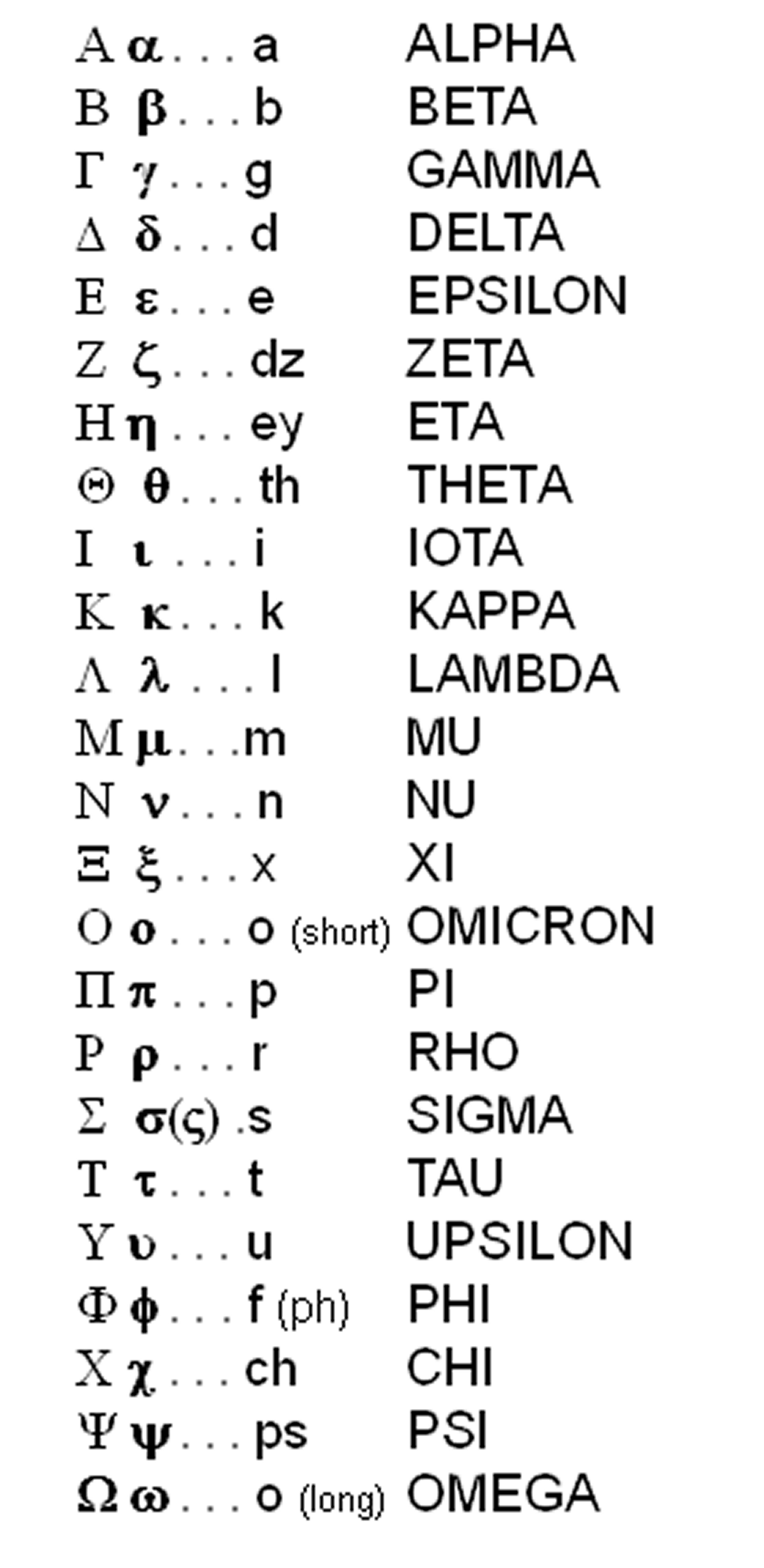
Language is weirdly flexible here. While what is grandma in greek seems like a straightforward translation question, the context changes everything. In many Diaspora communities, the spelling gets mangled into Yiayia, Yaya, or even Ya-ya. None of them are "wrong" in a casual sense, but if you're looking for the Greek alphabet version, it’s γιαγιά.
Why the YiaYia Is the Pillar of the Greek Family
In Greece, the family structure isn't a pyramid; it’s a circle with the grandmother at the center. This isn't just sentimentality. It’s sociology.
Historically, Greek grandmothers have been the primary caregivers, the keepers of religious tradition, and the informal bankers of the family. According to researchers like Evdokia Tastsoglou, who has studied Greek immigrant women, the grandmother often acts as the "cultural glue." She is the one who ensures the grandkids speak at least three words of Greek and know exactly which saint’s day it is.
She’s also the chef.
If you’ve never seen a YiaYia hand-roll phyllo dough using a piece of a literal broomstick (cleaned, obviously), have you even lived? Food isn't just nutrition in this context. It’s an olive-oil-soaked manifestation of love. To refuse a second helping is to basically tell her you hate her entire lineage. It's high stakes.
The Myth of the "Old" Grandmother
We have this Western image of a grandma sitting in a rocking chair, knitting. Forget that.
A Greek YiaYia is more likely to be found scaling a ladder to pick lemons, arguing with a vendor at the laiki (the open-air market) over the price of tomatoes, or lighting a dizzying number of candles in a church. There is an incredible vitality there.
There’s a specific term you should know: proyia-yia. This is the great-grandmother. In Greece, thanks to a Mediterranean diet and a lifestyle that involves walking up a thousand stone steps every day, it is very common to have four generations sitting at one table. The proyia-yia is like the High Priestess. She doesn't even have to speak; she just vibrates with ancient authority.
Regional Flavors: Is It Always YiaYia?
Greece isn't a monolith.
While what is grandma in greek is almost universally answered with YiaYia, different regions have their quirks. In parts of Northern Greece or among Pontic Greeks (those with roots in the Black Sea region), you might hear different variations or dialects influencing the tone.
- Nona: Now, be careful here. In some Ionion islands like Corfu, which spent a lot of time under Italian rule, you might hear Nona. But in most of Greece, Nona or Nono refers to a godmother or godfather. Use this incorrectly, and you’ll confuse the hell out of everyone at the baptism.
- Mamma: In some very old-school village dialects, the lines between "Mother" and "Grandmother" blur, but this is increasingly rare.
Most of the time, the variation comes not from the word itself, but from the name attached to it. You don’t just have "Grandma." You have YiaYia Eleni or YiaYia Maria. The name and the title become a single, inseparable noun.
The "Black Dress" Phenomenon
You can't talk about Greek grandmothers without acknowledging the mavra—the black clothes.
It’s a sight familiar to anyone who has visited rural Greece: older women dressed entirely in black. Traditionally, this was a sign of mourning that often lasted for the rest of a woman's life after her husband passed. While this is fading in big cities like Athens or Thessaloniki, it remains a powerful visual symbol of the YiaYia’s stoicism.
It represents a generation that survived wars, occupations, and extreme poverty. When you look at a YiaYia in black, you’re looking at a living history book. She isn't just "grandma"; she’s a survivor who likely knows 400 different uses for oregano and how to cure an earache with a warm cloth and a prayer.
The Evil Eye and the Grandma's Role
If you feel a random headache or a string of bad luck, the Greek YiaYia is your first line of defense against the Mati—the Evil Eye.
This is where things get "superstitious-adjacent." Many grandmothers practice kemiano or specific prayers to "undo" the eye. It usually involves a drop of olive oil in a glass of water. If the oil sinks or spreads in a certain way, you’ve been "eyed."
Whether you believe in it or not is irrelevant. If YiaYia says you have the eye, you have the eye. She will yawn, pray, and magically make you feel better. It’s a blend of folk medicine and deep-seated Orthodox Christian tradition that grandmothers have passed down for centuries.
The Modern YiaYia: Zoom and Baklava
Don't let the traditions fool you. The YiaYia of 2026 is a different beast.
She probably has a smartphone. She’s definitely on Viber or WhatsApp, sending you "Good Morning" GIFs featuring sparkly roses and icons of the Virgin Mary. She might still make her own yogurt, but she’s also checking your Instagram stories to see why you’re out at 2:00 AM on a Tuesday.
The core essence of what is grandma in greek remains her role as the emotional anchor. Even in a digital age, the expectation is that she is the one who keeps the family secrets and the family recipes. If she dies without writing down the secret to her kourabiedes (almond shortbread cookies), it is considered a legitimate family tragedy.
Cultural Nuance: Why We Obsess Over This
People search for this term because the Greek grandmother has become a global meme of sorts. She represents a disappearing world of radical hospitality (philoxenia).
In a world of fast food and nuclear families, the idea of a woman who spends three days preparing a feast for twenty people is fascinating. She is the antidote to loneliness. You cannot be lonely in the presence of a YiaYia; she won't allow it. She will fill the silence with questions about your love life and fill your stomach with carbs.
But it’s not all sunshine and honey puffs.
The Greek YiaYia can be intensely stubborn. She might have "views" on things that haven't been updated since 1954. There’s a complexity there—a mix of fierce protection and occasional overbearingness that defines the Mediterranean family dynamic.
Actionable Steps for Connecting with Your YiaYia
If you’re lucky enough to have a YiaYia (or a Greek grandmother-in-law) and you want to bridge the cultural gap, a little effort goes a long way.
- Learn the "The": When addressing her, you don't always need the article, but when talking about her, Greeks often say "The YiaYia" (I YiaYia). It adds a layer of respect.
- Never arrive empty-handed: If you’re visiting, bring a box of pasteries (sweets) from a Greek bakery. It’s the law.
- The "Full" Rule: When she asks if you want more food, the answer "No" is actually interpreted as "Ask me three more times until I eventually give in." If you are actually full, you have to be strategic. Lean back, pat your stomach, and use the word Hortasa (I’m satisfied/full).
- Ask for stories: Most grandmothers in Greece have lived through massive societal shifts. Ask about her village. Ask how she met your grandfather. The stories are usually better than anything on Netflix.
- Master the greeting: A kiss on both cheeks is standard. Anything less is cold.
Understanding what is grandma in greek isn't just about translating a word. It’s about recognizing a role that balances being a domestic CEO with being a spiritual guardian. Whether she’s calling you moro mou (my baby) or yelling at you for not wearing an undershirt in 70-degree weather, the YiaYia is the heart of the Greek world.
The next time you see her, just say "YiaYia, se agapo" (Grandma, I love you). It’s the only phrase you really need to get on her good side—well, that and finishing your spinach pie.
To truly honor the tradition, start a small notebook of her "unwritten" recipes. Most Greek grandmothers don't use measuring cups; they use "cups" that are actually just old jars of Nescafé, or they measure by "how much the flour takes." Capturing that "feeling" is the best way to keep the spirit of the YiaYia alive for the next generation.
Don't wait until she's gone to ask how many eggs go in the tsoureki. Do it today. Take a video of her hands working the dough. That’s the real meaning of the word.



