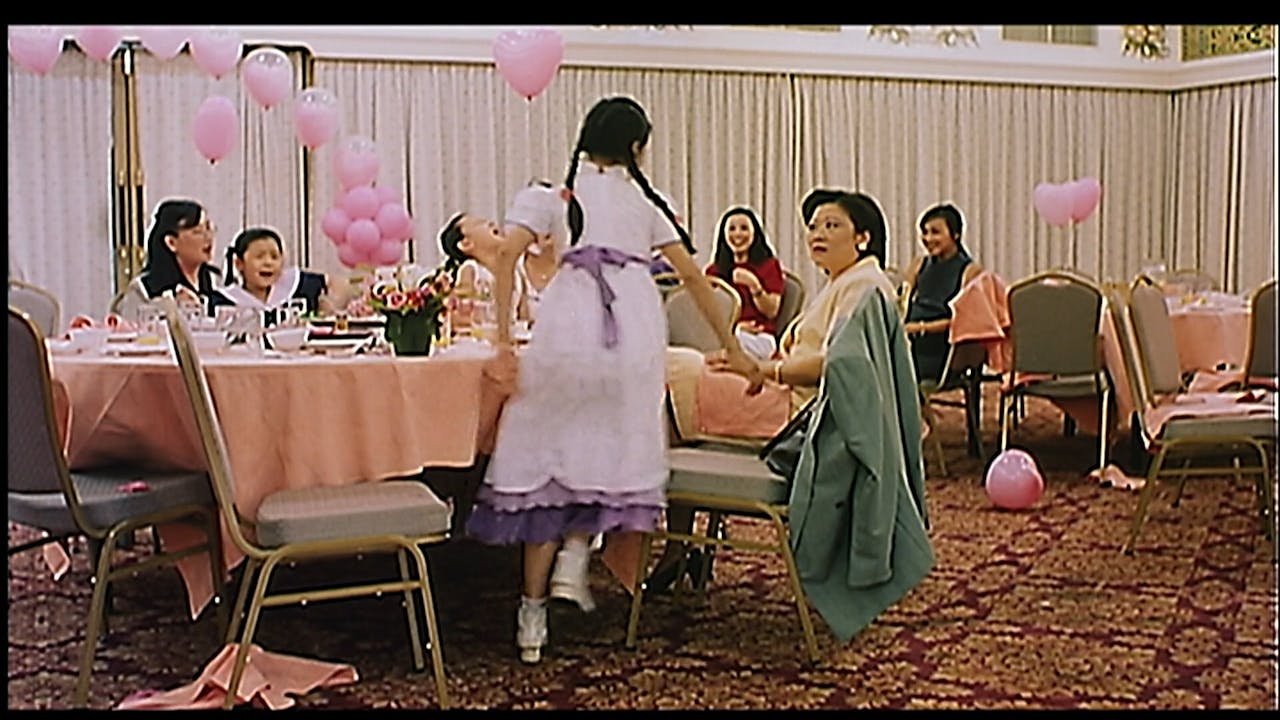
If you’ve ever sat through a three-hour movie and felt like you lived an entire lifetime by the time the credits rolled, you’ve probably seen Yi Yi. It’s a film that breathes. Released in 2000, Edward Yang’s final completed work—often referred to by fans through the literal translation of its title, Yi Yi one and two—isn’t just a movie about a family in Taipei. It is a mirror. It’s the kind of cinema that makes you realize how much of your own life you’re missing while you’re busy living it.
Most people come to this movie expecting a "slow cinema" slog. They expect pretension. Instead, they get NJ, a middle-aged father in the middle of a business crisis; Ting-Ting, a teenage girl navigating the messy guilt of a first romance; and Yang-Yang, a young boy who starts taking photos of the backs of people's heads because "they can't see them themselves."
It’s brilliant. Truly.
What Yi Yi One and Two Actually Means
The title is a bit of a linguistic puzzle for Western audiences. In Mandarin, Yi Yi simply means "one one." When written vertically, the two characters for "one" (一) resemble the character for "two" (二). Yang chose this because the film suggests that life is lived one by one, step by step, or perhaps that there are always two sides to every story. It’s about the duality of the individual and the collective.
We see this through the "one and two" structure of the family’s generations. The film starts with a wedding and ends with a funeral. In between, we get the messy, uncoordinated middle of human existence. It's funny how we try to categorize life into neat chapters when Yang shows us it's actually just a series of overlapping, often contradictory, moments.
The Tragedy of the "Back of the Head"
Young Yang-Yang is the soul of the film. While the adults are losing their minds over bad investments or rekindled flames from twenty years ago, this kid is walking around with a camera. He tells his father, "You can't see what I see, and I can't see what you see. So how can I know what you see?"
This isn't just cute kid dialogue. It's the central thesis of the movie.
We are all walking around with blind spots. NJ, the father, meets his old girlfriend in Tokyo and realizes that even if he could do it all over again, things might end up exactly the same. That’s a heavy realization. It’s also incredibly honest. Most movies tell us that "the path not taken" is the one where we’d finally be happy. Yi Yi suggests that the path doesn't matter as much as our inability to see the whole picture while we’re on it.
Why Edward Yang Refused to Release it in Taiwan
Here is a bit of trivia that most casual viewers miss: Edward Yang actually blocked the film’s release in Taiwan for years. He was frustrated with the state of the local film distribution and the "corrupt" nature of the industry at the time. He didn't think the audience was being given a fair shake to see movies like his. Consequently, a film that is essentially a love letter to the textures of Taipei wasn't officially seen by most Taiwanese people until much later.
It won Best Director at Cannes. It appeared on almost every "Best of the Decade" list. Yet, the very people it depicted were the last to get a seat in the theater.
The Business of Sincerity
The subplot involving NJ’s company and the Japanese gaming mogul, Mr. Ota, is surprisingly relevant today. In a world of "disruption" and "pivot," NJ is a man who values sincerity. He likes Ota because Ota actually cares about the quality of the games, not just the profit margins.
There’s a scene where they go to a bar and Ota performs a magic trick. It’s a quiet moment, but it highlights the contrast between the cold, calculating business partners NJ usually deals with and the human connection he actually craves. This movie understands that work isn't just where we get a paycheck; it's where our ethics go to die or be tested.
Honestly, the corporate scenes in Yi Yi feel more realistic than 90% of business dramas. They’re boring, tense, and filled with people who are pretending to know more than they do.
Listening to the Silence
The pacing of the film is intentional. Yang uses long takes. He places the camera at a distance, often looking through doorways or windows. This isn't just a stylistic quirk. It forces us to be observers. We aren't being manipulated by quick cuts or swelling orchestral music. We are just... there.
When NJ’s wife, Min-Min, has a breakdown because she realizes her life is a repetitive loop of nothingness, she goes to a spiritual retreat. She thinks silence will fix it. But the movie suggests that the answer isn't in escaping to a mountain; it’s in finding a way to live with the noise of the city.
Common Misconceptions About the Ending
People often find the ending of Yi Yi sad. I don't see it that way. Yes, there is a funeral. Yes, the characters are arguably in the same place they started. But there's a shift in perspective.
When Yang-Yang reads his letter to his grandmother at the very end, he says, "I want to tell people things they don't know. Show them things they haven't seen." That is the birth of an artist. It’s the cycle continuing, but with a little more clarity than the generation before.
It’s not a "happily ever after." It’s a "happily ever after-realization."
How to Actually Watch Yi Yi (And Not Get Bored)
If you're going to dive into this, don't do it on a phone. Don't do it while scrolling TikTok. You’ll hate it. The movie requires you to sink into its rhythm.
- Set aside a full evening. It’s 173 minutes. Treat it like a mini-series you’re bingeing in one go.
- Watch the reflections. Yang uses glass and reflections constantly to show the layers of the city.
- Pay attention to the soundscape. The transition between the bustle of Taipei and the rain in Tokyo is masterful.
- Don't worry about "getting" it. There’s no twist. There’s no hidden code. It’s just life.
The legacy of Yi Yi one and two isn't just in film textbooks. It's in the way it teaches us to look at the people around us. We are all someone else's "back of the head." We are all navigating the one and the two—our private selves and the faces we show the world.
If you want to understand modern cinema, or just want to feel a little less alone in your own mid-life (or quarter-life) crisis, find a copy of the Criterion Collection version. Watch it. Then go out and take a look at the things you usually ignore.
Next Steps for the Interested Viewer:
To truly appreciate the depth of Edward Yang's work, start by watching A Brighter Summer Day after you finish Yi Yi. It is a much darker, four-hour epic that serves as a spiritual precursor to the themes of societal pressure and lost innocence. Additionally, look for the essays by film critic Tony Rayns, who was a close friend of Yang; his commentary provides the most accurate historical context for the production challenges faced during the filming in Taipei. Finally, observe your own surroundings for one day through the "Yang-Yang lens"—try to identify one thing you see every day but never actually notice. This shift in perception is the greatest gift the film offers its audience.



