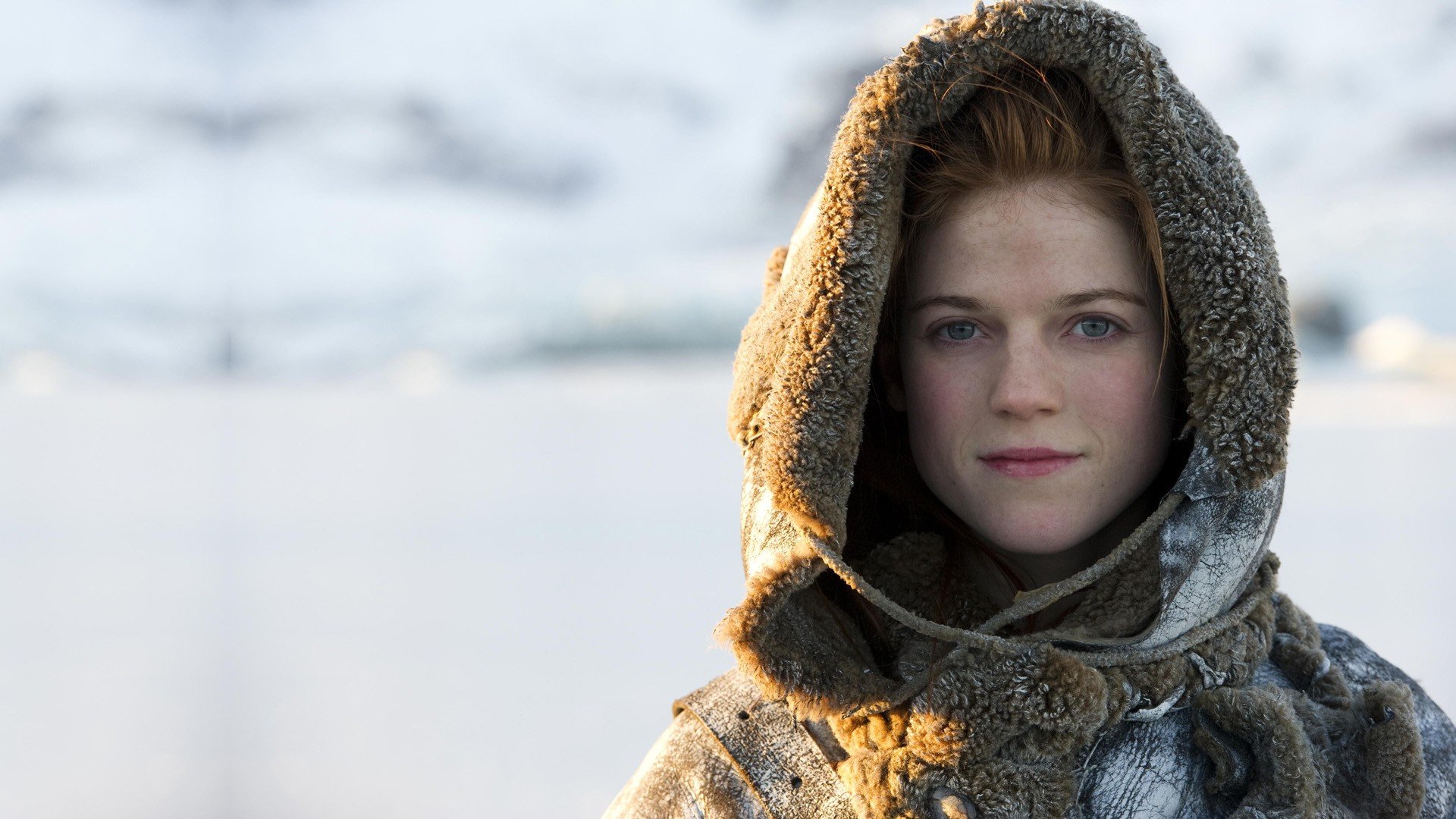
She wasn't just a redhead with a bow. When we first met Ygritte of Game of Thrones in the second season, she seemed like a plot device to get Jon Snow into the Wildling camp. We were wrong. Rose Leslie didn't just play a character; she basically redefined what "strength" looked like in George R.R. Martin’s brutal world.
She was loud. She was dirty. She was "kissed by fire."
Most characters in Westeros are defined by their lineage or their gold. Ygritte? She was defined by the fact that she didn't give a damn about any of that. She lived in a society—if you can even call the Free Folk a society—where you only owned what you could keep. Honestly, that perspective is what made her relationship with Jon Snow so electric. It wasn't just a "star-crossed lovers" trope. It was a clash of entire worldviews. Jon was obsessed with duty and vows. Ygritte was obsessed with living.
The "You Know Nothing" Reality Check
Everyone remembers the line. "You know nothing, Jon Snow." It’s a meme now. It’s on t-shirts. But if you actually go back and watch those scenes in the Frostfangs, she isn't just teasing him. She’s diagnosing him.
Jon Snow grew up as the "bastard of Winterfell," yet Ygritte sees him as a pampered highborn. To her, Jon is trapped in a cage of his own making. He’s loyal to a Night’s Watch that views the Free Folk as monsters, even though the only difference between a "Crow" and a "Wildling" is which side of a giant ice wall they happened to be born on. Ygritte was the first person to point out the blatant hypocrisy of the Seven Kingdoms.
Think about the cave scene. It's easily one of the most famous moments in the series. Beyond the obvious romance, it represents the moment Jon Snow finally abandons his rigid, frozen morality for something human. Ygritte forced him to choose between a cold oath and a warm person. And for a while, she won.
Why Rose Leslie’s Performance Still Holds Up
There’s a reason people still talk about Ygritte years after the show ended. A lot of that comes down to Rose Leslie’s acting. She brought a specific kind of feral energy that was missing from the more "proper" ladies like Sansa or even Margaery Tyrell.
She didn't try to be likable.
She was dangerous. Remember when she killed those villagers? It’s easy to forget because she’s so charismatic, but Ygritte was a killer. She participated in raids. She shot people with arrows without blinking. The show didn't shy away from her brutality, which made her vulnerability later on feel earned rather than forced.
When she looks at the Wall for the first time and realizes it’s not just a legend but a physical manifestation of her people’s exclusion, you see the pain in her eyes. It’s a brief moment, but it’s heavy. She knew the world was bigger than her, and she knew her side was probably going to lose.
The Battle of Castle Black and the Death of Innocence
The death of Ygritte of Game of Thrones is arguably the turning point for the entire series. It’s the moment Jon Snow stops being a boy and starts becoming the weary leader we see in the later seasons.
The staging of that scene was gut-wrenching.
The chaos of the battle is happening all around them. Fire. Screams. Giants riding mammoths. And then, in the middle of it all, there’s this quiet pocket of space where Jon and Ygritte find each other. She has her arrow notched. She has him dead to rights. But she can't do it.
Then comes Olly.
That one arrow from a scared kid changed the trajectory of the show. If Ygritte had lived, Jon might never have become the Lord Commander. He might have run away with her like she wanted. "We should have stayed in that cave," she tells him as she’s dying. It’s the most heartbreaking line in the show because they both know it’s true. The world of politics and White Walkers didn't care about their love. It just crushed them.
Misconceptions About the "Wildling" Archetype
A lot of casual viewers lump Ygritte in with the "manic pixie dream girl" trope—the wild woman who exists just to teach the brooding male lead how to live. That’s a total misunderstanding of her character.
Ygritte had her own agency.
She wasn't trying to "save" Jon Snow. She was trying to recruit him to a cause she actually believed in. She believed in Mance Rayder. She believed that the Free Folk deserved to survive the Long Night just as much as the people in King's Landing. When Jon betrayed her and went back to the Watch, she didn't just mope. She hunted him. She shot him three times.
That’s not a plot device. That’s a character with a backbone.
What You Can Learn from Ygritte’s Arc
If you’re rewatching the series or diving into the lore for the first time, pay attention to how Ygritte functions as a mirror. She reflects back all the flaws in the "civilized" world of Westeros.
- Perspective is everything. What Jon saw as "protection" (the Wall), Ygritte saw as a "prison."
- Loyalty is messy. You can love someone and still recognize that they are your enemy.
- Freedom has a price. The Free Folk were free, but they were also starving and freezing.
The Legacy of the Redhead
In the books, Ygritte is described slightly differently—less conventionally beautiful, with "pug" features and crooked teeth. But the spirit is the same. She represents the wildness of the North that the Starks claim to represent but have largely forgotten in their castles.
Even after she was gone, her presence felt heavy. When Jon eventually meets Daenerys, or when he deals with the aftermath of the mutiny at Castle Black, you can see the ghost of Ygritte in his decision-making. He became a better leader because he loved a woman who challenged every single thing he thought was "right."
To really understand the impact of Ygritte of Game of Thrones, look at the state of the show after she left. The stakes became more global, more magical, and honestly, a bit more detached. Ygritte kept the story grounded in the dirt and the snow. She reminded us that before the dragons and the ice zombies, this was a story about people trying to find a tiny bit of happiness in a world that wanted them dead.
If you want to dive deeper into the lore of the Free Folk, start by looking at the history of the First Men. Ygritte often mentioned that the Free Folk have the "blood of the First Men," which is the same blood that runs through the Starks. This isn't just a throwaway line. It suggests that the Wildlings and the Starks are essentially the same people, separated only by a wall and a few thousand years of politics. Exploring the origins of the Night’s Watch through the lens of the "Six Abominations" in the books provides a much darker context for why Ygritte’s people were so desperate to get south.
Pay close attention to the specific geography of the Skirling Pass in the novels. It gives a much better sense of just how impossible Ygritte’s life was before she met Jon. Living in perpetual winter isn't just a setting; it’s a character trait.
For those looking to understand the technical side of how her character was brought to life, research the costume design of Michele Clapton. She used actual sandpaper and tools to distress Ygritte’s furs so they looked authentically worn-in and frozen. It’s that level of detail that made the character feel like she stepped right out of a survivalist’s nightmare and into our living rooms.



