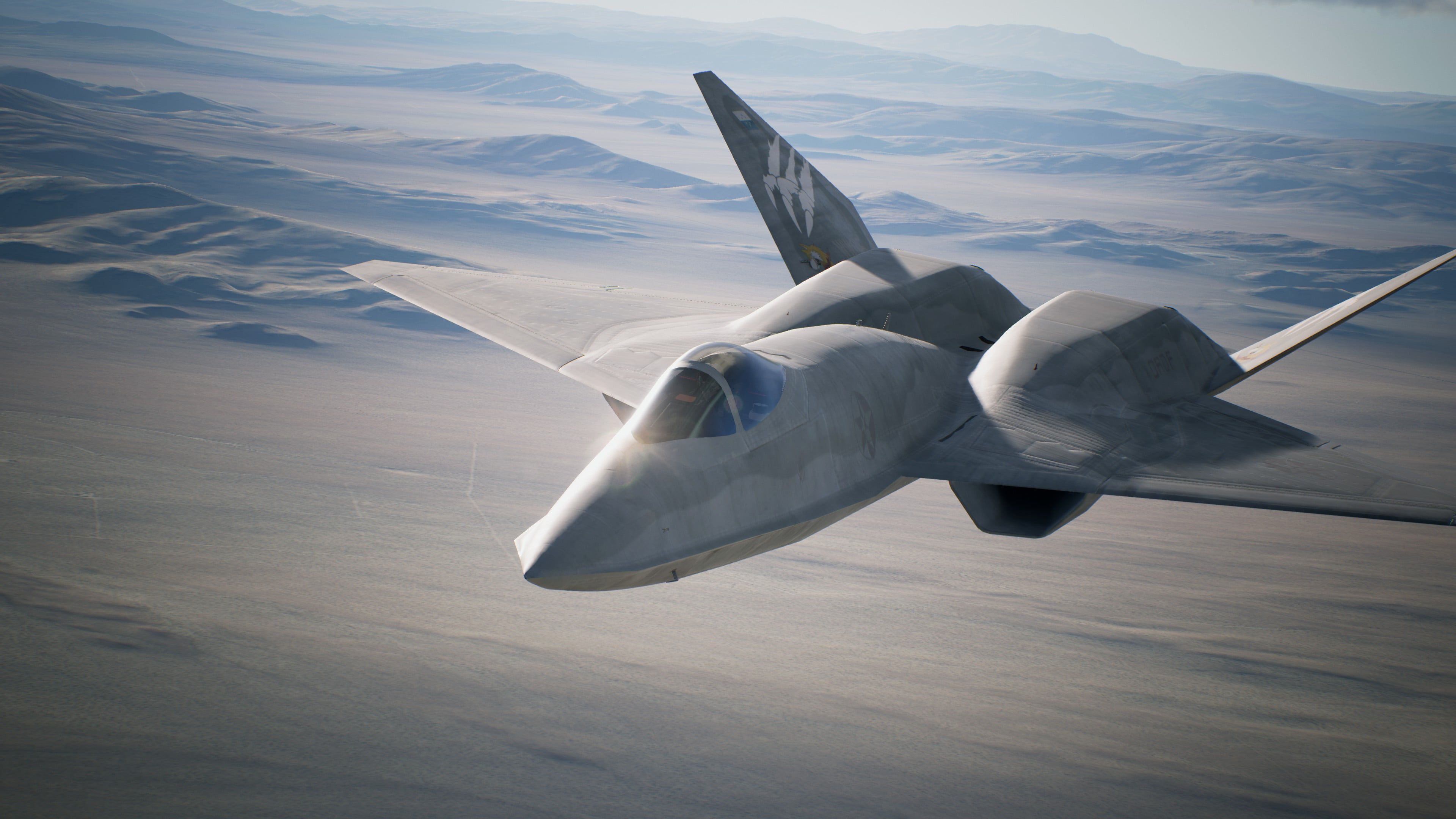
Honestly, if you saw the YF-23 Black Widow II sitting on a tarmac today, you’d probably think it was a top-secret drone from 2030. It looks that alien. But here’s the kicker: this thing first flew in 1990. While most of us were listening to MC Hammer and trying to figure out Windows 3.0, Northrop and McDonnell Douglas had built a jet that was, by many accounts, faster and stealthier than the F-22 Raptor we eventually bought.
It’s one of those classic "what-if" stories that keeps aviation nerds up at night. The YF-23 didn’t lose because it was bad. It lost because it was too different, and maybe because the guys building it weren't as good at "the sell" as Lockheed was.
The Ghost in the Radar
The whole point of the Advanced Tactical Fighter (ATF) program was to replace the F-15 Eagle. The Air Force wanted something that could "supercruise"—basically fly supersonic without using gas-guzzling afterburners—and stay invisible to Soviet radar.
Northrop’s solution was the YF-23.
Instead of traditional tails, it had these massive, canted "all-moving" V-tails. The wings were diamond-shaped. The engines were buried deep in the fuselage to hide their heat signature from infrared sensors.
When it came to stealth, the YF-23 was arguably the king. Because it didn't have the thrust-vectoring paddles that the YF-22 used, its rear end was much cleaner. Heat from the engines was dissipated over specialized tiles (similar to the Space Shuttle) to make it nearly impossible for heat-seeking missiles to lock on.
PAV-1 vs. PAV-2: The Two Widows
There weren't dozens of these. Only two prototypes were ever built:
- PAV-1 (Spider): This was the one painted charcoal gray. It used Pratt & Whitney YF119 engines.
- PAV-2 (Gray Ghost): Painted in a lighter, two-tone gray scheme, this one used the General Electric YF120 engines.
The GE engines were absolute monsters. They were variable-cycle, meaning they could act like a turbojet at high speeds and a turbofan at low speeds. With those engines, the YF-23 could supercruise at Mach 1.6 or higher without even trying.
Why did the F-22 win?
If the YF-23 Black Widow II was faster and stealthier, why is the F-22 the one in the history books?
It basically comes down to showmanship.
During the flight demonstrations, Lockheed’s pilots flew the YF-22 like they were at an airshow. They fired missiles. They pulled 9G turns. They showed off the thrust-vectoring nozzles that let the plane "flip" in the air. It was a visual masterclass.
Northrop, on the other hand, was more conservative. They proved the YF-23 could fly the mission, but they didn't "do the stunts." Paul Metz, a Northrop test pilot who actually flew both planes, famously suggested that the "Fighter Mafia" within the Air Force still wanted a dogfighter. They wanted a plane that could win a visual-range "furball," even though the YF-23 was designed to kill enemies from 50 miles away before they even knew it was there.
There was also the "politics of the paycheck." At the time, Northrop was already busy (and under fire for budget issues) with the B-2 Spirit bomber. The Pentagon was worried that if they didn't give the fighter contract to Lockheed, Lockheed might go out of business as a fighter manufacturer.
The Specs Nobody Believed
Let's look at the raw numbers for a second. The YF-23 had a range of about 2,800 miles. The F-22? More like 2,000. The YF-23 could reach a ceiling of 65,000 feet. It was longer, sleeker, and had a lower radar cross-section from almost every angle.
The Legacy of the "Loser"
Even though it never went into production, the YF-23 didn't just vanish into thin air. You can see its DNA in the designs being discussed for the Next Generation Air Dominance (NGAD) program today. The focus on "all-aspect" stealth and extreme range—things the YF-23 excelled at—is exactly what the Air Force needs for the Pacific theater now.
It’s kinda tragic. We spent billions to develop the "best" fighter, and then ended up retiring the F-22 early because it didn't have the range we needed. If we'd picked the Widow, things might be different.
Where to See the YF-23 Today
If you want to see these beasts in person, they aren't hidden in Area 51.
- PAV-1 is at the National Museum of the United States Air Force in Dayton, Ohio.
- PAV-2 is currently at the Western Museum of Flight in Torrance, California.
Actionable Insights for Aviation Enthusiasts
- Study the V-tail: If you're interested in aerodynamics, look into how the YF-23's ruddervators worked. It’s a masterclass in reducing "surface count" for stealth.
- Check out the YF120 Engine: Research the General Electric YF120. It was technically the "better" engine that lost to the more reliable P&W YF119. Its variable-cycle tech is finally making a comeback in 6th-gen fighter research.
- Visit the Museums: If you're near Dayton or Torrance, go see them. Photographs don't do justice to how flat and "pancake-like" the fuselage actually is. Seeing the engine troughs in person explains exactly why it was so hard to track with infrared.
The story of the YF-23 Black Widow II is a reminder that in the world of military tech, being the "best" on paper doesn't always mean you get the job. Sometimes, it’s about who can put on the better show and who the Pentagon thinks needs the money more.