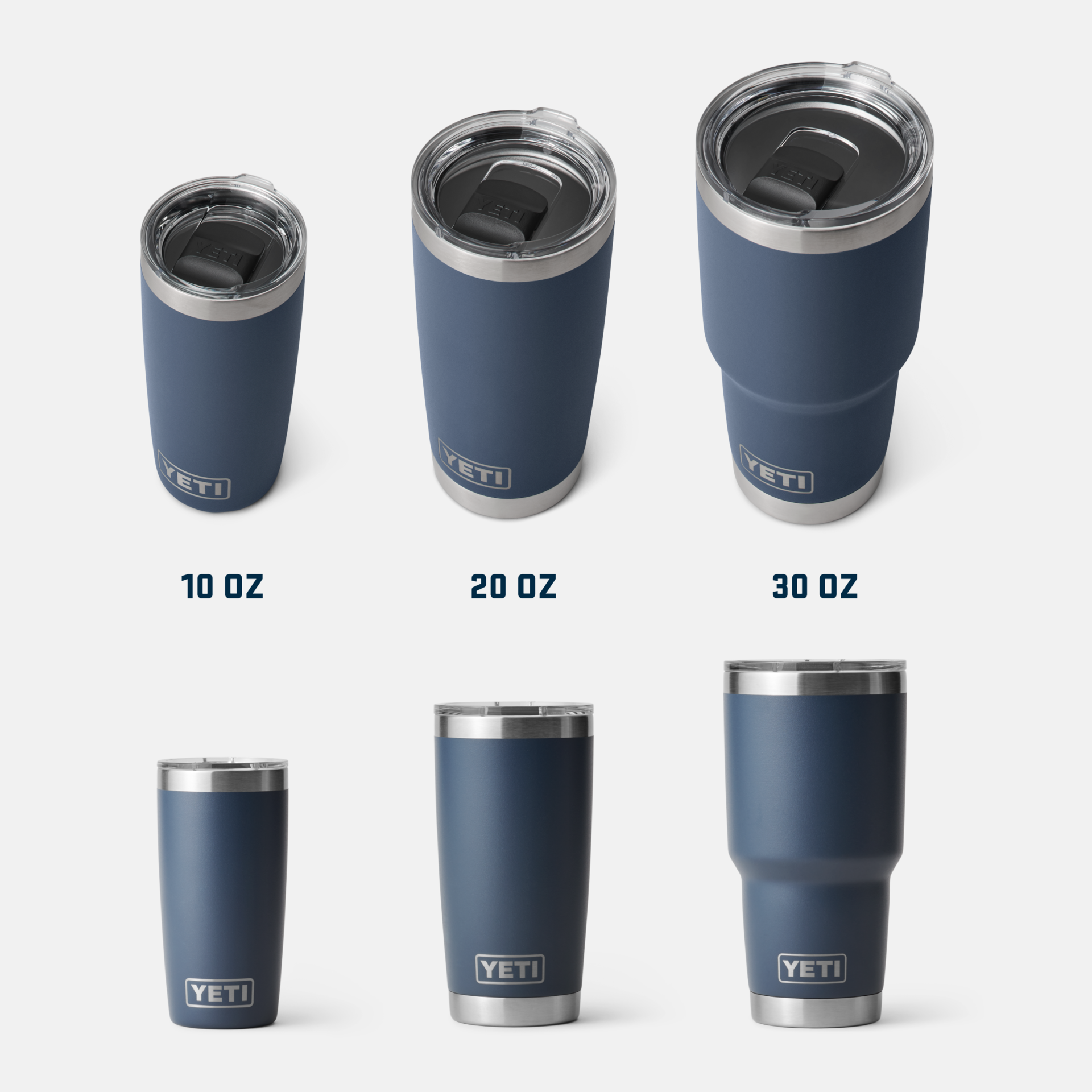
You’ve probably seen them everywhere. They’re sitting on the dashboards of muddy Ford F-150s, tucked into the side pockets of diaper bags, and lined up on the desks of software engineers. The Yeti Rambler 30 oz has become something of a cultural icon, which is kind of weird for a piece of stainless steel. It’s heavy. It’s expensive. Yet, people treat these things like family heirlooms.
Honestly, it’s just a cup. But it’s a cup that basically solved the "lukewarm coffee" crisis that plagued morning commutes for decades. When Yeti released the original Rambler line, they weren't just selling a vessel; they were selling the idea that your ice shouldn't melt just because you're busy.
Most people buy it because they want their water cold for 24 hours. They stay for the MagSlider lid.
The Engineering Behind the Yeti Rambler 30 oz Weight
It feels substantial. Pick one up and you'll notice it immediately. That’s the 18/8 stainless steel at work. Unlike the cheap, flimsy promotional tumblers you get at trade shows, the Rambler is double-wall vacuum insulated.
What does that actually mean?
Basically, there’s a pocket of nothingness—a vacuum—between the inner and outer walls. Heat needs matter to move. Without air molecules to bounce off of, the heat from the Texas sun can't easily reach your iced tea. This is also why the outside doesn't "sweat." You won't find those annoying rings on your wooden coffee table.
I’ve dropped mine on concrete. Multiple times. It gets a little "character" in the form of a scuff, but the seal stays intact. That’s the puncture resistance talking. While other brands might use thinner steel to save on shipping costs or weight, Yeti leans into the bulk. It’s a tank.
The MagSlider Lid Obsession
Let's talk about the lid. It’s the part everyone fiddles with. Most tumblers have those annoying flip-tops that break off or slide-tops that get gunked up with dried latte milk.
Yeti used magnets.
The MagSlider isn't leak-proof—don't throw this in a backpack—but it is splash-resistant. The beauty is in the cleaning. You just pop the magnet off, wipe it down, and snap it back on. No hidden crevices for mold to grow. If you've ever looked inside the rubber gasket of a cheaper brand after a month of use, you know exactly why this matters. It's gross. Yeti fixed the grossness.
Is the Yeti Rambler 30 oz Too Big?
It’s a valid question. At 30 ounces, this thing is a beast. It stands nearly eight inches tall. If you have small hands, it can feel a bit like you’re trying to drink out of a fire hydrant.
However, the design team did something smart. They tapered the bottom.
Will it fit in your car?
Almost always. The base is narrowed down to roughly 2.75 inches, which is the "sweet spot" for standard American cup holders. I’ve tested it in a 2022 Toyota RAV4 and a 2018 Honda Civic; it fits both perfectly. But, and this is a big "but," if you have one of those shallow, flimsy cup holders in an older European car, it might feel top-heavy. Since the weight is concentrated at the top when it’s full of 30 ounces of liquid, it can tip if you take a sharp turn.
- Height: 7 7/8 inches
- Lip Width: 4 inches
- Base Width: 2 3/4 inches
- Empty Weight: 1.1 lbs
Performance: Cold vs. Hot
There’s a lot of hype about how long these things hold temperature. Some people claim their ice lasted for three days. Let’s be real: that only happens if you keep the lid closed in a room-temperature house.
In a real-world scenario—say, a 90-degree day at the beach—you can expect ice to survive for about 12 to 18 hours. If you’re using it for coffee, it’ll stay "burn your tongue" hot for about 4-5 hours and "pleasantly warm" for another 3.
One pro tip from long-time users: pre-chill or pre-heat your Rambler. If you’re going to put iced coffee in it, rinse the inside with ice water first. If you want scorching hot tea, pour in some boiling water for a minute to warm up the steel before you put your drink in. It makes a massive difference because the steel itself won't be stealing heat from your beverage.
The Color War and Durability
The Duracoat finish is another reason these cost $42. It’s a powder coating that doesn't chip or crack like spray paint.
I’ve seen people put these through the dishwasher for years. Yeti says they are dishwasher safe, and honestly, they are. Some "purists" insist on hand-washing to preserve the vacuum seal, but Yeti’s official stance is that the heat of a residential dishwasher won't hurt the insulation.
The colors are where they get you. They release limited edition "seasonal" drops—like King Crab Orange or Cosmic Lilac—and people lose their minds. It's a collector's market. You can find "retired" colors on eBay for double the retail price. It’s wild.
What Most People Get Wrong About "Leak-Proof"
I need to clarify this because it’s the #1 complaint in Amazon reviews. The Yeti Rambler 30 oz with the MagSlider lid is not leak-proof.
If you knock it over on your desk, it’ll buy you a few seconds to grab it before the coffee starts dripping out. But if you tip it upside down, it will leak. If you need something you can toss in a gym bag, you need the Rambler Bottles with the TripleHaul Cap or the newer StrongHold Lid found on the 20oz and 30oz Travel Mugs. The Travel Mug has a handle and a screw-on lid that actually seals.
The standard 30 oz Rambler is a "sipping" vessel, not a "stowing" vessel. Know the difference before you ruin your MacBook.
Common Competitors: Why Not Stanley?
The "Quencher" craze hit hard recently. You know the one—the giant Stanley mug with the straw and the huge handle.
Stanley wins on aesthetics for many, especially with the "clean girl" aesthetic on TikTok. But Yeti wins on pure durability. The Stanley Quencher is notorious for leaking around the straw hole. The Rambler is a more closed system. Plus, Yeti’s 18/8 steel feels thicker. If you’re going to be out on a boat or at a construction site, you want the Yeti. If you’re sitting in an office and want a straw, maybe the Stanley is your vibe.
There's also RTIC. Honestly, RTIC performs almost identically to Yeti for about half the price. They were founded by brothers who basically wanted to make Yeti-quality gear cheaper. If you don't care about the brand name or the specific "Seafoam" color, an RTIC 30 oz tumbler will keep your water just as cold.
But you’re buying the Yeti for the ecosystem. You’re buying it because you know that if the lid breaks five years from now, you can walk into any hardware store in America and find a replacement.
Maintenance and Long-Term Care
If your Rambler starts to smell a little "funky," it’s probably the gasket.
The black rubber ring around the lid can be pried off with a dull knife. Underneath that ring is where coffee oils and sugar sit and ferment. Give it a soak in white vinegar and baking soda once a month.
Also, avoid using bleach. Bleach can actually pit the stainless steel and ruin the finish. Just stick to soap, water, or the dishwasher. If you get those weird brown "rust" spots at the bottom, don't panic. It's usually just mineral deposits from your tap water. A quick scrub with a paste of baking soda and water will take it right off.
Actionable Steps for New Owners
If you just bought a Yeti Rambler 30 oz, or you're about to, here is how to get the most out of it:
- Check the Gasket: When you first get it, ensure the rubber gasket on the lid is seated flat. If it’s twisted, it won't stay on tight.
- The "Sacrificial" Rinse: Always rinse with hot or cold water (depending on your drink) for 60 seconds before filling. This "primes" the insulation.
- Upgrade the Lid: If you hate the MagSlider, Yeti sells a "Straw Lid" separately. It’s great for hydrating while driving because you don't have to tilt the massive 30 oz cup and block your view of the road.
- Register It: Yeti has a 5-year warranty. It’s rare for the vacuum seal to fail, but if the cup starts "sweating" or stops holding ice, they are usually pretty good about sending a replacement if you've registered the product.
- Dishwasher Placement: Put the lid on the top rack. The cup itself is fine on the bottom, but the high heat of the drying cycle can sometimes warp the plastic of the lid if it's too close to the heating element.
The reality is that this tumbler is a "buy it once" kind of product. It’s built to survive a decade of abuse. Whether it's worth $40+ depends entirely on how much you value a cold drink at the end of a long shift. For most people, the answer is a resounding yes.



