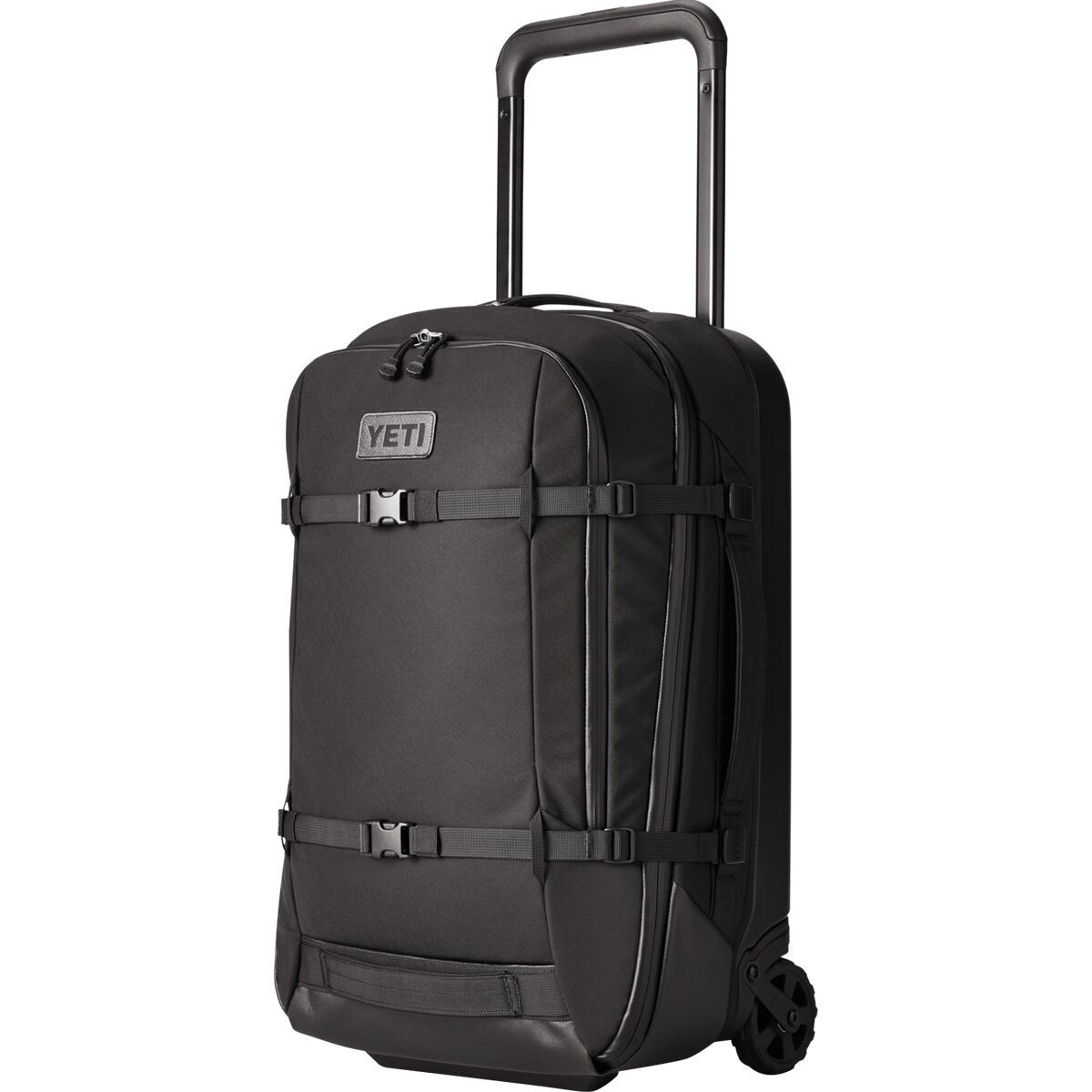
You’ve seen them everywhere. Those boxy, colorful bags sitting in the back of SUVs or hanging off the shoulders of parents at the soccer fields. Most people see the YETI Camino 20 Carryall and think, "Oh, it's just a really expensive tote bag."
Honestly? They aren't exactly wrong. It is expensive. But after actually lugging one around through beach sand, spilled coffee, and a very messy afternoon involving muddy hiking boots, I’ve realized most people are using it all wrong—or at least, they're missing the point of why this specific size exists.
It is not a cooler (and why that's okay)
Let’s get the big misconception out of the way immediately. I can't tell you how many times I've seen someone toss loose ice into a Camino expecting it to keep their drinks cold for three days. It won't. This bag is not insulated. If you want a cooler, go buy a Hopper.
The YETI Camino 20 Carryall is a "gear hauler." Think of it as a bucket that you can actually carry comfortably. It’s made from the same ThickSkin Shell as the Panga dry bags, which means it is essentially indestructible. You can toss a set of rusty grill tools or a pile of wet, sandy towels inside and the bag just doesn't care.
The "Small" bag that feels surprisingly heavy
The "20" in the name stands for 20 liters. In the world of YETI, that's the baby of the family, sitting below the 35 and the massive 50. But don't let the "small" label fool you.
Empty, this thing weighs about 2.9 lbs. That sounds light until you realize it’s a lot heavier than your average canvas grocery bag. It has a rigid EVA molded bottom that keeps it standing upright. This is the secret sauce. You can set it down in a puddle or on a muddy riverbank, and the contents stay dry because the base is completely waterproof.
The dimensions are roughly 13.25 inches tall and 15 inches wide. It’s compact enough to fit on the floorboard of a car or in the overhead bin of a plane, but it's built like a tank.
What actually fits inside?
I’ve found that the 20 is the sweet spot for a "personal" bag. For instance:
- A 13-inch laptop (in a sleeve, please, it’s not padded).
- Two 36 oz Rambler bottles (thanks to the deployable dividers).
- A light jacket.
- Your wallet and keys in the interior zippered pockets.
If you try to pack for a family of four at the beach, you’re going to hate the 20. You'll need the 35 for that. The 20 is for your stuff. It’s for the gym, the office, or a solo day trip.
The divider situation is a game changer
YETI added these deployable dividers a while back, and they basically saved the bag from being a disorganized black hole. There are two of them inside. When you aren't using them, they fold flat against the sides.
When you pop them out, they create perfect little holsters. I usually keep a 36 oz Rambler in one and a bottle of wine or a rolled-up towel in the other. It keeps the heavy stuff from sliding around and crushing your sandwich or whatever else you have in the main compartment.
Why would you pay $130 for a tote?
This is the question that keeps people up at night. You can buy a canvas tote for five bucks. You can buy a plastic bin for ten. So why the YETI Camino 20 Carryall?
It comes down to the "hose-off" factor.
Last week, I had a container of leftover pasta leak inside. In a normal bag, that's a tragedy. The bag is ruined or requires a delicate dance with the washing machine. With the Camino, I just took it to the backyard and hit it with the garden hose. Done.
The welded construction means there are no seams for gunk to get trapped in. It’s also puncture-resistant. I’ve thrown sharp oyster shells and literal firewood into these things, and they don't even scuff.
Real talk: The downsides
It’s not all sunshine and rainbows. The open-top design is great for quick access, but it sucks in a rainstorm. There’s a little hook closure at the top, but it doesn't seal. If the bag tips over in your trunk, small items will slide out.
Also, the shoulder straps are sturdy, but they aren't exactly "plush." If you overload this bag with 30 pounds of gear and try to hike a mile with it, your shoulder is going to feel it. It’s meant for "truck to boat" or "house to gym" distances.
Is the Camino 20 right for you?
If you’re a "just in case" packer who carries three changes of clothes and a full picnic, skip this and get the Camino 35. You’ll find the 20 frustratingly tight.
However, if you want a bag that stands up on its own, won't tip over in the car, and can be cleaned in thirty seconds after a trip to the muddy dog park, this is it. It’s the ultimate "daily driver."
Actionable Tips for New Owners:
- Use the HitchPoint Grid: Most people ignore the loops on the outside. You can clip a Sidekick Dry pouch to the front to make the bag 100% waterproof for your phone and wallet.
- Don't overthink the cleaning: Mild dish soap and a sponge are all you need. Avoid harsh chemicals; they can mess with the finish of the fabric.
- Check the dividers before you buy: If you use the massive 64 oz Ramblers, they won't fit in the Camino 20's dividers. You’ll need the 35 for those behemoths.
The YETI Camino 20 Carryall isn't about status—well, maybe a little—but it's mostly about not having to worry about your bag. You can beat it up, get it dirty, and it still looks brand new after a quick rinse. In a world of disposable stuff, there's something genuinely nice about a bag that's built to outlive you.
Next Steps for Your Gear Setup
If you've decided the 20 is your size, the best thing you can do is grab a YETI Bottle Sling or a carabiner. Use the external MOLLE loops to keep your keys or water bottle on the outside, freeing up the entire 20 liters of internal space for your actual gear. For those heading to the water, pair it with a waterproof pouch to compensate for the open-top design.



