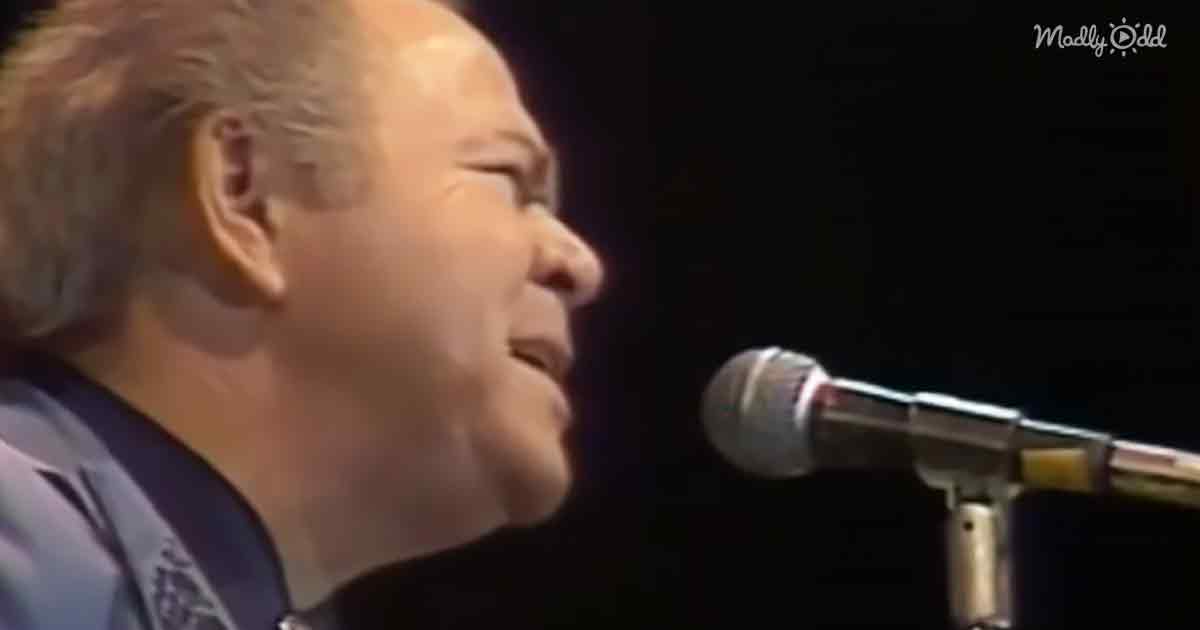
Roy Clark was always the guy with the grin. If you grew up watching Hee Haw, he was the virtuoso who could make a banjo talk while cracking jokes that were just the right amount of cheesy. But in 1969, he did something that shifted the trajectory of his career and arguably the emotional landscape of country-pop music. He released Yesterday When I Was Young. It wasn't a joke. It wasn't "Pickin' and Grinnin'." It was a devastating, mid-tempo gut punch that forced everyone to see the comedian as a world-class balladeer.
Most people don't realize that this song wasn't a Nashville original. Far from it.
The French Connection You Probably Didn't Know
Before it ever touched Roy’s guitar strings, the song was "Hier Encore," written by the legendary French singer Charles Aznavour. Aznavour was the "Frank Sinatra of France," a man who specialized in the kind of existential longing that makes you want to stare out a rainy window for three hours. The English lyrics were eventually penned by Herbert Kretzmer—the same guy who later wrote the lyrics for Les Misérables. You can feel that theatrical, heavy-handed grief in every line.
Roy Clark heard it and saw something. He saw a bridge between the sophisticated melancholy of the French Chanson and the honest, plainspoken ache of American country music.
When Clark walked into the studio to record Yesterday When I Was Young, he was already a star, but he wasn't yet an icon of the soul. The song changed that. It’s a track about the arrogance of youth and the "taste of honey" that eventually turns into "the bitter taste of ashes." It’s dark. It’s heavy. And for a man who spent his nights making people laugh on national television, it was a massive risk.
Why the Roy Clark Version Stood the Test of Time
There have been dozens of covers. Dusty Springfield tried it. Shirley Bassey gave it the powerhouse vocal treatment. Even Bing Crosby took a swing at it. But Clark’s version is the one that people still search for at 2:00 AM when they’re thinking about their own regrets. Why?
Honestly, it’s the contrast.
Clark’s voice had this specific, grainy warmth. It didn't sound like a trained opera singer pretending to be sad; it sounded like your uncle telling you the truth after a few drinks. He brings a conversational weariness to the lyrics. When he sings about the "thousand dreams" he entertained, you believe he actually had them and watched them burn.
The Sound of Regret
Musically, the production on the 1969 Dot Records release is fascinatingly dated yet timeless. You’ve got these swelling strings that feel very "Old Hollywood," but Clark’s vocal remains grounded. It’s a masterclass in phrasing.
- He lingers on the words "the game of love."
- He rushes slightly through the "arrogant and proud" section, almost like he’s ashamed of the younger version of himself.
- The guitar work—while subtle compared to his usual shredding—is precise and mournful.
The song peaked at number 9 on the Billboard Hot Country Singles chart and crossed over to the Billboard Hot 100, hitting number 19. That was a huge deal in '69. It proved that "country" artists weren't just for the rural south. They were singing about universal human experiences. Aging. Loss. The terrifying realization that time is a one-way street.
The Mickey Mantle Connection: A Legend's Final Wish
You cannot talk about Yesterday When I Was Young and Roy Clark without mentioning Mickey Mantle. This is the part of the story that usually makes people misty-eyed.
The New York Yankees legend was obsessed with this song. For Mantle, the lyrics weren't just poetry; they were a literal autopsy of his life. He had been the golden boy of baseball, the man with the "fast-running legs" mentioned in the lyrics, but he had also struggled with the excesses of fame and the physical toll of his lifestyle.
Mantle famously told Roy Clark, "If I ever have a funeral, I want you to sing that song."
In 1995, when Mantle passed away, Clark kept his word. Standing there at the funeral, Roy Clark performed the song for his friend. If you watch the footage, you can see the weight of the moment. It wasn't a performance for a TV audience anymore. It was a final tribute to a man who felt he had wasted the "magic of my youth." That moment cemented the song's legacy as the definitive anthem for looking back.
Breaking Down the Lyrics: What Are We Actually Singing?
We tend to hum along to the melody, but the words are incredibly bleak. It’s a song about a man who realizes he's used up his life on "nonsense" and "idle breath."
"I used my magic age as if it were a wand / And never saw the waste and emptiness beyond."
That’s a heavy concept for a top 40 hit. Most pop songs are about falling in love or breaking up. This is a song about the existential dread of realizing you've been living a shallow life. It’s about the "ev'ry evening" where you're left with nothing but "the candle of my life" burning down.
Clark’s delivery of the line "The time has come for me to pay for yesterday / When I was young" is particularly haunting because he doesn't oversell it. He delivers it as a fact. A bill that has finally come due.
Misconceptions About Roy Clark's Career
A lot of younger listeners only know Roy Clark from the memes or the reruns of Hee Haw. They see the overalls and the "PFFT! You was gone!" segments. They think he was just a "corny" country guy.
That’s a mistake.
Roy Clark was one of the most technically gifted guitarists and banjo players to ever live. He was the first country star to guest-host The Tonight Show for Johnny Carson. He was a pioneer who took country music to the Soviet Union in 1976. He was a virtuoso who just happened to have a great sense of humor. Yesterday When I Was Young was his way of saying, "I have range. I have depth. I can play the clown, but I can also play the poet."
How to Listen to It Today
If you’re going back to listen to it now, try to find the original 1969 mono or stereo mix. Skip the later re-recordings if you can. The original has a certain "dustiness" to it that fits the theme of aging.
- Listen for the breath. You can hear Clark taking these sharp intakes of air between phrases. It makes it feel urgent.
- Watch the 1969 TV performance. You can see the sweat on his brow and the focus in his eyes. He wasn't just singing; he was inhabiting a character.
- Compare it to the Aznavour version. It’s fun to hear how a French cabaret song morphed into a country-pop staple. The bones are the same, but the soul is totally different.
The Legacy of a Song That Never Truly Ages
It’s weirdly ironic. A song about getting old and losing your relevance has remained relevant for over 50 years. Every generation reaches a point where they look back and think, "Man, I really thought I was invincible, didn't I?"
Roy Clark died in 2018 at the age of 85. By all accounts, he lived a full, happy life—the exact opposite of the narrator in the song. But because he was such a good storyteller, he made us believe he was that lonely, regretful man.
Actionable Ways to Appreciate Roy Clark's Catalog
If "Yesterday When I Was Young" is the only Roy Clark song you know, you're missing out on a massive chunk of music history.
- Check out "The Ghost Riders in the Sky." It shows off his incredible instrumental speed.
- Watch his 1963 performance of "12th Street Rag." He plays it on a tiny guitar and it’s mind-blowing.
- Listen to "Come Live with Me." Another great example of his ability to handle a soft, romantic ballad without being overly sentimental.
Ultimately, Roy Clark’s legacy isn't just the jokes or the fast pickin'. It’s the fact that he could hold up a mirror to our own lives and make us feel something uncomfortable, yet beautiful. He took a French song about death and regret and turned it into an American masterpiece that still resonates every time a person realizes their youth is behind them.
Next Steps for the Listener: To truly understand the impact of this track, find the live footage of Clark performing it at Mickey Mantle's funeral. It provides the necessary context for why this song became a cultural touchstone. After that, listen to Charles Aznavour's original "Hier Encore" to see how much of the "theatrical" element Clark kept versus what he "country-fied." This comparison reveals the true genius of Clark’s interpretation—he kept the drama but removed the pretension.



