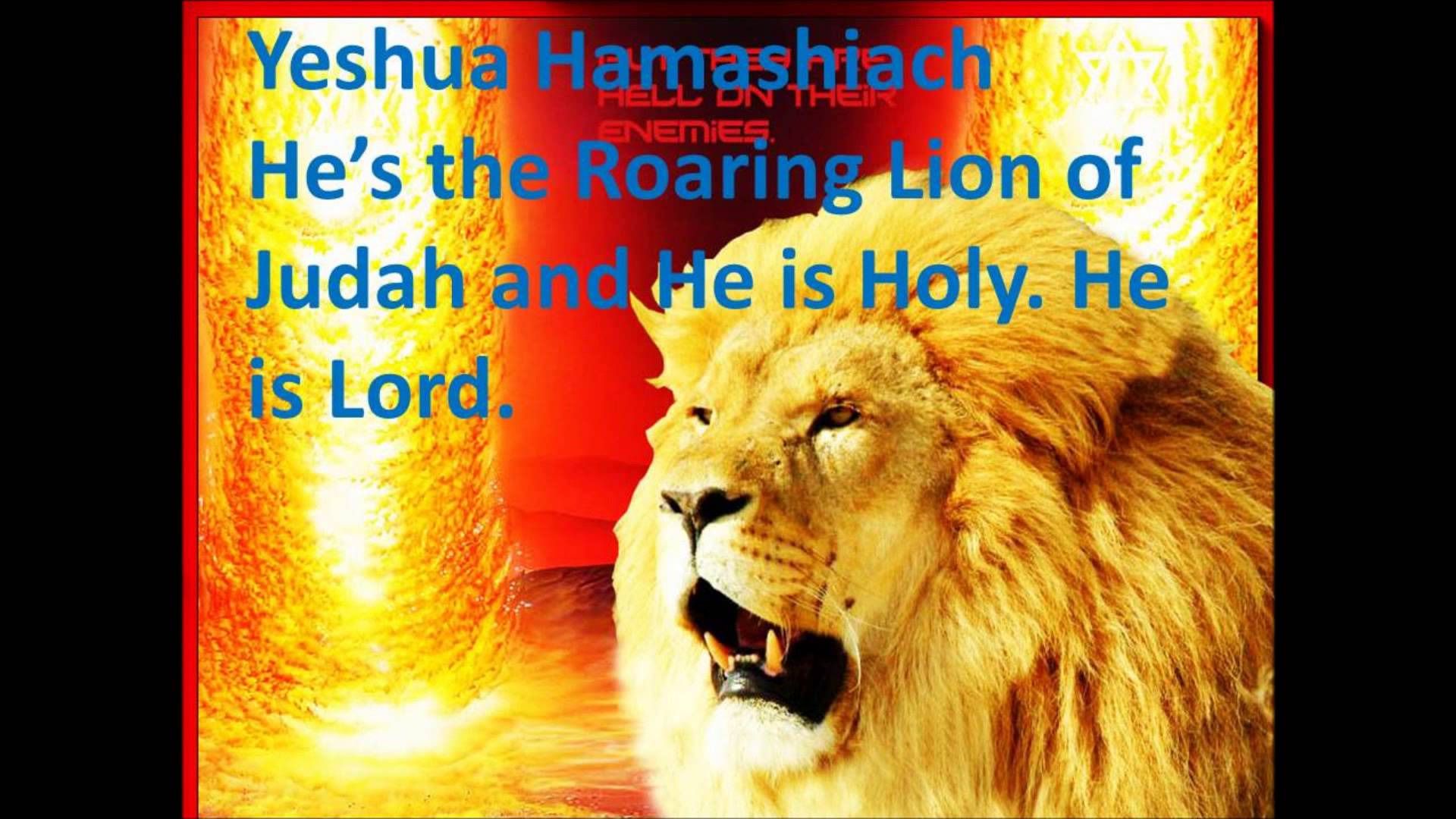
You've probably heard it. That deep, rolling chant that seems to vibrate right in your chest during Sunday service or while you're driving with a worship playlist on shuffle. Yeshua Hamashiach. It isn’t just a catchy bridge or a trendy "worship-ese" phrase. It’s actually one of the oldest ways to say "Jesus the Messiah."
Honestly, the way yeshua hamashiach song lyrics have exploded in the last few years is kind of wild. You've got Nigerian powerhouse Nathaniel Bassey turning it into a global anthem, and then you have groups like Jesus Image or Maverick City Music weaving it into their sets. But why? Why are we suddenly swapping the familiar name "Jesus" for the Hebrew original in so many modern songs?
It’s Not Just a Name—It’s a Statement
Basically, when you sing these lyrics, you aren’t just saying a name. You're making a claim about identity. Yeshua (יֵשׁוּעַ) is the Hebrew name that actually means "Salvation" or "The Lord Saves." Then you add Hamashiach (הַמָּשִׁיחַ), which literally translates to "The Anointed One."
Put them together? You’re singing "Salvation, the Anointed One."
Most people don't realize that "Christ" isn't Jesus's last name. It’s a title. In Greek, it’s Christos. In Hebrew, it’s Mashiach. Singing the Hebrew version feels, for many, like stripping away centuries of translation layers to get back to the raw, original source of the faith. It feels grounded. It feels ancient.
The Nathaniel Bassey Effect
If you’ve searched for these lyrics, there’s a 90% chance you’re looking for the song by Nathaniel Bassey. Released back in 2019 on his album The King Is Coming, this track didn’t just stay in Nigeria. It went everywhere.
The lyrics are surprisingly simple, which is probably why they stick:
Yeshua Hamashiach Lion of Judah Agunechemba
Wait, what was that last one? Agunechemba. That’s Igbo (a Nigerian language). It means "The Lion that guards the city" or "The Lion that watches the land." This mix of Hebrew and African dialect created something that felt bigger than just a "church song." It felt like a war cry.
Why the Repetition?
If you’ve ever looked at the sheet music or a lyric video for a "Yeshua" song, you’ll notice something: they are repetitive. Like, really repetitive.
Take the Jesus Image version. They’ll sing the name "Yeshua" for ten minutes straight. Some people find this annoying. I get it. But there’s a psychological and spiritual reason for it. It’s meant to be "soaking" music. The goal isn’t to give you a complex theological lecture through the verses; it’s to create a space where the listener focuses on a single point of devotion.
It’s about the "vibe" as much as the vocabulary.
Breaking Down the Popular Versions
There isn't just one song. Depending on what you're listening to, the yeshua hamashiach song lyrics might vary quite a bit. Here’s a quick look at the ones hitting the charts right now:
- Nathaniel Bassey’s Version: Focuses on the "Lion of Judah" and "Agunechemba." It’s rhythmic, heavy on the trumpet, and feels very regal.
- Jesus Image (Michael Koulianos): This one is much more ethereal. The lyrics usually revolve around "Yeshua" and "You are the most beautiful among thousands." It’s often used in "spontaneous worship" settings.
- Elshaddai Music (feat. Moses Onoja): This is a newer favorite. It adds lines like "There is power in the name of the Lord" and "He who watches over me never sleeps." It’s a bit more "song-y" than the others.
The "J" Controversy (Is "Jesus" Wrong?)
There is a corner of the internet—and some song lyrics—that suggests using the name "Jesus" is somehow a mistake because the letter "J" didn't exist in Hebrew.
Let's clear that up. Most scholars and linguists (like Dr. Michael Brown) will tell you that "Jesus" is just a transliteration. It went from the Hebrew Yeshua to the Greek Iesous, then to the Latin Iesus, and finally the English Jesus.
God isn't confused by your accent.
However, many songwriters prefer Yeshua Hamashiach because it honors the Jewish roots of the Christian faith. It reminds people that Jesus wasn't a guy from Western Europe; he was a Jewish Rabbi from Nazareth. Using the Hebrew name in song lyrics is a way of saying, "We remember where this story started."
Why It's All Over Google Discover and TikTok
You've probably seen those "aesthetic" worship videos with the hazy filters and the Hebrew text overlay. Those videos are a huge reason why the search for yeshua hamashiach song lyrics has spiked.
There’s something undeniably cinematic about the phrase. It sounds powerful. In a world that feels increasingly chaotic, people are drawn to lyrics that sound ancient and unshakeable. It’s less about "me and my problems" and more about "this eternal figure who has been around for thousands of years."
What Most People Get Wrong
One big misconception? That you have to be "Messianic" (a movement of Jewish people who follow Jesus) to sing these songs.
Not true at all.
Most of the artists writing these songs are from mainstream Pentecostal, Baptist, or non-denominational backgrounds. The "Hebrew roots" movement in music has gone totally mainstream.
How to Use These Songs in Your Own Life
If you’re looking to add these to a personal prayer time or a church set, keep a few things in mind:
- Check the Translation: If the song uses Igbo or Aramaic words alongside the Hebrew, make sure you actually know what they mean so you aren't just chanting syllables.
- Focus on the Meaning: Don't get so caught up in the "exotic" sound of the Hebrew that you forget who you're actually singing to.
- Vary the Style: If you like the high-energy Bassey version, try the more stripped-back "Jesus Image" style for a different experience.
At the end of the day, yeshua hamashiach song lyrics are about one thing: refocusing. Whether you’re calling him Jesus, Yeshua, or the Lion of Judah, the intent is the same. It’s a way to find a bit of peace in the noise.
If you want to dive deeper, I'd suggest looking up the "Names of God" album by Nathaniel Bassey. It’s probably the best starting point for understanding how these Hebrew titles are being used in modern music today. You can also find literal word-for-word translations of the Igbo portions of these songs on most major lyric sites if you want to be 100% sure of what you’re proclaiming.
The next time that chorus hits, you'll know exactly why everyone is singing it. It's a bridge between the ancient past and the modern moment, all wrapped up in a name that means "Salvation."



