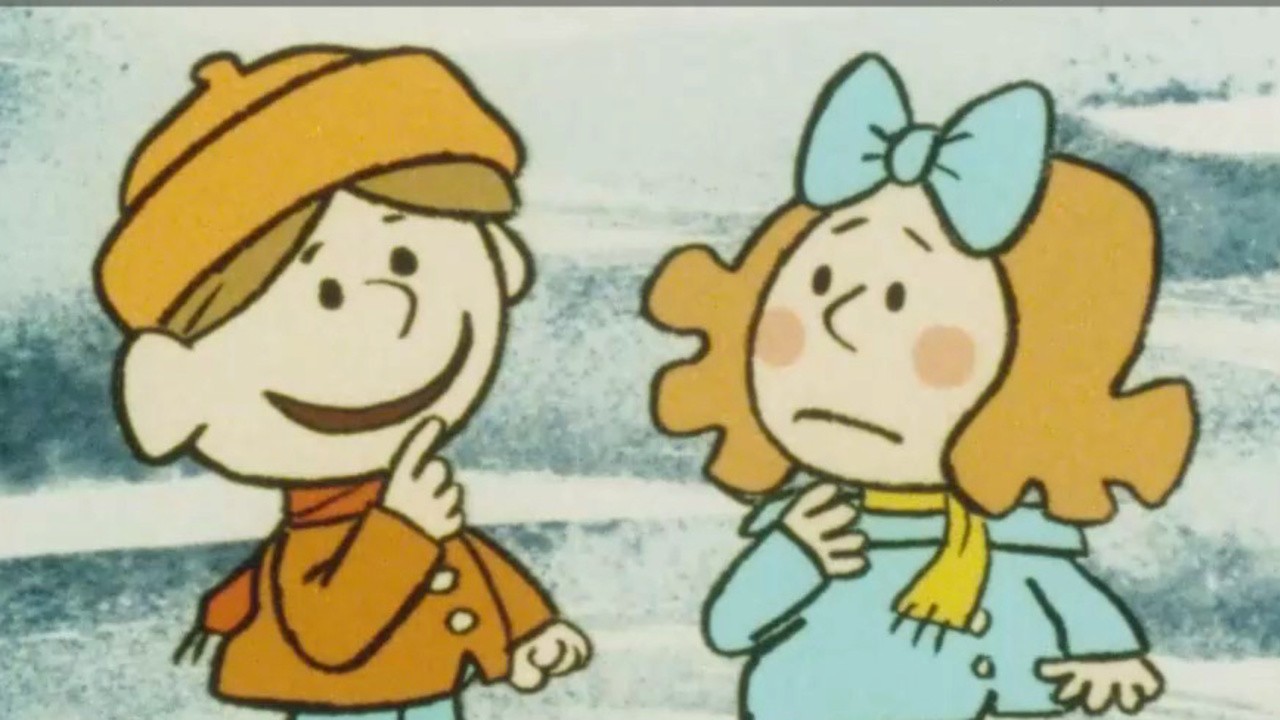
You know that feeling when a cartoon from your childhood stays in the back of your brain, not because it was flashy, but because it felt... real? That’s the vibe with the 1974 animated special Yes Virginia There Is a Santa Claus. It isn’t the Rankin/Bass stop-motion stuff we usually see on a loop every December. It's something else.
Honestly, it’s a bit of a mood.
Back in the mid-seventies, Bill Melendez—the guy we have to thank for the Peanuts specials—decided to tackle the most famous newspaper editorial in history. It originally aired on ABC on December 6, 1974. It didn't have singing snowmen or reindeer with glowing noses. Instead, it gave us a gritty, snowy, slightly 19th-century New York City that felt lived-in.
The Actual Story Behind the Animation
Most people think they know the story. Girl asks if Santa is real, newspaper says yes. End of scene. But the Yes Virginia There Is a Santa Claus 1974 special actually digs into the "why" of it all. It follows Virginia O'Hanlon, an eight-year-old girl living in a world where her friends are starting to get cynical.
It’s about the pressure of growing up.
The animation style is distinctively "Melendez." If you look closely at the character designs, you’ll see the DNA of Charlie Brown and Linus, but with a more detailed, illustrative flair that fits the 1897 setting. It’s hand-drawn. It’s shaky in that beautiful, nostalgic way that modern CGI just can’t replicate.
The plot doesn't rush. We see Virginia grappling with the taunts of other children. We see her father, Dr. Philip O’Hanlon, struggling to give her a straight answer. He’s the one who suggests she write to The Sun.
"If you see it in The Sun, it’s so."
That line carried a lot of weight in 1897. Today, we’d call it "brand authority," but back then, it was just the gospel truth for New Yorkers.
Why the 1974 Version Still Wins
There have been plenty of remakes. A live-action TV movie came out in 1991 with Richard Thomas and Charles Bronson. There was even a CGI short in 2009. But the 1974 version won an Emmy for Outstanding Children's Special for a reason.
It captured the melancholy.
The music, composed by Jimmy Webb, isn't your standard "Jingle Bells" fare. It’s melodic and a little bit haunting. It mirrors the cold New York streets.
And then there’s the voice acting. Courtney Lemmon voiced Virginia. She sounded like a real kid, not a thirty-year-old woman trying to sound six. Jim Backus—the voice of Mr. Magoo and Thurston Howell III—provided the voice of the narrator and the narrator's perspective as Francis Pharcellus Church.
Church was the man who wrote the editorial. In the 1974 special, he’s portrayed as a bit of a curmudgeon who has lost his own spark. That’s the secret sauce of this version. It’s not just Virginia who needs to believe; it’s the guy writing the response.
Breaking Down the Editorial (The Part Everyone Quotes)
When we talk about Yes Virginia There Is a Santa Claus 1974, we have to talk about the text itself. Church’s editorial is the most reprinted newspaper piece in the English language.
He wrote:
"Virginia, your little friends are wrong. They have been affected by the skepticism of a skeptical age."
That was 1897. Imagine what he’d think of 2026.
The special builds up to the moment the paper is printed. The tension is real. Virginia is waiting. The neighborhood is waiting. When the words finally appear on the screen, read with the gravitas of Jim Backus, it doesn't feel like a Hallmark card. It feels like a manifesto for keeping your soul intact in a world that wants to turn everything into a cold, hard fact.
Church argued that the most real things in the world are those that neither children nor men can see. Love. Generosity. Devotion. He basically told the world that if you only believe in what you can touch, you’re living in a very small box.
Production Secrets and the Bill Melendez Touch
Bill Melendez and Mort Marshall (who worked on the teleplay) didn't want a sugar-coated story. They kept the Victorian setting authentic. The clothes, the gaslights, the way the printing presses moved—it was all researched.
- The Peanuts Connection: Because Melendez was at the helm, the timing of the humor and the pauses feels very familiar to anyone who grew up on A Charlie Brown Christmas. There’s a quietness to it.
- The Emmy Win: It beat out some heavy hitters that year. The academy recognized that it managed to turn a static piece of prose into a dynamic narrative.
- The Layout: The backgrounds were often watercolor-heavy, giving it a storybook feel that separated it from the more "cartoonish" shows of the Saturday morning variety.
The Legacy of the 1897 Letter
If you go to the New York Public Library or look through the archives of the New York Sun, you’ll find the original letter. Virginia O’Hanlon grew up to be a teacher. She spent her whole life answering letters about her experience. She died in 1971, just three years before this special aired.
In a way, the Yes Virginia There Is a Santa Claus 1974 special was a tribute to her life and the fact that she never stopped believing in the message Church sent her.
She reportedly said that the editorial shaped her life. It made her look for the "Santa Claus" in every person she met. The 1974 special captures that transition from a doubting child to a woman who understands the metaphorical power of the myth.
Finding the Special Today
Searching for this specific version can be a bit of a hunt. Because so many things share the name, you have to be specific. Look for the 25-minute runtime. Look for the 2D hand-drawn art.
It often pops up on retro-focused streaming services or as a bonus feature on older holiday DVDs. It hasn't been remastered to death like some Disney classics, which is actually a good thing. The graininess of the film adds to the historical vibe.
Why It Matters Right Now
We live in an era of "fact-checking" and instant information. Everything is debunked in seconds.
The 1974 special is an antidote to that. It reminds us that there is a difference between a "fact" and a "truth."
Is Santa a guy in a red suit who fits through a chimney? If you’re being literal, no.
Is Santa the personification of the human capacity to give without expecting anything in return? Yes.
That’s what Church was saying. That’s what Melendez was animating.
Actionable Steps for the Nostalgia Hunter
If you’re planning a holiday marathon, don't just stick to the obvious choices.
- Check the Credits: Ensure you are watching the 1974 version directed by Bill Melendez.
- Read the Original Editorial: Before watching, read the actual text published on September 21, 1897. It’s less than 500 words but packs a punch.
- Compare the Versions: If you have kids, show them the 1974 version and then a modern CGI special. Ask them which one felt more "human." The results might surprise you.
- Visit the Site: If you’re ever in New York City, the site of the old Sun building (the Sun Building at 280 Broadway) is still there. It’s a cool piece of history to stand where that letter was received.
The 1974 special isn't just a "kids' show." It’s a piece of television history that treats its audience with respect. It assumes you can handle a little bit of sadness and a lot of philosophy. It’s about the power of the written word and the endurance of hope.
It basically proves that some things never go out of style.
Next Steps for Christmas Historians
To get the most out of your viewing of Yes Virginia There Is a Santa Claus 1974, track down a copy of the 1970s "The New York Sun" commemorative reprints. These are often sold in antique shops and give a tactile sense of what Virginia was holding in her hands when the world finally answered her question. Additionally, you can research the biography of Virginia O'Hanlon Douglas to see how she carried the legacy of "The Letter" through her career as an educator in the New York City school system.



