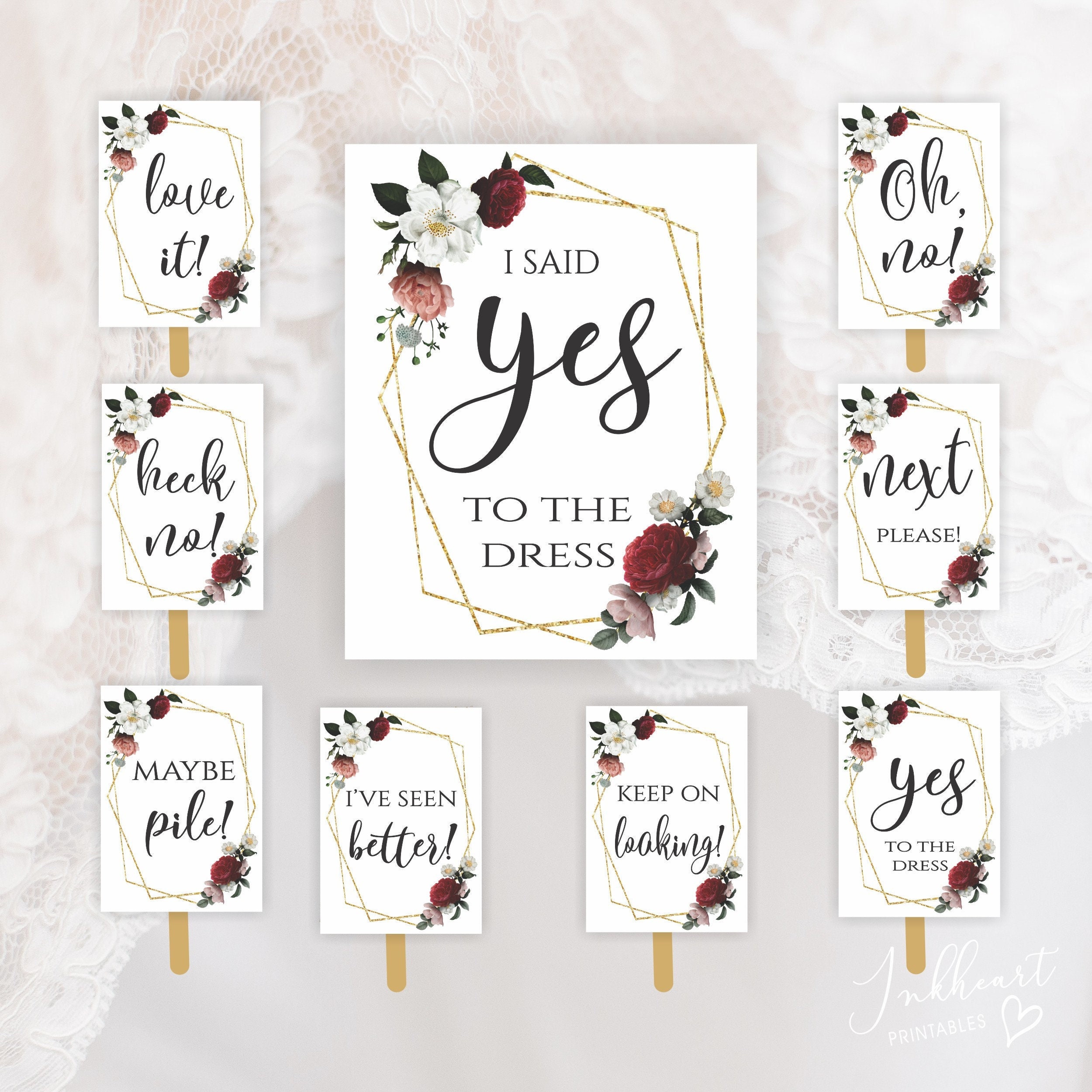
It happens in a flash. You’re standing on a literal pedestal, staring at a reflection of yourself in three thousand dollars' worth of tulle and lace, and suddenly your Maid of Honor flips a glittery piece of cardboard over. It says "Yes!" in cursive. Everyone screams. A consultant rings a bell. You might cry. If you’ve spent any time on Pinterest or watched even five minutes of TLC, you know exactly what I’m talking about. Yes to the dress signs have become the definitive punctuation mark for the modern bridal shopping experience, turning a private purchase into a full-blown production.
But honestly? The reality of using these signs is a bit messier than the curated photos suggest.
The trend blew up because of Say Yes to the Dress, the show that turned Kleinfeld Bridal into a global landmark. Since the show premiered in 2007, the "reveal" has become the climax of the appointment. It wasn't enough to just buy the dress anymore; you had to perform the decision. Now, you can’t walk into a local boutique without seeing a stack of these signs—often custom-made with the bride's name or wedding date—waiting by the mirrors.
The Psychology Behind the Sign
Why do we do it? Validation.
Bridal shopping is high-stakes. It’s expensive, it’s emotional, and for many, it’s the most "public" they will ever be. A sign acts as a physical consensus. When the group holds up those signs, it signals that the search is over. It’s a collective exhale. Psychological studies on consumer behavior often point to "choice paralysis," especially with high-ticket items. Having a literal sign that says "She Said Yes!" helps the brain switch from searching mode to celebrating mode.
It’s about the photo, sure. But it’s also about the relief.
What Most People Get Wrong About Using Signs
Most brides think the sign is for them. It’s actually for the audience.
If you're browsing Etsy or Amazon for yes to the dress signs, you'll notice a massive variety. Some are simple paddles. Others are elaborate chalkboards or acrylic hexagons. But here is the thing: if the sign is too big, it hides the dress in the photo. If it’s too small, it looks like a coaster.
I’ve seen dozens of bridal appointments where the "sign moment" actually ruins the vibe. Imagine this: the bride is genuinely crying because she found the one. It’s a beautiful, raw moment. Then, a bridesmaid starts fumbling with a bag to find the "I Said Yes" sign because she wants the perfect Instagram shot. The authenticity evaporates.
If you’re going to use them, they need to be accessible. Don't hide them under a pile of coats and purses.
The Rise of Custom Yes to the Dress Signs
Generic signs are dying out. Nobody wants the same cardboard "Yes" that the last ten brides used.
Lately, the shift has moved toward personalization. Brides are ordering custom wood-cut signs or even neon signs that they can later repurpose at the wedding reception. It’s a clever bit of branding for the wedding itself. According to data from various wedding planning platforms, "experience-based" shopping is the number one priority for Gen Z and Millennial brides. They don't just want a gown; they want a core memory.
Materials Matter More Than You Think
- Acrylic: This is the current "it" material. It looks high-end and modern. However, it’s a nightmare for photography because of the glare from those bright boutique lights.
- Wood: Great for boho weddings. It photographs well because it doesn’t reflect light. It’s sturdy.
- Cardstock: The budget option. It works, but it can look a bit flimsy if it’s been handled by twenty different bridesmaids throughout the day.
- Digital: Some tech-savvy boutiques are moving toward digital screens or iPads that display the "Yes" message, though many feel this lacks the tactile charm of a physical prop.
Does the Sign Put Too Much Pressure on the Bride?
Let’s be real for a second.
The presence of yes to the dress signs creates an unspoken expectation. It implies that every shopping trip should end in a purchase. But sometimes, you just don't find the dress. I’ve talked to consultants who mention that brides feel like they’ve "failed" the appointment if they don't get to use the props.
"It’s a lot of pressure," says Sarah, a former bridal stylist in Chicago. "I’ve seen brides buy a dress they were 70% sure about just because the energy in the room was so high and the signs were already out. Then they call two days later wanting to cancel the order."
This is the dark side of the Pinterest-perfect wedding. The "Yes" moment is so curated that it can overshadow the actual garment. It's important to remember that the sign is a tool, not a requirement.
Alternatives to the Traditional Sign
Some groups are getting creative. Instead of a binary "Yes" or "No," they use rating signs.
- "Total Vibe"
- "Needs More Sparkle"
- "Mom’s Crying (In a good way)"
- "Keep Looking"
This makes the process feel more like a conversation and less like a scripted TV show. It also gives the bride's entourage something to do besides just nodding.
How to Capture the Perfect "Yes" Photo
If you're going to do the sign thing, do it right.
First, lighting is everything. Most bridal shops have "daylight" bulbs which are great for seeing the color of the dress but can be harsh for photos. Stand slightly away from the mirror to avoid capturing the back of your own head (unless that’s the goal).
Second, timing. Don't grab the sign the second you think you like the dress. Wear the dress for ten minutes. Walk in it. Sit in it. If you still love it, then bring out the signs.
Third, the "V-Shape." If you have a group, have them flank the bride in a V-formation with their signs. It draws the eye directly to the center—the bride—while still showing off the support system.
Why Some High-End Boutiques are Banning Signs
Interestingly, there’s a counter-movement. Some ultra-luxury bridal salons in New York and Paris have started discouraged or outright banning outside props like yes to the dress signs.
Their reasoning? It cheapens the brand. These ateliers want the focus to be on the craftsmanship of the lace, the structure of the corset, and the heritage of the designer. They argue that the "social media circus" takes away from the sacredness of the moment. It’s a "quiet luxury" approach.
Whether you agree or not, it’s a sign that the industry is splitting. You have the "Theatrical Experience" shops on one side and the "Couture Purists" on the other.
Real Examples of Viral Sign Moments
Remember the "Dog 'Yes' Sign" from 2023? A bride brought her Golden Retriever to the appointment, and they attached a "She Said Yes" sign to his collar for the reveal. It got millions of views on TikTok.
Then there was the "Grandma Sign" where a bride had her grandmother hold up a sign that said "I wore it better" as a joke, referencing a photo of the grandma’s own 1950s wedding dress. These are the moments where signs actually add value—when they reflect a specific, personal relationship rather than just mimicking a TV show.
The Environmental Impact
It’s worth noting that many of these signs are single-use plastic or treated paper that ends up in the trash five minutes after the photo is posted. If you’re an eco-conscious bride, look for:
- Chalkboards: You can erase them and use them again for the wedding "Order of Events" or "Signature Cocktails."
- Rentals: Many shops now offer high-quality signs as part of the appointment fee, which they sanitize and reuse.
- Digital overlays: Using Instagram or Snapchat filters instead of physical props.
Actionable Steps for Your Shopping Trip
If you’re the Maid of Honor or the Bride-to-be, here is how to handle the sign situation without the stress:
- Check the Boutique Policy: Call ahead. Some places provide signs, others don't. You don't want to show up with a DIY kit only to find out they have a "no props" rule.
- Designate a "Sign Captain": Choose one person in the group to be in charge of the props. This prevents chaos and ensures that the "Yes" moment actually gets captured on camera.
- Don't Feel Obligated: If you find the dress but aren't feeling the "performance," skip it. You can take a beautiful photo without a piece of cardboard telling people how to feel.
- Coordinate the Aesthetic: If your wedding is a moody, gothic vibe, a bright pink "Yes" sign is going to look weird in your planning album. Buy or make a sign that matches your wedding colors.
- Focus on the Fit First: No sign can fix a dress that makes you feel uncomfortable. The sign should be the last thing that happens, not the focus of the fitting.
The era of yes to the dress signs isn't over, but it is maturing. It's moving away from the loud, clichéd "TLC style" and into something more personal and intentional. Whether it's a hand-painted wooden plank or a funny inside joke on a piece of paper, the best sign is the one that actually means something to the person wearing the white dress.



