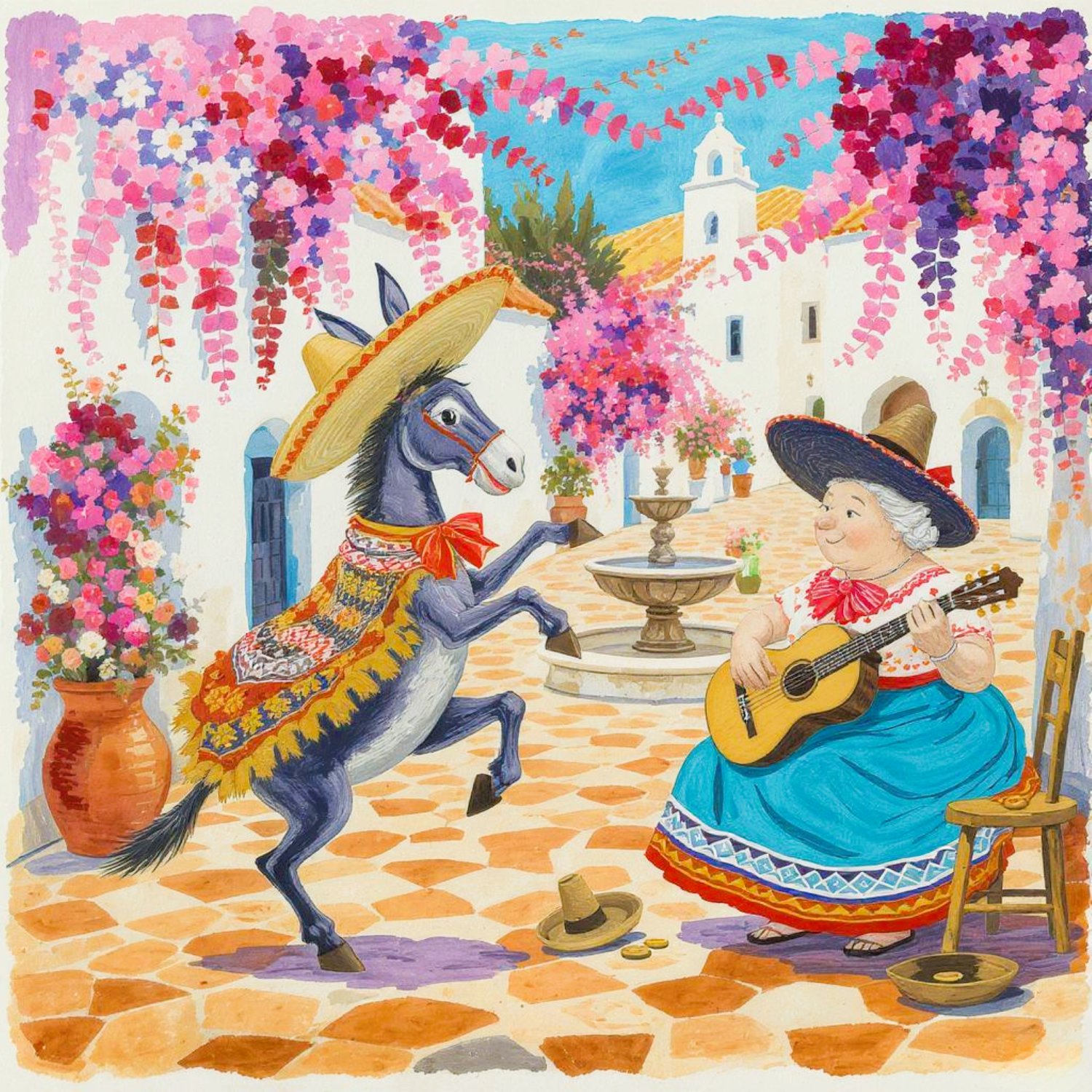
You know that feeling when a bassline hits and your feet just start moving before your brain even realizes what's happening? That is the magic of Baccara. But honestly, when people say "I can boogie but I need a certain song," they aren't just quoting a lyric—they are talking about one of the most improbable success stories in the history of European pop music. It’s a track that shouldn't have worked. Two Spanish flamenco dancers singing in English with thick accents, produced by a West German team, during the height of a disco craze that was already starting to cannibalize itself. Yet, here we are, decades later, and the song is still everywhere.
It's a masterpiece of simplicity.
Mayte Mateos and Maria Mendiola weren't looking to change the world. They were just performing a cabaret act at a hotel in Fuerteventura. Think about that for a second. You're on vacation, sipping a drink, and you see two women performing traditional Spanish dance. Then, a RCA executive named Leon Deane sees them and thinks, "Wait, there's something here." He didn't see flamenco; he saw disco. That pivot changed everything.
Why the "Certain Song" Language Matters
The phrase "I can boogie but I need a certain song" is more than just the opening hook. It’s the identity of the track. If you look at the lyrics, they’re actually kind of cheeky. The narrator is basically telling a guy that she’s got the moves, but he’s gotta provide the right vibe. It’s a demand for quality.
Musically, the song relies on a very specific disco trope: the "four-on-the-floor" beat combined with a lush, orchestral string section. In 1977, this was the gold standard. When Dutch producer Rolf Soja and writer Frank Dostal sat down to create this for Baccara, they weren't aiming for subtle. They wanted a hit. They used a Roland drum machine—very high-tech for the time—and layered it with live percussion to give it that "breathing" feel that pure electronic music often lacks.
People often forget how massive this was. We're talking about a single that sold over 18 million copies. To put that in perspective, that's more than many modern superstars see in their entire careers. It reached number one in the UK, making Baccara the first female duo to top the charts there. And they did it with a song that basically admits they can't dance to just anything.
The Scotch Connection and the 2020s Resurgence
If you’re wondering why you’ve heard this song more in the last few years than in the previous twenty, you can thank the Scottish National Football team. It’s the weirdest thing. Sometimes a song just finds a new home in a different subculture.
After Scotland qualified for Euro 2020 (which actually happened in 2021 because of the pandemic), a video went viral. It showed the players in the dressing room, losing their minds, screaming "Yes Sir, I Can Boogie." Why? Because of Andrew Considine. Years earlier, the defender had made a stag-do video of himself in drag, lip-syncing to the song. It became a cult classic among fans, then a dressing room anthem, and finally, a national obsession.
Suddenly, a 1977 disco track was back in the Top 40. It shows that the "certain song" isn't just a lyric—it’s a piece of cultural glue. The song has this infectious, campy joy that cuts through the cynicism of modern sports. It’s impossible to be angry while listening to Baccara.
The Technical Brilliance of the Production
Let’s get nerdy for a second. Why does it sound so good?
Rolf Soja was a genius of the "Euro-Disco" sound. Unlike the gritty, funk-heavy disco coming out of New York or Philly, Euro-Disco was polished. It was clean. The vocals on "Yes Sir, I Can Boogie" are mixed very forward, almost whispered in parts. This gives it an intimate, breathy quality.
Then there’s the arrangement:
- The Bassline: It’s a walking bassline but with a syncopated "pop" that keeps it from sounding like jazz.
- The Strings: They don't just hold chords; they play counter-melodies that respond to the vocals.
- The Accents: Maria and Mayte’s Spanish accents weren't a bug; they were a feature. It gave the track an exotic, European flair that appealed to the jet-set aesthetic of the late 70s.
Some critics at the time called it "disposable." They were wrong. You don't sell 18 million copies of something disposable. You sell that many copies of something that taps into a universal desire to just let go and dance.
Misconceptions About the Duo
A lot of people think Baccara was a "one-hit wonder." That’s technically incorrect, though "Yes Sir, I Can Boogie" is certainly their biggest shadow. Their follow-up, "Sorry, I’m a Lady," was also a massive hit across Europe. They even represented Luxembourg in the Eurovision Song Contest in 1978 with "Parlez-vous français?"
They finished seventh, but the song became a massive club hit.
The tragedy of the group is the eventual split. By 1981, after several albums and a lot of touring, the creative partnership between Mayte and Maria dissolved. It wasn't a clean break. For years, there were actually two versions of Baccara touring the world. "Baccara" and "New Baccara." It was a mess of trademark disputes and hurt feelings. Maria Mendiola unfortunately passed away in 2021, right as the song was seeing its biggest revival in decades. It was a bittersweet moment for the music community.
How to Use the "Boogie" Energy Today
If you’re a content creator or a DJ, there’s a lesson here. The "Yes Sir, I Can Boogie" phenomenon proves that "vibe" beats "perfection" every time. The song isn't the most complex piece of music ever written. The lyrics are repetitive. The premise is simple. But the execution is fearless.
When you need a "certain song" to fill a dance floor or lift a mood, you’re looking for three things:
- A recognizable intro: Those first few bars are instant.
- A physical reaction: The tempo (around 120 BPM) is the human heart rate when it's excited.
- Inclusivity: Anyone can sing along to the chorus. You don't need to be a linguist.
Actionable Steps for Music Lovers and Curators
If you want to recapture that 77-era magic, don't just stop at Baccara. You have to understand the ecosystem they lived in.
- Dig into the Munich Sound: Check out Giorgio Moroder’s early work and Donna Summer’s "I Feel Love." This is the DNA of the Baccara sound.
- Vary your playlists: If you’re DJing, "Yes Sir, I Can Boogie" works best when transitioned from something slightly slower. It provides a "lift" that people feel in their chests.
- Watch the original performances: Go to YouTube and find their 1977 TV appearances. Look at the choreography. It’s minimal, elegant, and entirely focused on the rhythm. It’s a masterclass in stage presence.
- Embrace the "Certain Song" mentality: In your own life or work, identify your "certain song"—that one thing that gets you into a flow state. For Baccara, it was a specific disco beat. For you, it might be a specific environment or a specific type of task.
The legacy of Baccara isn't just a catchy tune. It’s a reminder that sometimes, the most "commercial" music is actually the most human. It’s okay to want to boogie. It’s okay to be picky about the song. Just make sure when you find it, you don't stop dancing.
Next Steps for Deepening Your Knowledge
To truly appreciate the era, track down the 1977 West German production credits for RCA Victor. Look for the engineers who worked at Polydor Studios. Understanding the hardware they used—the specific analog consoles and tape saturation—explains why modern digital covers of this song often feel "flat" compared to the original vinyl pressings. If you are collecting, look for the original 7-inch Spanish pressings; they have a slightly different mastering profile that favors the mid-range vocals more than the UK exports.



