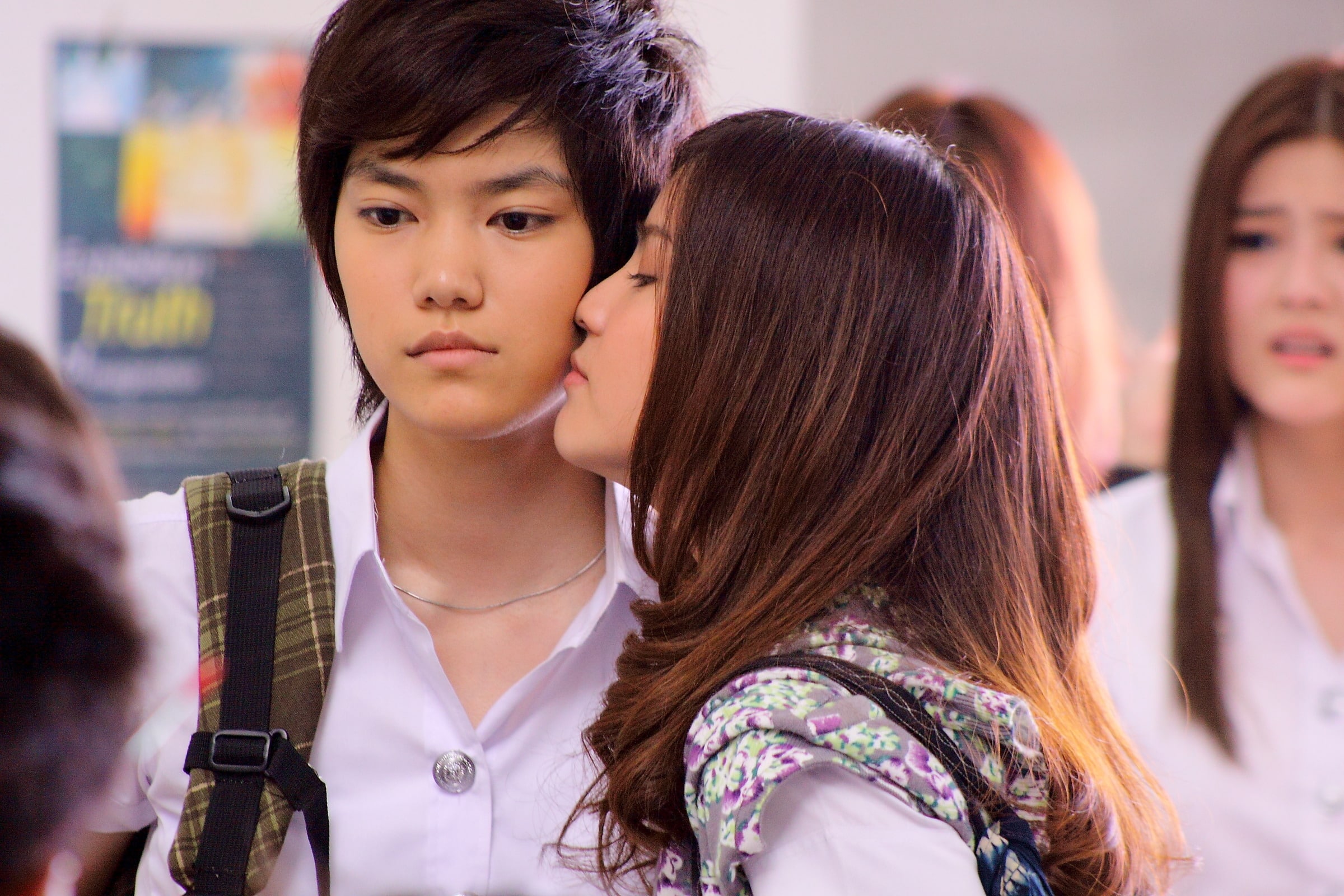
If you were deep in the "Girls' Love" (GL) internet back in 2010, you remember the chaos. People weren't just watching a movie; they were witnessing a shift. Yes or No wasn't the first queer film to come out of Thailand, but it was the one that broke the dam. It was sweet. It was awkward. Honestly, it was a little bit cheesy. But for a generation of viewers across Southeast Asia and beyond, it was the first time they saw a butch-femme dynamic treated with actual tenderness instead of being the punchline of a tragic joke.
The story is simple. Pie (Aom Sushar Manaying) is a conservative university student who moves into a dorm room only to find her roommate is Kim (Tina Jittaleela). Kim wears oversized shirts. She has short, cropped hair. She looks like what the Thai media calls a "Tom"—a masculine-identifying woman. Pie is horrified. She draws a line down the middle of the room. She’s rude. She’s judgmental. But then, as these things go, the line fades. You might also find this related article insightful: The Bonnie Tyler Coma Clickbait and the Broken Economics of Nostalgia Touring.
The Cultural Impact of the Yes or No Film
We have to talk about the "Tom" and "Dee" culture in Thailand to understand why this hit so hard. In 2010, Thai cinema was busy. You had horror hits and slapstick comedies, but queer representation was usually relegated to the "Kathoey" (trans woman/effeminate gay man) character who provided comic relief. Yes or No did something radical by making the relationship between two women the central, serious heart of the story.
It didn't end in a double suicide or a forced marriage to a man. That was huge. As extensively documented in recent coverage by Variety, the results are notable.
Director Sarasawadee Wongsomphet took a gamble. She based it on short stories by writers like "Candy," focusing on the slow-burn realization of feelings. When Kim tries to win Pie over with small gestures—fixing things, being a shoulder to cry on—it resonates because it feels grounded in that specific university dorm-life nostalgia.
Why the Chemistry Between Aom and Tina Worked
Tina Jittaleela wasn't a seasoned actress when she took the role of Kim. She had this raw, shy energy that perfectly suited a character who was comfortable in her gender expression but terrified of emotional rejection. On the flip side, Aom Sushar brought a polished, expressive performance that balanced Tina’s minimalism.
Fans didn't just watch the movie; they obsessed over the "Aom-Tina" ship. It became a marketing juggernaut. They toured Asia. They had massive fan meetings in China, where the film became an underground sensation despite strict censorship laws. It’s funny looking back—some of the acting is a bit stiff, and the soundtrack is relentlessly sentimental—but the authenticity of the feeling was there.
The Sequels and the Dilution of the Brand
Success usually leads to a franchise, and this was no different. Yes or No 2: Come Back to Me arrived in 2012. It took the relationship out of the dorm and into the "real world," dealing with long-distance struggles and internship stress. It was a solid sequel, though it lacked that lightning-in-a-bottle magic of the first one.
Then came Yes or No 2.5.
This is where things got confusing for the casual viewer. It wasn't a direct continuation of Pie and Kim’s story. Instead, it brought Tina back as a different character named Wine, alongside new cast members like Nan Sunanta and Hongyok Chanyasak. It was okay. It just wasn't the Yes or No that people fell in love with. It felt like the studio was trying to keep the brand alive without the original chemistry that made it work.
Comparing Yes or No to Modern GL Series
If you look at the landscape today, we have massive hits like Gap: The Series or 23.5. These shows have huge budgets, high-production values, and global streaming deals on platforms like Netflix or YouTube.
But Yes or No was the blueprint.
It established the "T-Pop" aesthetic for queer romance. It proved that there was a massive, underserved market for women-loving-women (WLW) content in Asia. Before the glossy, high-definition dramas of 2024 and 2025, there was this grainy, heartfelt indie film about a girl who didn't want to cross a line in her dorm room.
What the Critics Got Wrong
A lot of mainstream critics at the time dismissed the Yes or No film as a "niche" project for teenage girls. They missed the political weight of the dialogue. There’s a scene where Kim’s father talks about plants—how some need different environments to grow—which was a thinly veiled, beautiful metaphor for sexual orientation.
It wasn't just "fluff." It was a survival manual for kids living in conservative households. It gave them a vocabulary for their feelings.
The film also dealt with the "butterfly" metaphor. The idea that love is like a butterfly—the more you chase it, the more it flies away, but if you sit still, it might just land on your shoulder. It’s a bit Hallmark, sure. But in the context of a young woman coming to terms with her identity in a society that expects her to be a "proper" lady, that quietness was powerful.
Technical Limitations and Indie Charm
Let’s be real: the lighting in the first movie is hit or miss. The sound editing in some of the outdoor scenes is a bit rough. But these technical flaws actually add to the "human" quality of the film. It feels like a diary entry. It doesn't have the sterile, over-saturated look of modern digital cinematography. It feels like 2010. It feels like real life.
- Director: Sarasawadee Wongsomphet
- Original Release: December 16, 2010
- Run Time: 106 minutes
- Lead Cast: Sucharat "Aom" Manaying and Suppanad "Tina" Jittaleela
How to Watch It Today
Finding a high-quality version of the original film can be a bit of a treasure hunt depending on your region. It used to bounce around various streaming services, but often the best way to find it with accurate English subtitles is through official international DVD releases or specialized Asian cinema platforms.
If you're jumping into it for the first time, skip the trailers. They give away too many of the cute beats. Just go in cold.
Actionable Insights for Fans of the Genre
If you’ve already seen the film or are looking for something similar, here is how you can engage with the legacy of Yes or No:
- Watch the "Brother" Film: Check out Love of Siam. It’s often paired with Yes or No as the two foundational pillars of modern Thai queer cinema, though it focuses on a male-male relationship.
- Follow the Evolution: Watch Gap: The Series immediately after. The contrast in how queer identity is discussed—moving from the "secretive" nature of 2010 to the "out and proud" energy of the mid-2020s—is fascinating.
- Explore the Soundtrack: The song "Sop Ta" (Meeting Eyes) is an absolute classic. Even if you don't speak Thai, the melody captures the exact vibe of the movie.
- Look for the Directors’ Other Work: Sarasawadee Wongsomphet has continued to work in the industry, and you can see her touch in various Thai dramas. She has a specific way of filming "the gaze" that remains influential.
The Yes or No film didn't just provide 100 minutes of entertainment. It created a community. It showed that love isn't about the "type" of person you are supposed to be with, but about the person who makes you feel like you've finally come home. Whether you're a long-time fan or a newcomer to Thai GL, it’s a piece of history that still holds up because its core message is universal: love is just love, yes or no.



