You’re standing in the aisle—or more likely, scrolling through a dozen tabs—trying to figure out why a tube of slippery stuff costs twenty bucks while the pharmacy brand is five. It’s annoying. But then you see it. YES lubricant. Or, more accurately, The YES YES Company. They’ve got this cult-like following that feels a bit intense for a sexual health product, right? People talk about it like it’s a skincare holy grail rather than just something to make things go smoother.
Most people just want something that doesn't sting. Honestly, the bar is pretty low. But YES (often searched as YES YES YES lubricant because of their branding) stepped in a few years ago with a pitch that sounded less like a chemist and more like a botanist. They wanted to make something "certified organic." Now, if you’re a skeptic, "organic" in the bedroom sounds like marketing fluff. But for anyone who has ever had a localized allergic reaction to glycerin or parabens, it’s a massive deal.
The reality is that your most sensitive skin is incredibly absorbent. It’s a mucosal membrane. Stuff goes in. So, when YES founders Susi Lennox and Sarah Brooks (two former drug safety professionals, which is a cool bit of trivia) looked at the market, they saw a lot of industrial chemicals they didn't like. They decided to build something better.
What’s actually inside the tube?
If you look at a standard bottle of cheap lube, you’ll usually find glycerin. Glycerin is a sugar alcohol. It’s cheap, it’s slippery, and for many people, it causes yeast infections. Why? Because sugar feeds yeast. It’s a basic biological "oops."
YES water-based lubricant is different because it uses plant polymers. Specifically, they lean on flax (linseed) extract and aloe vera. It doesn't feel like that sticky, tacky gel that turns into "glue" after five minutes of friction. It feels... well, it feels like nothing. And that’s usually the goal. You want it to mimic natural arousal fluid, not a chemical experiment.
Then there’s the pH balance. This is where the science gets a bit nerdy but super important. The vaginal environment is acidic, usually sitting between a 3.8 and 4.5 on the pH scale. Most lubricants are way off that mark. If you throw off that balance, you’re basically inviting bacterial vaginosis to move in. YES formulated their water-based version to match that specific acidity. It’s one of the few brands that actually gets a nod from the NHS in the UK for being "vaginal-tissue friendly."
The Oil-Based Alternative
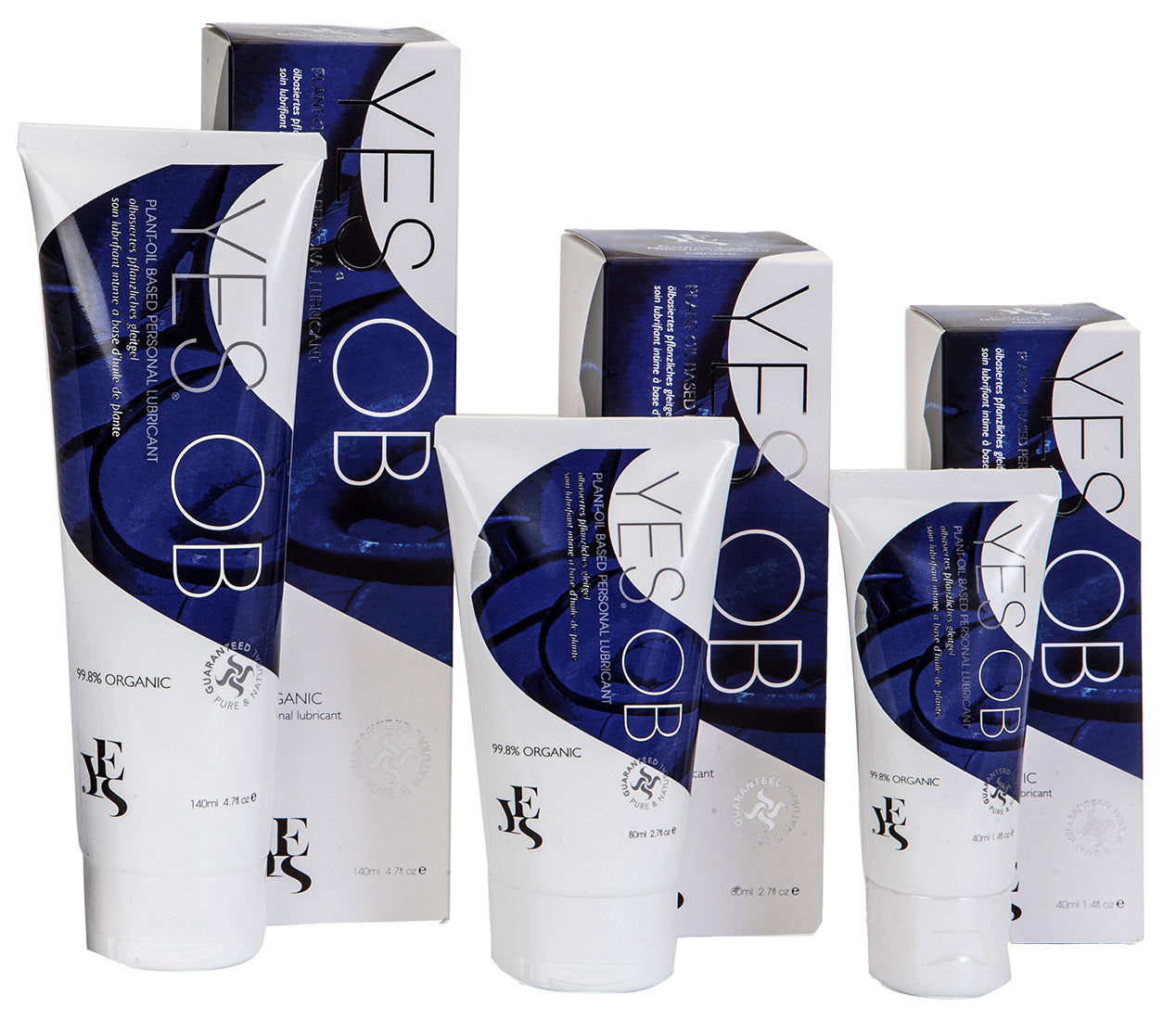
We need to talk about the oil-based version. It’s a different beast. It’s thick. It’s rich. It uses cocoa butter, shea butter, and sunflower seed oil. It’s great for massage or for anyone dealing with severe dryness—think menopause or certain medications like antihistamines or antidepressants that dry everything out.
But—and this is a big but—you cannot use the oil-based stuff with latex condoms. It will dissolve them. Fast. If you’re using toys, specifically silicone toys, oil can also be a bit of a nightmare to clean off. It’s amazing for skin-on-skin, but it’s a specialist tool, not an all-rounder.
Why the "Dual-Control" thing is actually smart
One of the weirder things this company suggests is mixing them. They call it "double gliding." It sounds like a sales tactic to get you to buy two bottles, doesn't it? It kinda is. But it also works.
If you put the oil-based one on first, it creates a waterproof barrier. Then, you put the water-based one on top. The water-based layer provides the initial "slip," and the oil layer keeps the water-based layer from soaking into the skin too quickly. It’s a technique used in professional settings (yes, those settings) to ensure things stay slick for a long time without constant reapplication.
Does the average person need to do this on a Tuesday night? Probably not. Is it a game-changer for long sessions? Absolutely.
The Problem With "Natural"
Let's be real for a second. "Natural" isn't always better. Poison ivy is natural. Lead is natural. The term "natural" in the US and UK isn't strictly regulated in the way "Organic" is. This is why YES makes a big deal about their Soil Association certification. It’s a paper trail. It proves they aren't just slapping a leaf on the packaging and calling it a day.
However, being organic means their products have a shorter shelf life than the stuff that could survive a nuclear winter. You can't leave a bottle of YES YES YES lubricant in a hot car for six months and expect it to be fine. It’ll go off. It’s a botanical product. It needs a little more respect than a bottle of motor oil.
Let’s talk about the sting
If you've ever used a "warming" or "tingling" lube and felt like you were being attacked by fire ants, you aren't alone. Those sensations are usually caused by menthol, capsaicin, or high concentrations of propylene glycol. They are irritants. They work by causing a mild inflammatory response to increase blood flow.
YES doesn't do that.
Their philosophy is about "isostericity." This is a fancy way of saying the concentration of salts and minerals in the lubricant matches the concentration in your body’s cells. If a lubricant is "hyperosmolar" (too salty/concentrated), it actually sucks water out of your cells. That’s why some lubes make you feel drier after you use them. It’s a cruel irony. By keeping the formula "iso-osmotic," YES ensures the skin stays hydrated rather than being stripped of its own moisture.
Comparing the heavy hitters
How does it stack up against something like Uberlube or Sliquid?
- Uberlube is silicone. It lasts forever, it’s great for the shower, but it doesn't "moisturize." It just sits on top.
- Sliquid is a great "clean" water-based option, very similar to YES, but usually has a slightly thinner consistency.
- YES sits in that sweet spot where it feels more like a treatment. It’s often used as a vaginal moisturizer for daily comfort, not just for sex.
The Menopause Factor
This is an area where this brand really shines, and it’s a topic people are finally starting to talk about without whispering. During perimenopause and menopause, estrogen levels drop. This leads to vaginal atrophy—the thinning and drying of the walls. It can be incredibly painful.
A lot of doctors recommend YES because it’s not estrogen-based, but it provides that relief. For women who can’t use hormone replacement therapy (HRT) due to health risks, a high-quality, pH-balanced lubricant is a literal life-saver. It’s about quality of life. It’s about being able to walk or sit comfortably, not just about sex.
Is it worth the price?
Honestly? It depends.
If you use it once a month and you’ve never had a sensitivity issue in your life, you might not notice the difference between this and a drugstore brand. But if you’re prone to UTIs, yeast infections, or you have sensitive skin, it’s a cheap insurance policy.
Think of it like buying bread. You can buy the white loaf that’s mostly air and preservatives, or you can buy the sourdough from the bakery. Both are bread. One just feels and tastes a lot better, and your body probably processes it a bit more kindly.
Common misconceptions to clear up
I hear a lot of weird stuff about organic lubes. Let's debunk a few.
- "It’s vegan, so I can eat it." Please don't. While the ingredients are food-grade in many cases, it’s designed for a different part of your anatomy. It’s not a dessert topping.
- "Organic means it won't cause an allergy." Wrong. People are allergic to strawberries and peanuts. Both are organic. Always patch test on your arm first if you’re super reactive.
- "It’s a spermicide." Nope. It won't stop you from getting pregnant. In fact, if you're trying to conceive, you should actually look for "fertility-friendly" lubes (YES has one called YES BABY), because standard water-based lubes can sometimes slow down sperm due to their pH and thickness.
How to use it effectively
Don't be stingy. That’s the biggest mistake. Most people use a pea-sized amount and wonder why it disappears. Your skin is thirsty.
Start with a generous amount. If you’re using the water-based version and it starts to get a bit tacky, don't just add more lube—add a drop of water. It reactivates the plant polymers and makes it slick again without the buildup.
If you're dealing with chronic dryness, try using a small amount of the water-based version as a daily moisturizer. Just a little bit after your shower. It helps maintain that mucosal barrier and prevents the micro-tears that can lead to infections.
Actionable Next Steps
- Check your current bottle: If the first three ingredients include glycerin or petroleum, and you've been feeling "itchy" lately, that’s your smoking gun. Switch to a glycerin-free water-based option.
- The "Latex Test": If you use condoms, stick exclusively to the YES WB (Water-Based). Keep the OB (Oil-Based) for solo play or partner massage where condoms aren't invited.
- Temperature Matters: Keep your organic products in a cool, dark place. The bathroom cabinet is fine, but don't leave it on a sunny windowsill.
- Try the sample packs: Most retailers sell tiny sachets. Before you drop $20 on a full tube, grab a sampler to see if the texture works for you.
- Hydrate from the inside: No lubricant can do all the work if you're chronically dehydrated. Drink your water. It sounds cliché, but your mucosal membranes will thank you.



