Sammy Davis Jr. was once asked how he survived. He didn't point to his voice or those legendary tap shoes. He pointed to a mindset. Yes I Can Sammy Davis Jr isn't just a book title; it was a survival mechanism for a man who was, in his own words, the only "Black, Puerto Rican, one-eyed Jewish entertainer" in a world that wasn't exactly rolling out the red carpet for any of those things.
Honestly, celebrity memoirs usually suck. They’re ghostwritten fluff designed to sell a tour or clean up a scandal. But when this thing dropped in 1965, it wasn't fluff. It was a 600-page gut punch. It’s raw. It’s kinda messy. And it’s surprisingly modern for something written when JFK was still fresh in everyone’s minds.
The Book That Almost Didn't Happen
You’ve got to understand the context. In the early 60s, Black entertainers were expected to grin and be grateful. Sammy wasn't feeling particularly grateful for the "colored only" entrances or being barred from the very hotels he was headlining.
The book was actually the brainchild of his close friends, Burt and Jane Boyar. Sammy famously told Newsweek he didn't type a single letter of it. He talked. They listened. For years. They captured his voice so perfectly that when you read it, you can practically hear the jewelry clinking and the smoke from a Pall Mall drifting off the page.
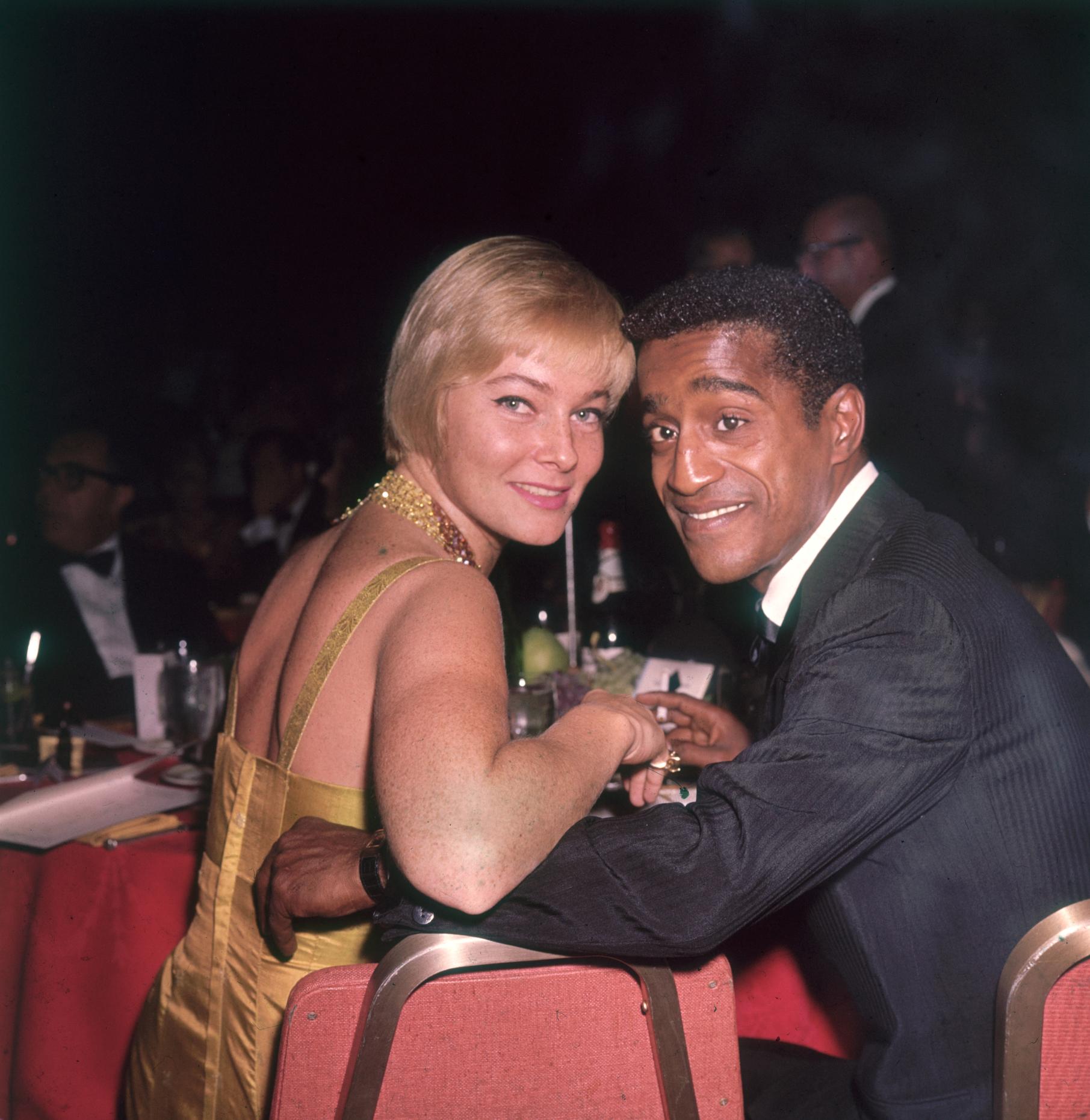
But publishers were terrified. A Black man talking openly about his conversion to Judaism? His marriage to a white Swedish actress, May Britt? In 1965, that was radioactive. 31 states still had laws against interracial marriage when they started writing.
- The Length: It was originally a 1,000-page monster.
- The Style: It reads like a novel, full of dialogue that the Boyars admittedly "reconstructed" to keep the pace moving.
- The Tone: It's defensive, proud, and deeply insecure all at once.
Why Yes I Can Sammy Davis Jr Is More Than a Bio
If you pick up a copy today—and Questlove actually just helped get it back into print for Sammy’s 100th birthday—you’ll notice it starts with a car crash.
November 19, 1954. San Bernardino. Sammy slams his Cadillac into a car backing out of a driveway. He loses his left eye. Most people would have quit. Sammy used the recovery time to finalize his conversion to Judaism, sparked by his friendship with Eddie Cantor and a deep, intellectual fascination with the "shared history of oppression" between Black and Jewish people.
The book doesn't shy away from the ugly stuff. He talks about the Army, where he was literally beaten for the color of his skin. He describes the "Will Mastin Trio" days, traveling in a beat-up car, eating in the back of kitchens because dining rooms were for whites only.
What People Get Wrong About the "Uncle Tom" Label
For a long time, Sammy was unfairly painted as a sell-out. People saw him hugging Richard Nixon or hanging with the Rat Pack and thought he’d lost his soul. Yes I Can Sammy Davis Jr argues the opposite. It shows a man who viewed his talent as a weapon. He believed if he could just be that good—if he could dance better, sing louder, and be funnier than anyone else—racism would simply have to move out of his way.
It didn't always work. But the book captures that desperate, frantic energy of a man trying to outrun prejudice.
The Rat Pack, The Mob, and The Reality
The sections on Frank Sinatra and Dean Martin are legendary, but they’re not just about drinking martinis at the Sands. Sammy describes the weird, tightrope-walking reality of being the only Black member of the coolest club on earth.
Frank was a fierce protector. He’d tear up contracts if a hotel wouldn't let Sammy stay in a room. But Sammy still felt the weight. He had to be "on" 24/7. The book captures the exhaustion of that performance. He wasn't just entertaining; he was representing an entire race in rooms where he was the only "exception."
- Vaudeville Roots: He started at age three. He never went to school.
- The Eye: The loss of his eye was the turning point that forced him to find a deeper purpose.
- The Marriage: His wedding to May Britt cost him a lot. He was even uninvited from JFK’s inauguration because the White House feared the optics of an interracial couple.
Is It Still Relevant?
Basically, yes.
In a world of 280-character hot takes, sitting down with a 600-page account of a man’s "emotional soul" is a trip. It’s a masterclass in resilience. It shows that the "I can" part of the title wasn't about ego. It was about survival.
If you’re looking to actually learn from Sammy’s journey, here’s how to approach the book:
- Read it as a time capsule. Don't judge 1965 through a 2026 lens.
- Look for the "Why Me?" follow-up. He wrote a second book later in life that’s even more self-reflective about his struggles with drugs and money.
- Listen to the audio. The newer versions narrated with that specific Rat Pack cadence really bring the Boyars’ "novelistic" dialogue to life.
Sammy Davis Jr. proved that you can't be "just" an entertainer when the world is trying to put you in a box. You have to be a force of nature. This book is the blueprint for how he did it.