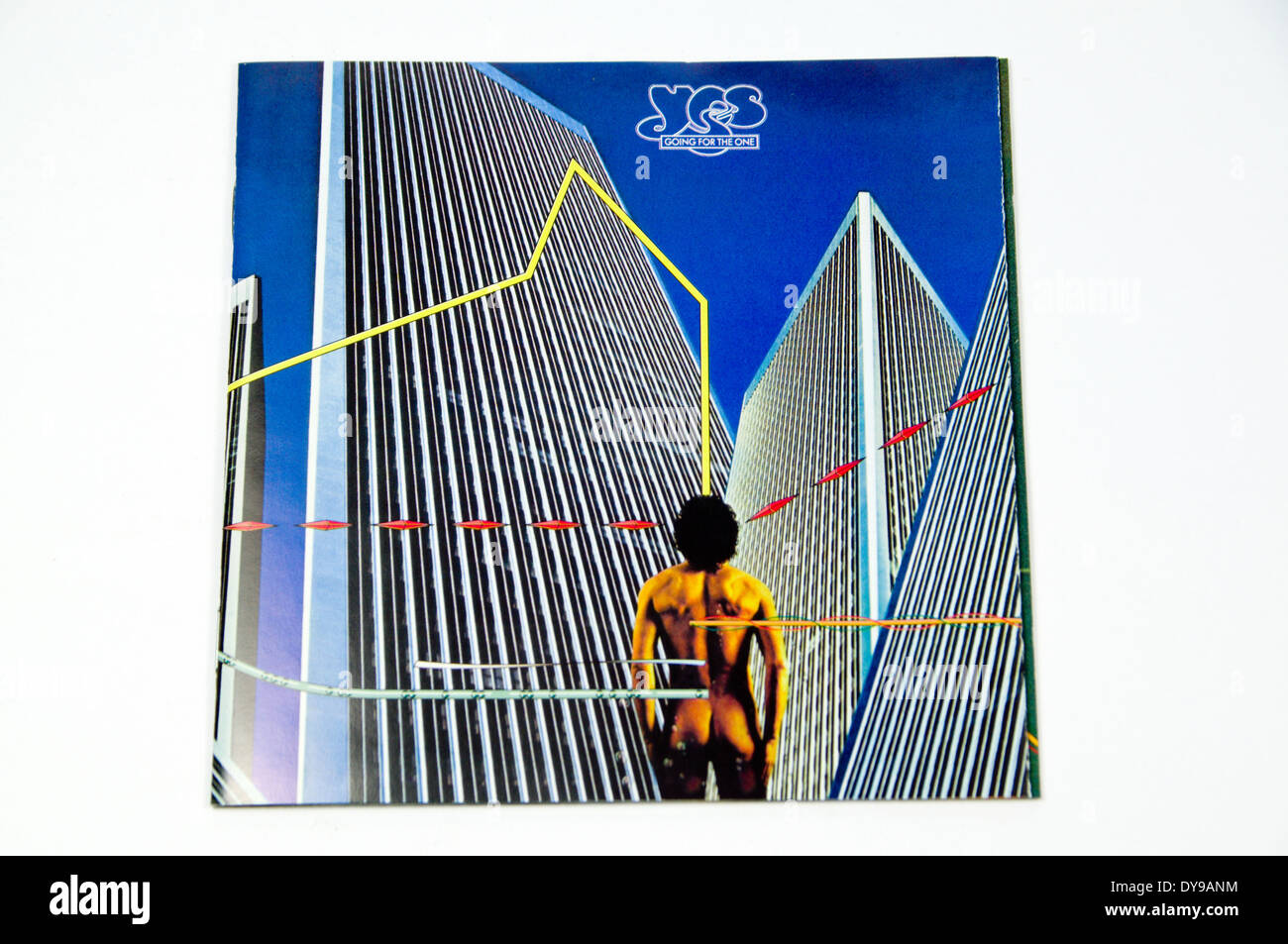
Prog rock was supposed to be dead by 1977. At least, that’s what the British music press wanted everyone to believe while they were busy pinning safety pins to their leather jackets. But then Yes went to Switzerland, hauled a church organ’s sound through a telephone line, and released Going for the One.
It’s a weird record. Honestly, it shouldn't have worked. The band was basically living as tax exiles in Montreux, dodging the UK's massive tax rates while trying to figure out if they even liked each other anymore.
The Prodigal Son Returns (and the Jazz Guy Leaves)
Before they even hit the studio, the lineup shifted in a way that felt like a soap opera. Patrick Moraz—the guy who brought that jagged, jazzy edge to Relayer—was out. Enter Rick Wakeman. Again.
Wakeman had famously bailed after Tales from Topographic Oceans because he was bored and reportedly spent most of those sessions eating curry on stage. But when he heard the tapes for Going for the One, something clicked. He saw that the band was actually writing songs again, not just side-long meditations on ancient scriptures. He wasn't just a session player this time; he was back in the fold, bringing a mountain of synthesizers and a newfound maturity.
Recording via Telephone? Only Yes.
Most bands just plug into an amp and hit record. Yes decided to use a 15th-century church.
For the tracks "Parallels" and "Awaken," the band wanted the massive, soul-shaking sound of a real pipe organ. They found it at St. Martin’s Church in Vevey, about four miles away from Mountain Studios. Instead of moving the whole band to the church, they rented a high-fidelity telephone line.
Rick sat in the church pews, playing a massive organ while the rest of the band stayed in the studio. They communicated through headphones and sent the audio signal down the wire. It sounds crazy, but you can hear the result in the opening of "Parallels." That isn't a synth patch. That’s air moving through ancient pipes, captured across miles of Swiss countryside.
A Track-by-Track Reality Check
- Going for the One: The title track is a straight-up rocker. Well, "straight-up" for Yes. Steve Howe is playing a pedal steel guitar like a madman, giving it this country-on-acid vibe. It’s loud, it’s messy, and it’s surprisingly high-energy.
- Turn of the Century: This one is heartbreaking. It’s a story about a sculptor named Roan who loses his wife and tries to carve her back to life. Jon Anderson’s vocals are incredibly delicate here, and Steve Howe’s acoustic work is some of his most intricate.
- Parallels: Chris Squire wrote this one. It’s a powerhouse. If you want to know what "lead bass" sounds like, this is the track. The church organ provides a floor of sound that makes the whole thing feel like a rock-and-roll cathedral.
- Wonderous Stories: This was the hit. It’s a shimmering, acoustic-led piece that actually made it onto the UK singles charts. It’s "user-friendly" Yes, but it still has that mystical DNA.
- Awaken: This is the big one. Fifteen minutes of absolute peak prog. It moves from a frantic piano intro to a celestial harp section, then builds into a massive choral finale. Many fans (and the band members themselves) consider this the best thing they ever recorded.
The Hipgnosis Cover and the "Naked" Truth
You can't talk about Going for the One without mentioning the cover art. For years, Roger Dean had defined the Yes aesthetic with his floating islands and alien landscapes. For this album, the band ditched him.
They went with Hipgnosis—the team famous for Pink Floyd’s Dark Side of the Moon. The result was a stark, blue-tinted photo of a naked man standing before the Century City towers in Los Angeles. It was a massive departure. It signaled that the band was moving out of the fantasy world and into something more modern, even if the music was still plenty "cosmic."
Why It Holds Up in 2026
The reason this album still works is that it’s the sound of a band relaxing. They had already done the "four songs over two discs" thing. They had done the experimental jazz-fusion thing. On Going for the One, they were just playing.
They produced it themselves, too. No Eddie Offord this time. They took the reins and created a sound that was bright, Echoey, and intensely alive. It captured a moment where prog rock wasn't trying to be "important"—it was just trying to be great music.
How to Really Experience This Album
If you’re coming to this for the first time, don't just shuffle it on a low-bitrate stream. This record was built for space.
- Get the 2003 Remaster: It includes some great rehearsals and an early version of "Going for the One" that sounds totally different.
- Listen to "Awaken" in the Dark: Use good headphones. When the choral section hits at the end, the layering is so dense you’ll hear something new every time.
- Watch the 1977 Live Footage: Seeing Alan White handle the complex percussion on "Awaken" live is a masterclass in drumming.
Going for the One wasn't just a "return to form." It was a reimagining of what a prog band could be in a world that was rapidly changing. It proved that you could have 15-minute epics and still top the charts. Most importantly, it gave us "Awaken," which is basically the gold standard for the entire genre.
If you want to dive deeper into the technical side of the recording, your next move is to check out the "Inside the Music" documentaries that break down the individual stems for "Awaken"—it’s the only way to truly appreciate the sheer scale of what they built in that Swiss studio.



