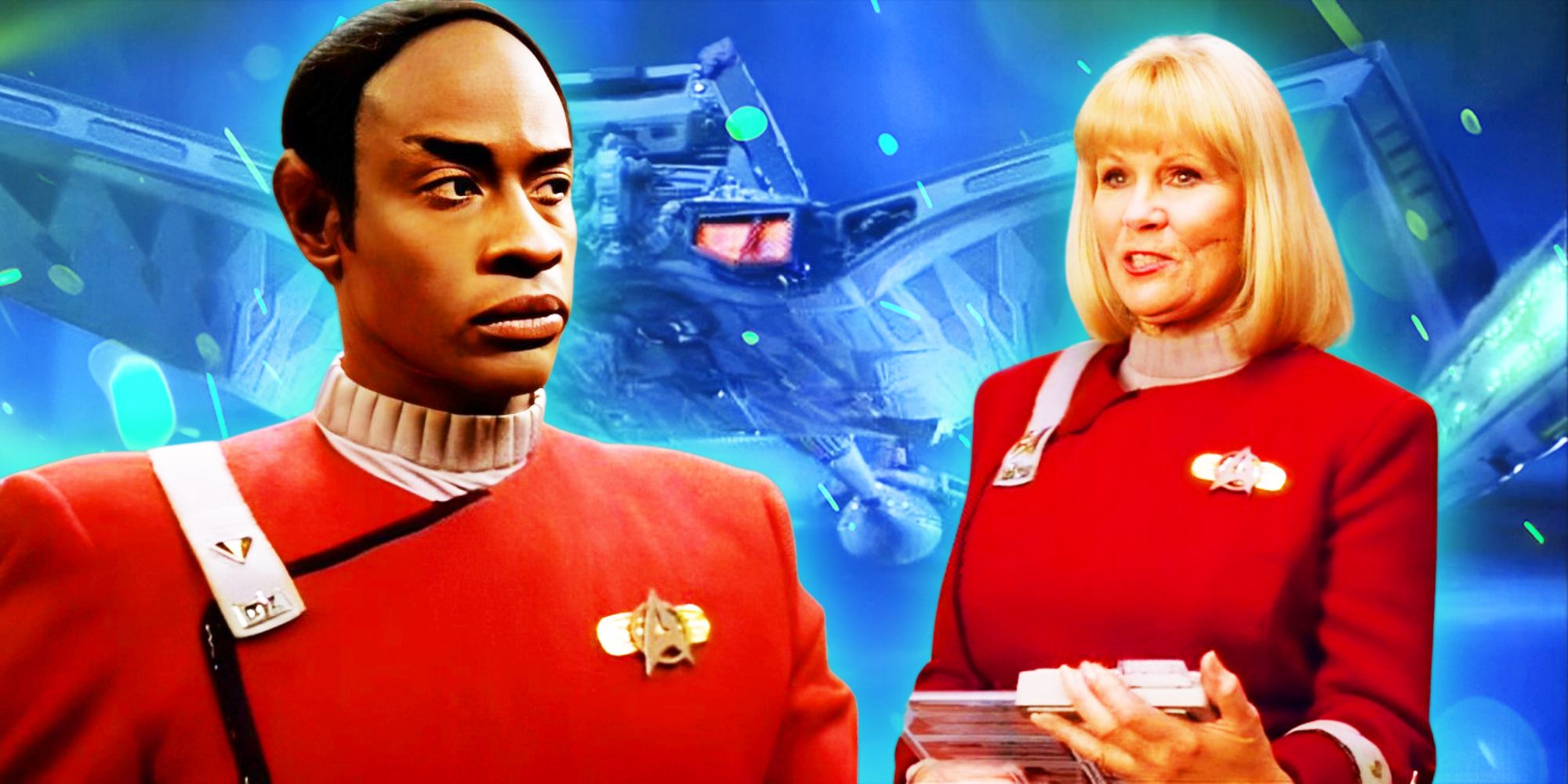
Janice Rand deserved better. Honestly, if you grew up watching Star Trek: The Original Series, you probably remember the blonde beehive hair and the short skirt. But Yeoman Rand on Star Trek was supposed to be so much more than a visual trope or a piece of scenery for Captain Kirk to glance at between battles.
She was the bridge between the audience and the high-concept sci-fi madness.
Grace Lee Whitney played the character with a specific kind of professional vulnerability that ground the show. Then, suddenly, she was gone. One minute she’s handing Kirk a coffee or a clipboard, and the next, she’s written out of the galaxy without so much as a goodbye. It’s one of the most frustrating "what ifs" in television history.
The Origin of Yeoman Rand on Star Trek
Gene Roddenberry didn’t just want eye candy. He wanted a "Galatea" figure. Initially, the idea for Janice Rand was to have a character who was competent but deeply infatuated with her captain. It sounds dated now—and it is—but in 1966, this was the framework for female characters in office-style settings, even if that office was a starship.
Rand was the Captain’s Yeoman. That’s a real naval rank, essentially a clerical petty officer.
Her first appearance in "The Corbomite Maneuver" (the first episode filmed after the pilots) established her immediately. She wasn't a scientist or a navigator. She was the person who kept Kirk’s life running. Whitney brought a certain "girl-next-door" energy that contrasted with the more stoic Spock or the fiery McCoy.
The Beehive and the Brand
Let’s talk about that hair. It was iconic. It was also a nightmare. Grace Lee Whitney actually hated that wig. It was two separate pieces woven together, often held up by a literal styrofoam cone. It became her trademark, but it also symbolized the "space secretary" box the writers struggled to get her out of.
Despite the limitations, Whitney found depth. In "The Enemy Within," where Kirk is split into his "good" and "evil" halves, Rand is the victim of the evil Kirk’s assault. It was a heavy, dark scene for 1960s television. Whitney’s performance in the aftermath showed a woman grappling with trauma while trying to maintain her professional composure.
That wasn't just "acting." It was a glimpse of the character’s potential.
Why Was Grace Lee Whitney Fired?
The truth is messy. For decades, fans speculated. Was it a budget issue? Was there a conflict with William Shatner?
The reality, as Whitney later detailed in her autobiography The Longest Trek: My Tour of the Galaxy, was a mix of internal politics and personal tragedy. The production felt that Kirk shouldn't be tied down. They wanted him to have a new love interest every week—the "space babe of the week" formula. Having a permanent, pining yeoman on the bridge made Kirk look like a jerk if he ignored her or a philanderer if he didn't.
But there was a darker side. Whitney recounted being sexually assaulted by an unnamed executive (referred to as "The Man in the Front Office"). Shortly after she fought back, she was handed her walking papers.
She was devastated.
The removal of Yeoman Rand on Star Trek wasn't just a loss for the actress; it shifted the show's chemistry. Without Rand, the "family" dynamic on the bridge felt slightly more sterile. The show lost that civilian-adjacent perspective that made the Enterprise feel like a living, breathing workplace.
The Missing Middle Years
After her departure in the middle of the first season, the character vanished. Episodes like "Miri" and "The Conscience of the King" showed her briefly, but then—poof.
The 1970s were rough for Whitney. She struggled with substance abuse, a battle she was incredibly open about later in life. It’s a testament to her resilience that she didn't just disappear into Hollywood history. She found her way back to the Trek family through the convention circuit.
Fans loved her. They never forgot Janice Rand.
When Star Trek: The Motion Picture went into production in 1979, Roddenberry brought her back. She wasn't a yeoman anymore. She was a Chief Petty Officer. It was a promotion, both in rank and in the narrative respect she was shown.
The Evolution to Commander Rand
If you watch the films, you see the growth. In The Search for Spock, she’s stationed at Starfleet Command. By The Voyage Home, she’s in the thick of the action in San Francisco.
But her real moment of glory? Star Trek VI: The Undiscovered Country.
She’s on the bridge of the USS Excelsior. She’s a communications officer. She’s working alongside Captain Sulu (George Takei). Seeing Janice Rand with commander’s stripes was a full-circle moment for fans who felt she’d been tossed aside in 1966. It validated her as a career officer. She wasn't just the girl with the coffee anymore. She was a veteran who had survived the Klingon wars and the transition into a new era of Starfleet.
Janice Rand’s Impact on the Fandom
She remains a symbol of the "Original Series" aesthetic. But more than that, Grace Lee Whitney became a beacon of hope for people in recovery. She used her platform at Star Trek conventions to talk about sobriety and surviving trauma.
That’s a legacy that goes way beyond a 1500-word script or a guest spot.
Even in the newer iterations of Trek, you see the influence. Modern "yeoman" or junior officer characters are given more agency and backstories because the creators realized, perhaps too late with Rand, that every person on that bridge is a protagonist in their own right.
Comparing the Yeoman to Later Characters
| Attribute | Janice Rand (TOS) | Later Junior Officers (TNG/DS9) |
|---|---|---|
| Primary Role | Administrative / Personal Assistant | Technical Specialists / Ensigns |
| Uniform | Standard Miniskirt (Skant) | Gender-neutral Jumpsuits / Duty Uniforms |
| Growth Arc | Minimal in-series; massive in films | Continuous development (e.g., Nog or Hoshi Sato) |
| Narrative Purpose | Romantic tension/Vulnerability | Plot drivers and expertise |
Honestly, you can't compare Rand to someone like Hoshi Sato from Enterprise without acknowledging the era. Rand was a product of the 60s. However, the fact that we're still talking about her shows that Whitney’s charisma broke through the limited writing.
The Mystery of the Deleted Scenes
There’s a lot of footage that never made it to air. In the episode "The Enemy Within," there were moments that showed more of Rand's internal struggle. Many of these cuts were made to keep the show "family-friendly" or to focus more on Kirk's heroics.
It’s a shame.
If those scenes had stayed, Rand might have been seen as the complex survivor she actually was. Instead, she was often reduced to "the girl who screamed" when things got weird.
What Most People Get Wrong
A common misconception is that Rand was replaced by Nurse Chapel (Majel Barrett). While Chapel did become a more prominent female presence after Rand left, they weren't the same archetype. Chapel was defined by her unrequited love for Spock, whereas Rand was the gateway to the ship's daily operations.
The show actually tried to fill the "Yeoman" gap with various rotating characters, but none of them stuck.
The chemistry wasn't there.
Whitney had a specific rapport with Shatner and Nimoy that was hard to replicate. She felt like she belonged in that specific 1966 lighting.
Actionable Insights for Trek Fans
If you want to truly appreciate the character of Janice Rand beyond the surface level, there are a few specific things you should do:
- Watch "The Miri" with fresh eyes. It's one of her final major appearances. Look at how she interacts with the children and the genuine fear Whitney portrays. It’s far more nuanced than people give it credit for.
- Read "The Longest Trek." Grace Lee Whitney's autobiography is essential reading for any Star Trek fan. It’s raw, honest, and provides a look at the dark side of 1960s television production that you won't find in official Starfleet archives.
- Track her rank. Watch the films in order (I, III, IV, VI) and specifically look for her. Seeing her rise from an E-4 (Petty Officer 3rd Class) to a commissioned Commander is one of the most satisfying long-term character arcs in the franchise, even if it happens mostly in the background.
- Explore the "Voyager" Connection. Don't miss the episode "Flashback." Whitney returns as Rand in a Tuvok-centered memory of the Excelsior. It’s the final time she played the character, and it’s a beautiful tribute to her longevity in the role.
Janice Rand started as a "secretary in space," but through the sheer will of Grace Lee Whitney and the devotion of the fans, she became a Starfleet icon. She proved that you don't have to be the captain to have a story worth telling.
Next time you see that blonde beehive on a grainy CRT screen, remember there’s a commander underneath that wig. She survived the 60s, she survived the cuts, and she earned her place among the stars.
Practical Next Steps: To deepen your understanding of the production history, search for the original casting memos from 1965. They reveal how Roddenberry originally envisioned the "Yeoman" role as a much more central, "Sherlock Holmes and Watson" dynamic with Kirk. Also, check out the 2013-2014 interviews with Whitney before her passing; her perspective on her legacy changed significantly in her later years, moving from resentment to a profound pride in what Janice Rand represented to women in the military and professional sectors.



