So, you think you know Yellowstone. You've seen the sapphire pools, smelled the sulfur that clings to your clothes for days, and maybe even waited in a traffic jam caused by a stubborn bison. But honestly? The ground under your boots is hiding secrets that even the experts missed for decades.
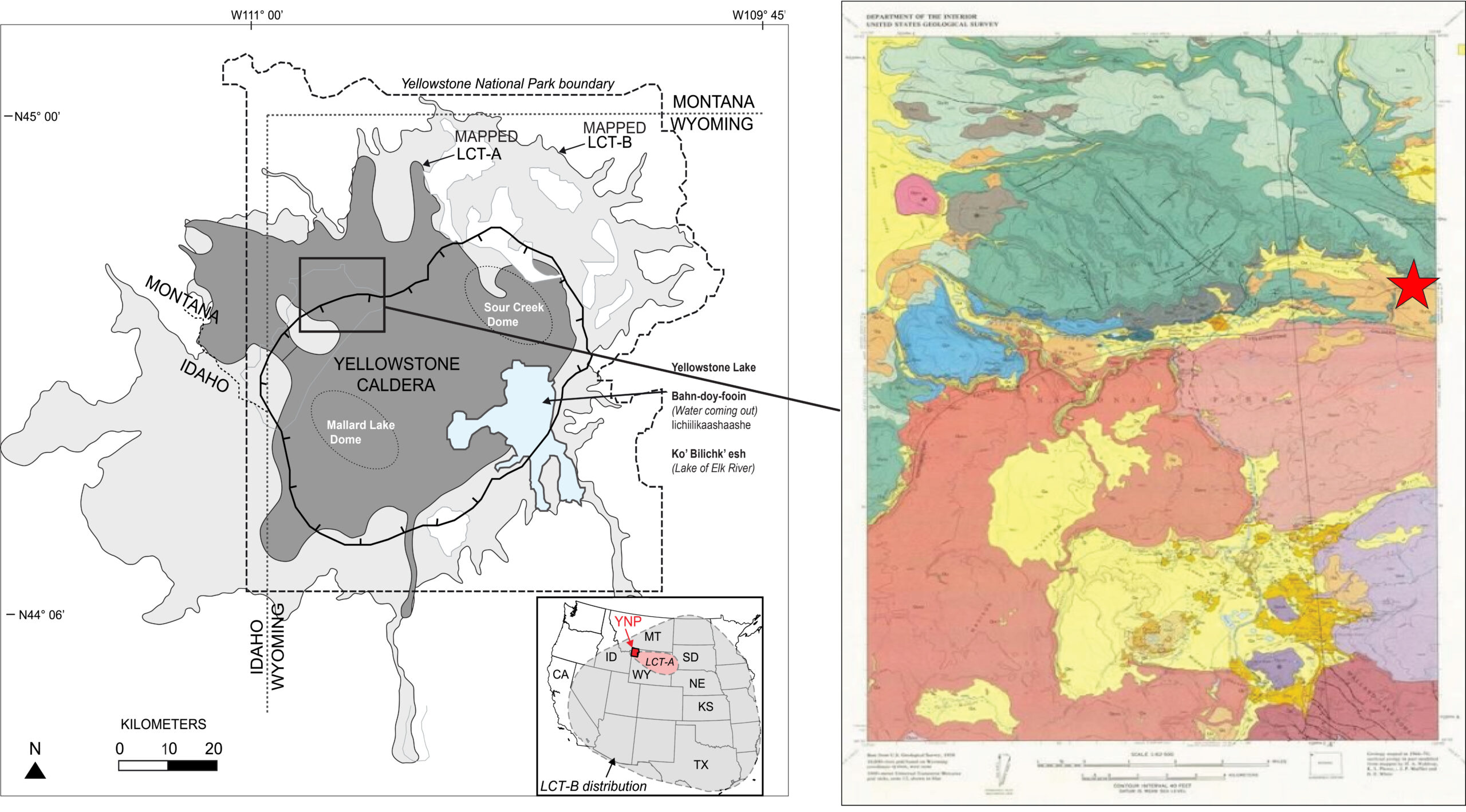
Just recently, geologists from Montana State University and the Yellowstone Volcano Observatory (YVO) realized they’d been mislabeling a huge chunk of the park’s history. For years, everyone assumed a specific stretch of dark, jagged rock in the western part of the park was just leftovers from the last "big one"—the Lava Creek Tuff eruption from 631,000 years ago.
Turns out, they were wrong.
The Mount Jackson Discovery: Not What We Thought
This newly recognized geologic unit belongs to the Mount Jackson Rhyolite Series. It’s not just some random pile of gravel; it's a dense, black, glassy rock known as a vitrophyre. Imagine a piece of obsidian, but peppered with tiny white crystals that look like snowflakes frozen in mid-air.
Basically, this rock was "hiding in plain sight." Because it’s often covered in grey lichen and weathered by centuries of brutal Wyoming winters, it looks just like the surrounding volcanic ash flows. It took a team of researchers, including Montana State’s Liv Wheeler, to get in there with hammers and modern dating tech to realize this stuff didn't match the "super-eruption" timeline at all.
Why a Little Glassy Rock is a Big Deal
You might be wondering why anyone cares about a few black boulders near the Gibbon River. Well, it completely changes the "narrative" of how Yellowstone behaves between its massive, world-ending explosions.
For a long time, the Mount Jackson Rhyolite was thought to be "effusive." In geology-speak, that means it just kinda oozed out of the ground like thick toothpaste. No big deal, right?
But this new vitrophyre tells a different story.
- It was fast: Vitrophyres only form when lava cools so quickly that crystals don't have time to grow.
- It was explosive: The structure of this unit suggests it wasn't just a slow leak. It likely came from a smaller, localized explosive eruption.
- It’s "Missing" History: This unit fills a gap in the timeline between the major caldera-forming events. It proves that Yellowstone isn't just a "sleeping giant" that only wakes up every 600,000 years; it’s a restless system that's constantly popping off in smaller, unexpected ways.
The "Breathing" Magma Cap
While the rocks on the surface are being remapped, what's happening under them is even weirder. Around the same time this new unit was being studied, researchers from Rice University and the University of New Mexico used a massive 53,000-pound "Vibroseis" truck—basically a giant thumper—to send sound waves deep into the crust.
They found something they’re calling a volatile-rich cap.
Located about 3.8 kilometers (roughly 2.4 miles) down, this layer is basically a "lid" of mushy rock and trapped gases like carbon dioxide and water vapor. Some headlines tried to make this sound scary, like the volcano is "priming" for an eruption.
Honestly? It's the opposite.
The data shows this cap is actually "breathing." The gases aren't building up until they pop; they’re slowly leaking out through cracks and feeding the geysers we love to take selfies with. This natural "pressure relief valve" is why most experts, like YVO's Mike Poland, aren't losing sleep over a super-eruption anytime soon.
The Norris Uplift: A Constant Shift
If you’ve visited the Norris Geyser Basin lately, you might have noticed things look... different. 2025 saw the return of the Norris Uplift Anomaly.
The ground there actually rose by about 5 inches.
It’s not a steady climb, either. The ground at Yellowstone is more like a living thing—it breathes in (uplifts) and breathes out (subsides). This latest shift, detected by InSAR satellite data, is centered right along the north rim of the caldera.
Is it magma? Maybe. But more likely, it’s just superheated water and steam moving around deep underground. When that water gets trapped, the ground swells. When it finds a way out—like the new blue-water pool that formed in Porcelain Basin in early 2025—the ground settles back down.
What This Means for Your Next Trip
If you're planning a trip to the park, don't let the talk of "new units" or "magma caps" freak you out. Yellowstone is still one of the most monitored places on Earth.
What's actually cool is that we're seeing geology happen in real-time. The discovery of the new Mount Jackson unit means that even in 2026, we're still finding "new" parts of the park that have been there for half a million years.
Actionable Tips for the Amateur Geologist:
- Check the "Caldera Chronicles": Before you go, read the weekly update from the USGS. It’s written by the actual scientists on the ground and cuts through the tabloid "supervolcano" hype.
- Visit the Gibbon River: Keep an eye out for those dark, glassy rocks. If you see a rock that looks like black glass with white specks, you're looking at the "new" history of the park.
- Watch the Water: New features, like the pool in Porcelain Basin, can appear in months. Stick to the boardwalks—seriously. These new features are often surrounded by "silica mud" that looks solid but is basically boiling quicksand.
- Download the NPS App: It now includes real-time geyser predictions and alerts if a specific basin (like Biscuit Basin or Norris) is closed due to "hydrothermal events."
Yellowstone isn't just a museum of old rocks. It's a messy, shifting, "breathing" lab. The fact that we're still discovering entire geologic units today just goes to show how much of this wild landscape is still waiting to be understood.
To stay updated on the latest shifts, you can monitor the live GPS and seismic feeds directly through the University of Utah's Yellowstone Seismic Network or the USGS Volcano Hazards Program. Checking these before a hike in the backcountry can give you a much better sense of which areas are currently seeing the most "breathing" activity.