You’ve seen the maps. They usually look like a giant bullseye painted over the United States, with a terrifying red circle covering everything from Idaho to Nebraska. People call it the yellowstone volcano map kill zone, and honestly, it's one of the most misunderstood pieces of geology on the planet. Most of those viral graphics you see on social media are just flat-out wrong. They treat a supervolcanic eruption like a giant grenade, but nature doesn't work in perfect circles.
I’ve spent a lot of time looking into the actual data from the United States Geological Survey (USGS). It’s not just about one big "boom." It’s about the ash. It's about the wind. It’s about the fact that if this thing actually went off—which, by the way, isn't likely to happen for thousands of years—the "kill zone" wouldn't be a tidy circle. It would be a messy, unpredictable sprawl of volcanic grit that would change the continent forever.
The reality of the Yellowstone volcano map kill zone
Let's get real for a second. When people talk about a "kill zone," they’re usually imagining two different things. First, there’s the pyroclastic flow. That’s the "everything is instantly vaporized" zone. We’re talking about a mixture of hot gas and rock that moves at hundreds of miles per hour. If you’re standing inside the Yellowstone National Park boundaries during a full-scale caldera-forming event, yeah, it’s over pretty fast. This immediate zone is roughly 40 to 70 miles around the vents.
But that’s not what scares people in Kansas or Iowa.
What people are actually looking for when they search for a yellowstone volcano map kill zone is the ash fall area. This is where the nuance of geology kicks in. Scientists like Mike Poland, the scientist-in-charge at the Yellowstone Volcano Observatory, have pointed out repeatedly that the "kill zone" isn't a single point of impact. It’s a logistical nightmare.
Most of the deaths wouldn't come from the heat. They’d come from the weight of the ash.
Think about it. Volcanic ash isn’t fluffy like wood ash from a fireplace. It’s pulverized rock. It’s heavy, it’s abrasive, and it doesn't dissolve in water. If you get three feet of it on your roof, your house collapses. If you breathe it in, it turns into a kind of watery cement in your lungs. That's the real threat that maps try to visualize, but they often fail to account for the way high-altitude winds actually move.
Why the wind matters more than the blast
If Yellowstone blew today, the ash wouldn't spread equally in all directions. We live in a world of prevailing westerlies. Most of that debris is headed East. A more accurate yellowstone volcano map kill zone would look like a giant, distorted fan stretching toward the Atlantic, not a circle touching Mexico and Canada equally.
Back in 2014, the USGS ran a study using a model called Ash3d. They simulated a "super-eruption" to see where the stuff would actually land. The results were messy. Cities like Billings, Montana, and Casper, Wyoming, would be buried in meters of ash. But even as far away as Des Moines or Chicago, you might see several centimeters.
That doesn't sound like a "kill zone," right? Wrong.
Just an inch of ash can short out power transformers. It kills crops. It clogs engines. It grounds every single flight. So, while you might not be "killed" by the eruption itself in the Midwest, the infrastructure that keeps you alive—water, electricity, food transport—would be absolutely wrecked.
The three tiers of the impact area
Let’s break down what a realistic map actually looks like based on the geological record of the Huckleberry Ridge, Mesa Falls, and Lava Creek eruptions.
The inner circle is the Zone of Total Destruction. This is the actual caldera and the immediate surroundings. If you are here, you are part of the geology. Everything is buried under hundreds of feet of rhyolite and tuff. This area is mostly contained within Wyoming, parts of Idaho, and Montana.
The second tier is the Primary Ashfall Zone. This covers a huge chunk of the Great Plains. We are talking about ash deep enough to collapse buildings. In this zone, the "kill" factor is about the environment becoming uninhabitable. Water becomes a toxic sludge of grey grit. Respiratory failure becomes the leading cause of death for anyone caught outside without a high-grade respirator.
Then there is the Continental Disruption Zone. This is basically the rest of North America. It’s not a "kill zone" in the sense of immediate physical danger, but it’s a total economic and societal collapse. The global temperature would likely drop by several degrees for a decade. We call this a "volcanic winter."
Is an eruption even overdue?
You’ve probably heard the phrase "Yellowstone is overdue." It’s a great line for a documentary, but it’s basically a myth.
Volcanoes don't work on a timer. They don't have a schedule.
The three major eruptions happened 2.1 million, 1.3 million, and 640,000 years ago. If you do the math, the intervals are roughly 800,000 years and 660,000 years. Even if we assumed a strict schedule—which geologists hate doing—we’d still have a massive window of time. Honestly, the most likely thing to happen in Yellowstone isn't a super-eruption at all. It’s a hydrothermal explosion (basically a massive steam burp) or a lava flow.
Lava flows in Yellowstone are actually pretty chill, relatively speaking. They move slowly. You could literally walk away from them. They’ve happened dozens of times since the last big blast, and they don't create a yellowstone volcano map kill zone that spans the continent. They just fill up a valley or two with obsidian and rhyolite.
What to actually look for in a map
If you are looking at a map and it shows a perfect circle, close the tab. It's garbage. Real maps of volcanic risk show "isopachs"—lines of equal thickness of ash. These lines look like topographic maps but for debris.
A real map will show:
- Thickest deposits trailing toward the Southeast and East.
- Thinning deposits toward the West Coast (because the wind has to work against the eruption).
- Irregular blobs based on mountain ranges and local weather patterns.
Researchers like Larry Mastin have used computer simulations to show that the "umbrella cloud" from a super-eruption is so powerful it can actually push ash upwind to some extent, but the bulk of the "kill zone" remains a victim of the jet stream.
How to prepare for the "unlikely"
Kinda feels weird to prep for a volcano, right? But the reality is that the things you’d do for a Yellowstone event are the same things you’d do for a major blizzard or a long-term power outage.
Don't buy a bunker. Instead, think about filtration. If you live anywhere in the Western or Central US, the biggest threat is the air. N95 masks aren't just for pandemics; they were originally a staple for people living near active volcanoes like Mt. St. Helens.
You also have to think about your car. Ash is essentially tiny shards of glass. If you run your engine in a "kill zone" periphery, that ash gets sucked in and sands down your cylinders until the engine seizes. You’d need a massive supply of air filters and a way to seal your home's HVAC system.
Actionable insights for the curious
If you’re genuinely worried or just fascinated by the yellowstone volcano map kill zone, stop looking at doom-scrolling infographics and look at the actual science.
- Check the USGS Yellowstone Volcano Observatory (YVO) monthly updates. They are transparent. If the ground starts bulging or the seismic activity shifts from "normal swarms" to "magma movement," they will be the first to tell you. They have sensors everywhere.
- Understand the difference between "active" and "erupting." Yellowstone is active. It breathes. The ground rises and falls by inches every year. That’s not a sign of an impending explosion; it’s just the plumbing system doing its thing.
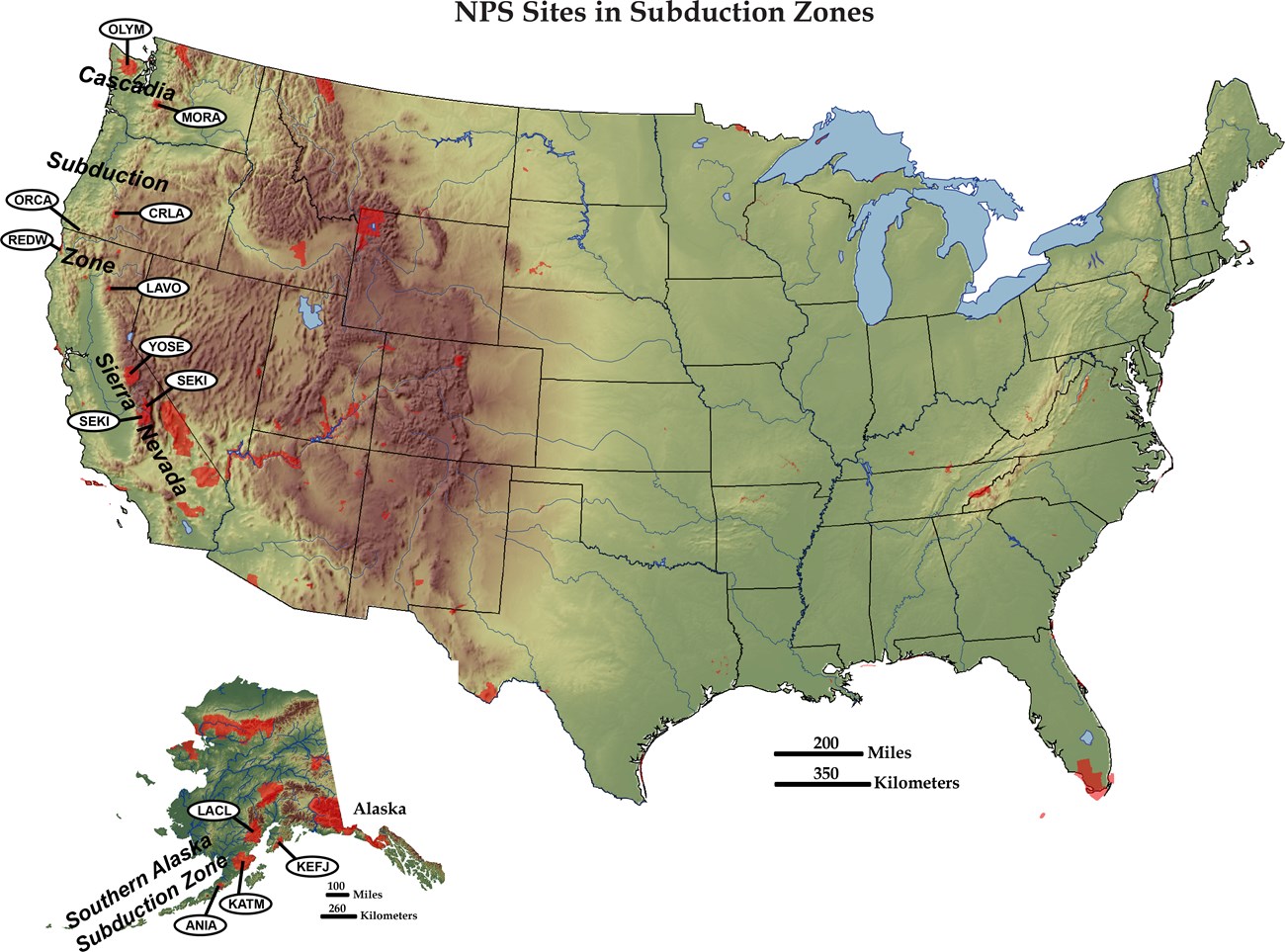
- Focus on realistic threats. If you live in the Pacific Northwest, you’re much more likely to deal with a Mount Rainier lahars or a Cascadia subduction zone earthquake than a Yellowstone super-eruption.
- Learn about ash mitigation. If you live in a high-risk area for any volcanic activity, knowing how to clean ash off a roof without it collapsing (don't use water—it makes it heavier!) is a legit survival skill.
The yellowstone volcano map kill zone is a fascinating "what if," but it’s often used to farm clicks rather than inform people. The real map is a story of wind, weight, and weather. It’s a continental event, not a local one. While the "kill zone" makes for a scary headline, the "disruption zone" is where the real story lies. We’re talking about a complete rewrite of how we live on this continent, but luckily, it’s a story that likely won't be written for many, many generations.