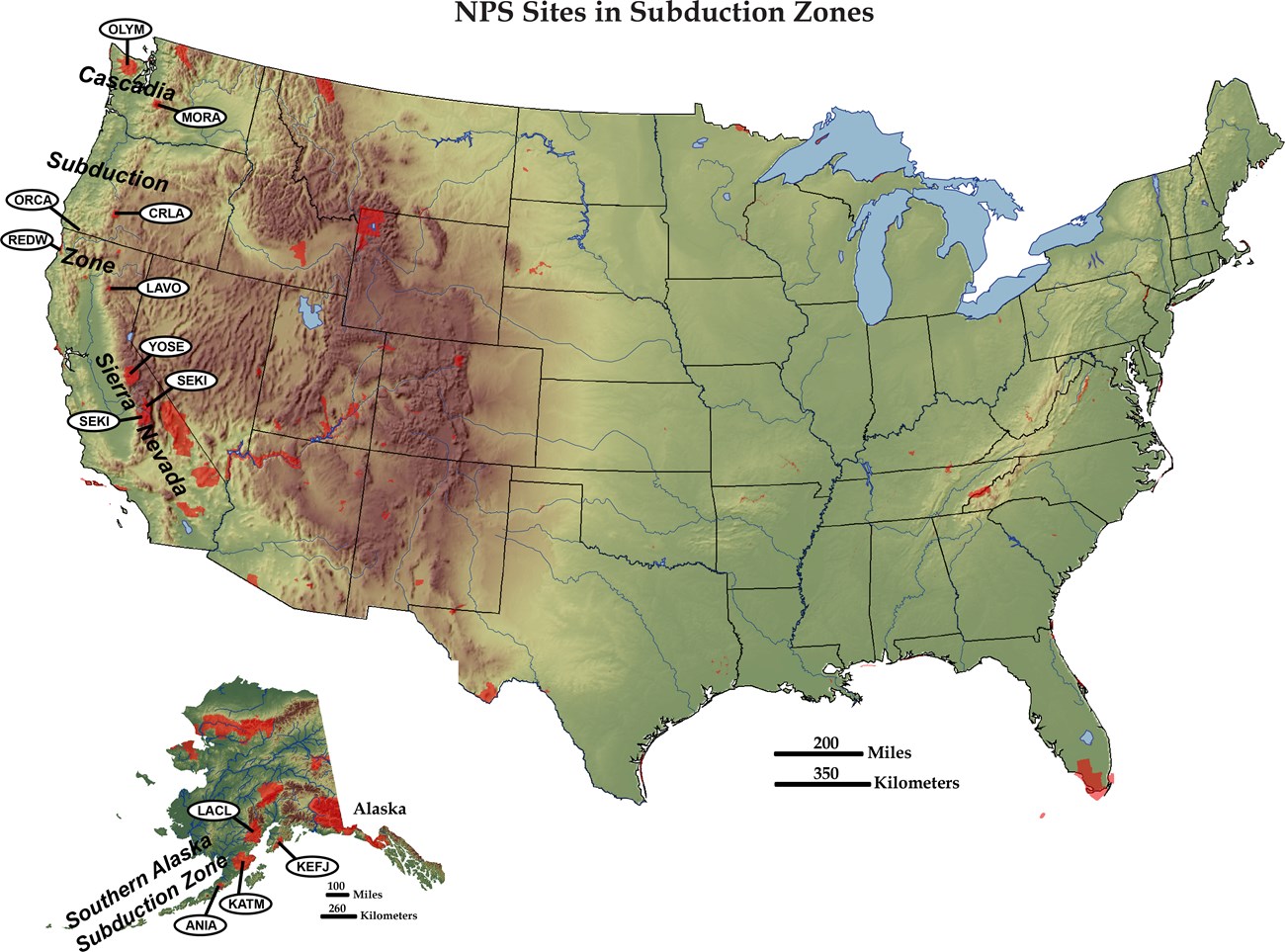
You've probably seen them. Those terrifying maps with giant, red concentric circles radiating out from Wyoming, labeled "Instant Death Zone" or "Total Destruction." They pop up on social media every time there's a minor earthquake swarm in the park. People freak out. They start wondering if they should sell their house in Denver or Salt Lake City. But honestly, the yellowstone volcano kill zone map you see on a random TikTok is usually a mix of Hollywood fiction and a massive misunderstanding of geology.
It’s scary stuff. The idea of a "supervolcano" lurking under one of America's favorite vacation spots is naturally cinematic. But the reality is much more nuanced, and frankly, a bit more boring than the "end of the world" headlines suggest. Geologists at the Yellowstone Volcano Observatory (YVO) spend their lives looking at this data, and they aren't exactly building bunkers.
The Myth of the Perfect Circle
Most maps showing a "kill zone" assume the volcano acts like a nuclear bomb. They draw a perfect radius. If you're inside the line, you're toast; if you're outside, you’re fine. That’s just not how it works.
Volcanoes are messy.
When Yellowstone has erupted in the past—and we're talking about the big ones like the Huckleberry Ridge eruption 2.1 million years ago—the "kill zone" was defined by pyroclastic flows. These are essentially avalanches of hot ash, gas, and rock. They move fast. They are incredibly hot. They destroy everything in their path. But they don't travel in a perfect circle across the entire United States. They are largely dictated by topography. They follow valleys. They get blocked by mountain ranges.
In a modern super-eruption, the immediate "lethal" zone where life would be extinguished instantly is roughly 50 to 100 miles around the caldera. This covers the park itself and parts of neighboring Idaho and Montana. Beyond that, the danger isn't a wall of fire. It's the ash.
Ashfall Is the Real Boss
If you look at a scientifically grounded yellowstone volcano kill zone map, the "zones" are actually shaped like a giant, distorted fan. Why? Because of the wind. Specifically, the jet stream.
In the United States, weather generally moves from west to east. If Yellowstone blew its top today, the folks in Seattle or Portland might actually be safer than people in Des Moines or St. Louis. Ash is the real killer in these scenarios, and it doesn't kill by burning you. It kills by being heavy, being glass-like, and being everywhere.
A few inches of volcanic ash is enough to collapse the roof of a standard house. It short-circuits power grids. It turns into a slurry that destroys jet engines. It clogs filters. It makes roads as slippery as ice but as abrasive as sandpaper. Mike Poland, the Scientist-in-Charge at the YVO, often points out that the "big one" is incredibly unlikely in our lifetime, but if it happened, the midwest would basically become a gray desert for a while.
The USGS has run simulations—real, data-driven models—showing that ash would reach both coasts. But "reaching" a coast and "killing everyone" there are two very different things. In New York, you might see a dusting like a light snow. In Omaha, you might be shoveling three feet of gray grit off your driveway.
Three Massive Eruptions (And What They Tell Us)
We have to look at the track record. Yellowstone has had three "big" eruptions:
- Huckleberry Ridge (2.1 million years ago): The absolute monster. It was about 6,000 times larger than the 1980 Mount St. Helens eruption.
- Mesa Falls (1.3 million years ago): A "smaller" one, relatively speaking. Still huge, but it shows that Yellowstone doesn't always go "maximum overdrive."
- Lava Creek (640,000 years ago): This one created the current caldera.
When people talk about the yellowstone volcano kill zone map, they usually use the Huckleberry Ridge data because it’s the scariest. But here is the kicker: Yellowstone is more likely to have a lava flow than a super-eruption. A lava flow would be devastating for the park's infrastructure—it would melt the roads and burn the hotels—but it wouldn't even leave the park boundaries. It wouldn't be a global catastrophe. It would just be a really bad day for the National Park Service.
The "Overdue" Fallacy
"It erupts every 600,000 years, and it's been 640,000 years! We're overdue!"
You've heard it. I've heard it. It's a staple of cable news documentaries. Except, math doesn't work that way for volcanoes. Geologic systems don't have a kitchen timer. If you averaged those three big eruptions, you get a mean of about 730,000 years. Even by that flawed logic, we’ve got 90,000 years to go.
But more importantly, the magma chamber underneath the park is currently only about 5% to 15% molten. To have a massive, explosive eruption, you generally need that number to be closer to 50%. Right now, the system is mostly solid crystal mush. It’s "hibernating," sorta.
Hydrothermal Explosions: The Real, Immediate Risk
If you want to be scared of something, look at the small stuff.
In July 2024, Biscuit Basin had a hydrothermal explosion. A wall of steam and rocks shot into the air, destroying a boardwalk and sending tourists running for their lives. Nobody died, luckily. But these happen way more often than the big caldera-forming events.
A yellowstone volcano kill zone map for a hydrothermal event is tiny—maybe a few hundred yards. But if you're standing on the boardwalk, that's the only map that matters. These events happen without much warning because they are driven by shallow water turning into steam, not by magma rising from the deep.
What Science Says About Your Survival
Let's get practical. If you live in the United States, and the "big one" happens, what actually happens to you?
- Zone 1 (The Kill Zone): Within 60-100 miles. Total destruction. Pyroclastic flows. Very little chance of survival if you aren't in a hardened bunker. This is the red circle on the map.
- Zone 2 (The Heavy Ash Zone): The Mountain West and the Midwest. You're looking at 10cm to 1 meter of ash. This is where the most deaths occur, not from the eruption itself, but from respiratory failure, roof collapses, and the total breakdown of the food supply chain.
- Zone 3 (The Global Cooling Zone): This is everyone else. The sulfur dioxide released would circle the globe, reflecting sunlight and potentially dropping global temperatures by several degrees for a few years. It would be a "volcanic winter." Agriculture would fail in many places.
It’s not a "get vaporized" scenario for most of the world. It’s a "get hungry and cold" scenario.
Why We Shouldn't Panic
The USGS, the University of Utah, and the YVO have the park wired like a patient in an ICU. There are seismographs, GPS tiltmeters, and satellite monitoring. Magma moving toward the surface isn't subtle. It causes thousands of intense earthquakes. It makes the ground bulge by feet, not millimeters. It changes the chemistry of the gas coming out of the vents.
We would likely have weeks, months, or even years of warning before a catastrophic event. We aren't seeing any of those signs. The "swarms" of earthquakes we see now are mostly just the earth settling or water moving through hydrothermal plumbing.
Actionable Steps for the "Volcano-Curious"
Instead of staring at doomsday maps, here is how you can actually be informed and prepared for geologic risks.
- Follow the Source: Ignore the tabloids. Follow the Yellowstone Volcano Observatory directly. They put out a monthly video update and a weekly "Caldera Chronicles" article that breaks down exactly what the ground is doing.
- Learn Ash Mitigation: If you live in the West, the most likely "volcanic" event you'll face isn't Yellowstone; it's a smaller eruption from a Cascades volcano like Mt. Rainier or Mt. Hood. Buy a high-quality N95 mask and keep it in your emergency kit. Ash is basically tiny shards of glass; you do not want it in your lungs.
- Understand the "Why": Read up on the difference between a "lava flow" and an "explosive eruption." Knowing that one is much more likely than the other helps lower the anxiety when you see "Yellowstone Activity" in the news.
- Check Local Geology: Most people are more likely to be affected by a local flood or earthquake than a supervolcano. Check your local USGS hazard maps for risks that actually apply to your zip code.
The yellowstone volcano kill zone map makes for a great movie poster, but it’s a poor tool for actual life planning. The park is a living, breathing system. It’s restless, sure. But restless isn't the same thing as "about to explode." We are living in a tiny snapshot of geologic time, and in this snapshot, the buffalo are still grazing, the geysers are still steaming, and the magma is staying exactly where it belongs: deep underground.
Stay prepared, but keep your sense of perspective. You're far more likely to get hurt by a bison in Yellowstone than by the volcano itself.