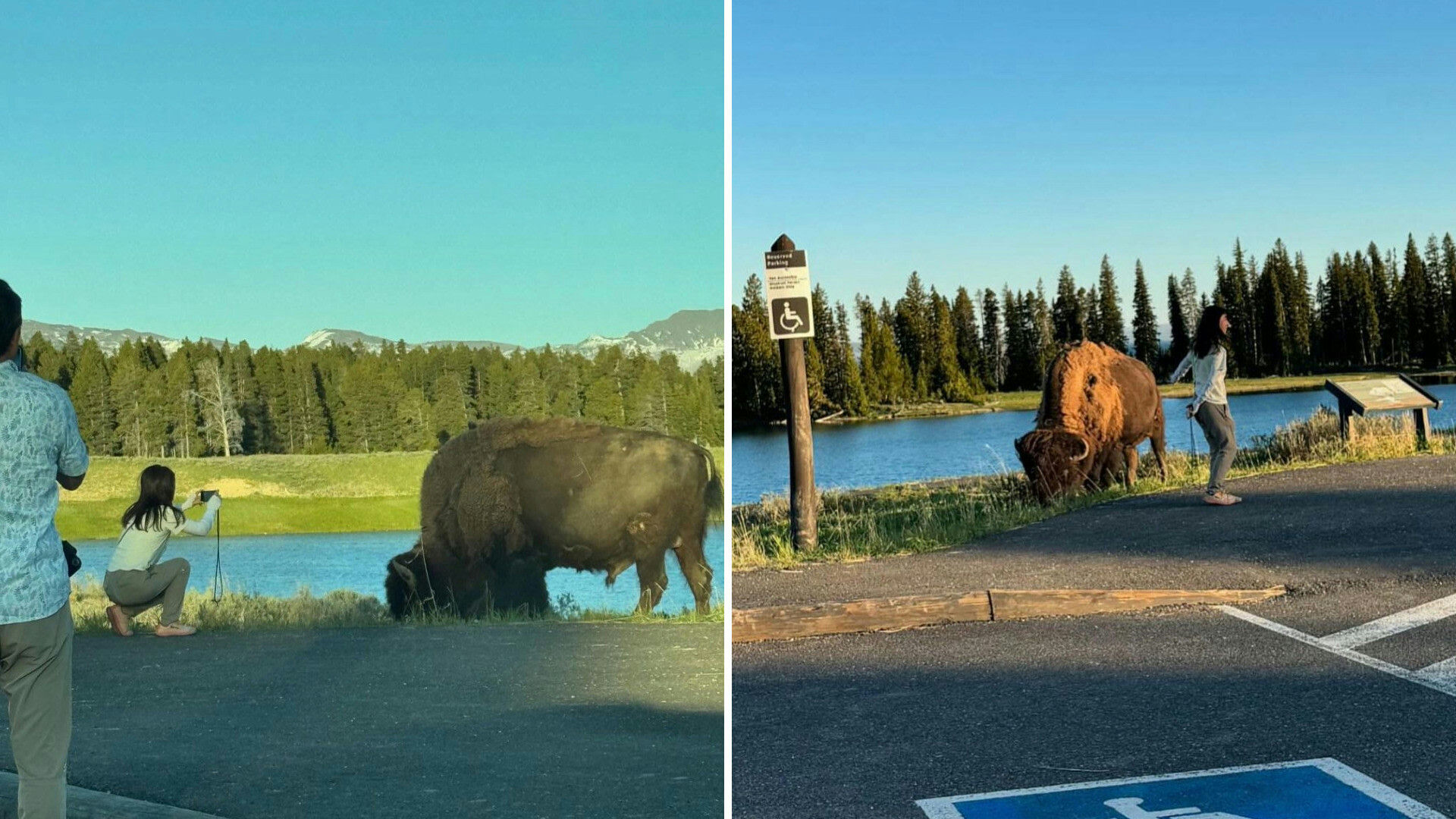
It happens every single year. You’ve seen the grainy cell phone footage on Instagram or TikTok. A tourist, usually clutching a smartphone, tiptoes toward a 2,000-pound bison as if it’s a fluffy cow in a petting zoo. Then, the inevitable happens. The animal tosses its head, huffs, and charges. People scatter. Sometimes, someone gets tossed into the air like a rag doll. It’s terrifying to watch, yet Yellowstone tourist risky behavior remains a persistent, baffling phenomenon that park rangers have to manage every single day.
Why do people do it? Honestly, there’s a strange psychological disconnect that happens when people enter a National Park. They treat the 3,500 square miles of rugged wilderness like a high-budget theme park. They think because they paid an entrance fee at the West Yellowstone gate, the animals are somehow "managed" or curated for their viewing pleasure. They aren't. They are wild, unpredictable, and significantly faster than you.
The Deadly Allure of the "Touron" Moment
The term "touron"—a portmanteau of tourist and moron—has become a staple of local slang in Wyoming and Montana. While it sounds mean-spirited, it’s born out of genuine frustration from locals and National Park Service (NPS) employees who see beautiful landscapes turned into crime scenes. In 2023, a man was caught on video grabbing a bison calf by the neck because it was struggling to cross a river. The intent was "helpful," but the result was tragic. Because of human interference, the herd rejected the calf, and the park service eventually had to euthanize it. That’s the reality of Yellowstone tourist risky behavior; it’s not just dangerous for the person, it’s a death sentence for the wildlife.
The bison isn't the only player in this drama. Elk, especially during the fall rut, are incredibly aggressive. People will park their SUVs right in the middle of the road at Mammoth Hot Springs and step out to take a selfie while a bull elk is bugling just ten feet away. Those antlers aren't for show. They can punch through a car door, let alone a human torso.
Why the Thermal Features are More Dangerous Than the Bears
If you ask a visitor what they're most afraid of, they’ll usually say grizzly bears. But if you look at the actual statistics, the geothermal features—the boiling pots of mud and the azure blue pools—are far more lethal. The ground in the thermal basins is often nothing more than a thin, fragile crust of mineral deposits over scalding water.
One of the most horrific examples of Yellowstone tourist risky behavior occurred in 2016 at the Norris Geyser Basin. A young man from Oregon stepped off the boardwalk, looking for a place to "hot pot" (soak in the springs). He slipped and fell into a highly acidic, boiling pool. By the time the rangers reached the area, the acidity of the water had essentially dissolved his body. There was nothing left to recover. It sounds like a horror movie plot, but it’s a documented NPS incident report. The heat in those pools can exceed 200°F. You aren't just getting burned; you're being cooked.
The Selfie Culture and the "Gram"
Social media has fundamentally changed how we interact with nature. Twenty years ago, if you saw a bear, you’d pull out binoculars. Now? You pull out a phone and try to get closer for a better shot. The pressure to capture "content" overrides the survival instinct.
Basically, people are trading their lives for likes.
The National Park Service officially requires visitors to stay at least 100 yards away from bears and wolves, and 25 yards away from everything else, including bison and elk. To give you a visual: 25 yards is about two full-sized school buses. Most people you see in those viral videos are barely five feet away. They think if they move slowly, the animal won’t notice. Trust me, the bison notices. It just hasn’t decided to end you yet.
The Myth of the "Docile" Animal
Bison look slow. They spend most of their day standing around, chewing cud, looking like giant, fuzzy boulders. But they can sprint at 35 miles per hour. That is significantly faster than Usain Bolt. If a bison decides to charge, you aren't outrunning it. You aren't dodging it.
I’ve talked to people who genuinely believe the animals in Yellowstone are "trained" to be around humans. They aren't. They are tolerated. But that tolerance has a very thin limit. When a mother grizzly feels her cubs are threatened because a group of twenty people is surrounding them with cameras, she isn't going to "warn" you. She’s going to neutralize the threat.
How to Actually Survive Yellowstone Without Becoming a Statistic
The best way to enjoy the park is to embrace the "long lens" philosophy. If you want a great photo of a wolf or a bear, buy a telephoto lens or use a spotting scope. Most of the serious wildlife watchers in the Hayden and Lamar Valleys spend thousands of dollars on glass so they can watch animals from a mile away. That’s the pro move.
- Stay on the boardwalks. Always. No exceptions. The ground is literally melting beneath you in some places.
- Carry bear spray and know how to use it. It’s not like bug spray; don't spray it on yourself. You need to know how to pull the safety tab and aim at the ground in front of a charging bear.
- Watch the tail. A bison’s tail is a mood ring. If it’s hanging down, they’re chill. If it’s standing straight up like a question mark, they are agitated and likely about to charge.
- Don't be the leader. If you see a crowd of people doing something stupid, don't join them. Walk the other way.
Understanding the Legal Consequences
Aside from the physical risk, Yellowstone tourist risky behavior can land you in federal court. Yellowstone is federal land. When you harass wildlife or enter closed thermal areas, you aren't just getting a "ticket" from a local cop. You are being cited by a federal ranger.
In recent years, judges have been handing out increasingly stiff penalties to make examples of people. We’re talking thousands of dollars in fines, bans from all National Parks for life, and even jail time. In 2021, a woman was sentenced to four days in jail for refusing to move away from a grizzly sow and her cubs. The court is over the "I didn't know" excuse. There are signs everywhere. Literally everywhere. In multiple languages.
The Environmental Impact
We often talk about the human cost, but the impact on the park itself is massive. When you walk off the trail in a place like the Grand Prismatic Spring, your footprints can stay there for decades. The delicate microbial mats that give the pools their vibrant colors are easily destroyed. Once they're gone, they don't just "grow back" next week. You are essentially vandalizing a prehistoric ecosystem for a 15-second video.
Real Expertise: What the Rangers Wish You Knew
I remember talking to a ranger near Old Faithful who looked absolutely exhausted. It was mid-July, the peak of "touron" season. He told me that the hardest part of the job isn't the wildlife—it's the people. They spend 90% of their time acting as glorified babysitters for adults who should know better.
He mentioned that people often ask him "What time do they let the animals out?"
Let that sink in. People think there’s a gate and a zookeeper.
This level of detachment from reality is what fuels Yellowstone tourist risky behavior. To stay safe, you have to acknowledge that you are at the bottom of the food chain the moment you step out of your car. The wilderness doesn't care about your vacation photos. It doesn't care if you're a "good person." It only reacts to your presence.
Actionable Steps for Your Next Trip
If you're planning a trip to the park, here is how you can avoid being the next viral sensation for all the wrong reasons:
- Download the NPS App. It has real-time alerts about trail closures and bear activity.
- Invest in a pair of 10x42 binoculars. This is the "sweet spot" for seeing detail without needing a tripod.
- Watch the safety video at the Visitor Center. It’s ten minutes long and could save your life.
- Practice the "Rule of Thumb." If you can’t cover the entire animal with your thumb held at arm's length, you are too close.
- Report bad behavior. If you see someone harassing an animal, don't confront them—they're already proving they lack judgment. Note their license plate and tell a ranger.
Yellowstone is one of the most beautiful places on Earth. It is a portal back to a time before cities and highways. But it is also a place that demands a specific kind of respect. You are a guest in a house owned by predators and volcanic forces. Act like it.
Don't be the person the rangers have to write a report about. Stay on the boards, keep your distance, and keep your bear spray handy. The best souvenir you can bring home is a set of photos taken from a safe distance and a story that doesn't end in an emergency room.
Next Steps for Your Yellowstone Safety:
- Check the Yellowstone NPS Current Conditions page before you leave your hotel, as roads and thermal areas close without warning due to volcanic activity or aggressive wildlife.
- Purchase bear spray at a local shop in Gardiner or West Yellowstone rather than online, as you cannot fly with it, and the local shops will show you exactly how to trigger the mechanism.
- Review the "Rule of Thumb" distance guide one last time before entering the park gates to ensure your perception of 100 yards is accurate.