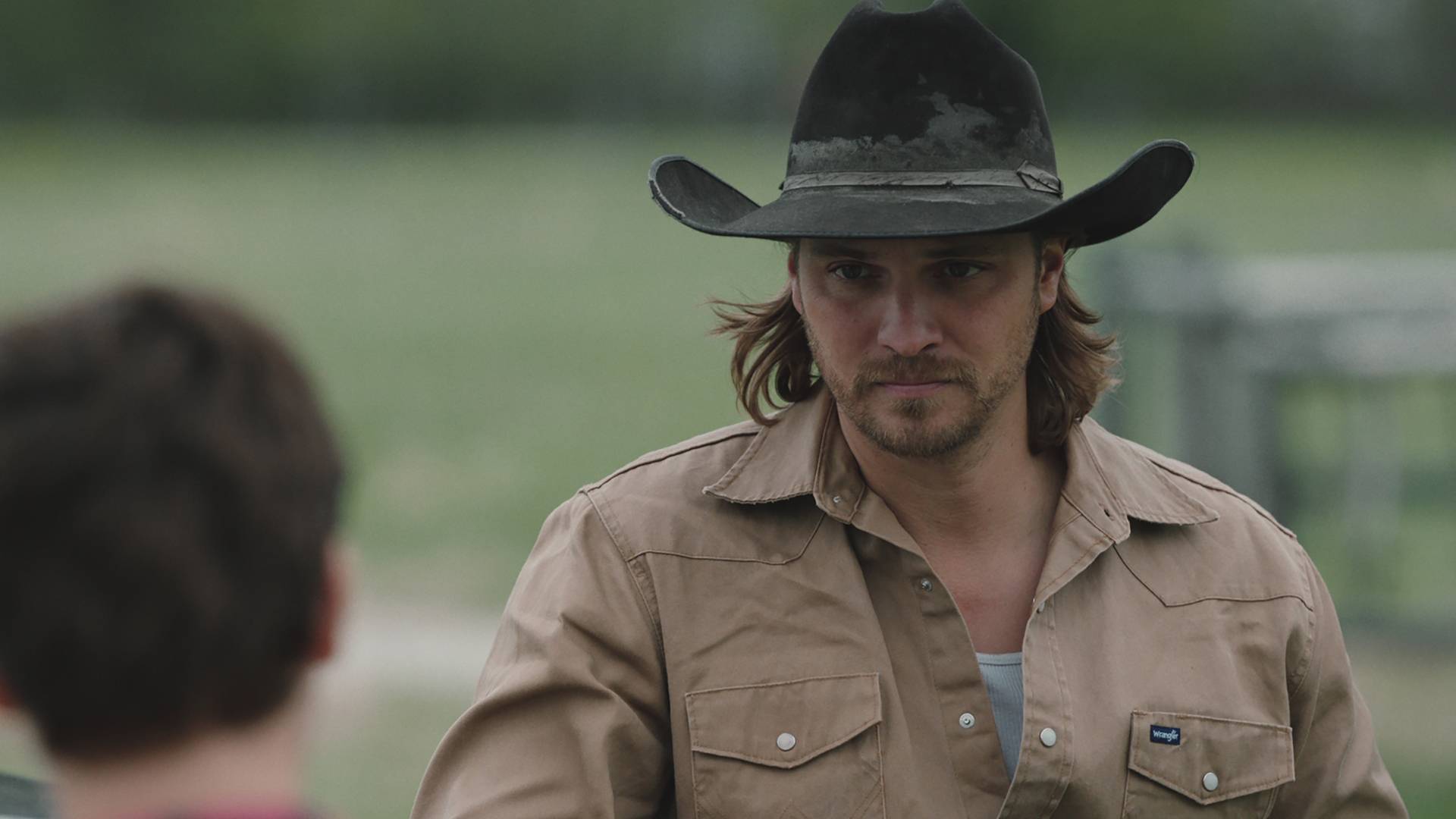
It happened in the fourth season. Most fans were still reeling from the explosive finale of season three—the bombs, the roadside shootings, the absolute chaos that nearly wiped out the Dutton family. But when Yellowstone "The Sting of Wisdom" aired, the tone shifted. It wasn't just about survival anymore. It was about the grueling, ugly process of recovery and the realization that winning a war doesn't mean you get to keep your soul.
Honestly, it's one of those episodes that sticks in your throat.
Taylor Sheridan has a way of writing where the landscape does as much talking as the actors. In this specific hour of television, the Montana wilderness feels less like a postcard and more like a witness. We see John Dutton, played with a weary, gravel-voiced intensity by Kevin Costner, trying to reclaim his life after months in a coma. It’s brutal. There is no Hollywood magic here where a man gets shot multiple times and hops back on a horse the next day. He's fragile. He's gray. He’s human.
What Actually Happens in Yellowstone The Sting of Wisdom
The narrative doesn't move in a straight line. It meanders through the pain of the various family members. Beth is consumed by a rage that feels almost radioactive. Kayce is trying to balance his duties as a father with the violent reality of being a Dutton. And then there's Jamie. Poor, conflicted, perpetually-hated Jamie.
The episode title itself is a bit of a riddle. Wisdom usually sounds like a gift, right? Something you earn and cherish. But in the world of Yellowstone, wisdom is a puncture wound. It’s the sharp, stinging realization that your enemies are closer than you thought and your allies are thinner than the mountain air.
The Sting of Wisdom focuses heavily on the aftermath. John returns to the ranch, but it’s not a joyous homecoming. He’s met with the debris of a battle he barely remembers. He has to reckon with the fact that his daughter, Beth, has essentially turned the ranch into a fortress of vengeance. The tension between them is thick. It’s not just about the land; it’s about what they had to become to keep it.
The Vulnerability of John Dutton
We rarely see John Dutton weak. Throughout the series, he’s a titan. He’s the guy who stares down developers and billionaire hedge fund managers without blinking. But here? He’s a man who needs help getting out of a chair.
There’s a specific scene where he goes to the bunkhouse. It’s a quiet moment, away from the politics and the killing. You can see the weight of the "sting" on his face. He realizes that while he was asleep, the world kept turning, and his children grew harder and colder. That’s the wisdom he didn't want: the knowledge that his survival cost his family their remaining scraps of innocence.
The Beth and Rip Dynamic: A Small Mercy
Amidst the grit, we get the relationship between Beth and Rip. It’s the only thing in the show that feels remotely like a heartbeat. In Yellowstone "The Sting of Wisdom," Beth is at her most volatile. She’s scarred—physically and emotionally—from the office bombing. She’s looking for someone to bleed for what happened to her father.
Rip is the anchor. He doesn't judge her. He doesn't try to "fix" her. He just stands there. It’s a fascinating look at how trauma bonds people. Most shows would have them having a deep, therapeutic conversation. Not here. They share looks. They share silence. They share a common understanding that the world is a cruel place and they are the only ones who can withstand it together.
But even this has a sting. Beth’s obsession with destroying Jamie reaches a fever pitch in this episode. She’s convinced he’s the one who orchestrated the hit. Whether he did or didn't (and the show loves to play with that ambiguity), the wisdom she thinks she has is actually a poison. She’s so blinded by her "truth" that she can't see the collateral damage she’s causing.
The Technical Mastery of the Episode
People watch Yellowstone for the drama, sure. But the cinematography in "The Sting of Wisdom" deserves a shout-out. The way the camera lingers on the steam rising from a horse's back in the morning cold, or the way the shadows fall across the ranch porch—it’s visceral.
The pacing is deliberate. It’s slow. Some fans complained when it first aired that "nothing happened." That’s a fundamental misunderstanding of what Sheridan was doing. He was letting the characters breathe. Or, more accurately, letting them gasp for air.
Why the Fans Are Still Talking About It
You see it on Reddit and Twitter all the time. People revisit this episode because it marks the turning point for the series. This is where Yellowstone stopped being a "prestige soap opera" and started becoming a modern Greek tragedy.
The "sting" isn't just about the plot points. It’s about the philosophy.
- John's realization that he can't protect everyone.
- Kayce's struggle with his "wolf" sightings and what they portend.
- The introduction of Carter, the kid who basically becomes a mirror for Beth’s own lost childhood.
Carter is a huge part of the wisdom theme. Beth tries to take him under her wing, but she does it in the most "Beth" way possible—with harshness and zero sentimentality. She tells him that the world doesn't care about him. It’s a stinging lesson for a kid, but in her mind, it’s the only wisdom worth having.
The Jamie Problem
We have to talk about Jamie. In this episode, his isolation is palpable. He’s bought his own ranch. He’s trying to carve out a life away from the shadow of his father. But the umbilical cord to the Dutton legacy is made of barbed wire.
Every time Jamie thinks he’s free, the "sting" pulls him back. He’s a man caught between two worlds—the one he wants (law, order, respect) and the one he belongs to (blood, dirt, and loyalty). His interactions with his biological father, Garrett Randall, add a layer of complexity that most viewers found infuriating and fascinating in equal measure.
Is Garrett a mentor or a manipulator? The episode leans into the latter, showing how Jamie’s desperation for a father figure makes him blind to the obvious red flags. That’s another sting of wisdom: sometimes the person who gives you the answers is the one who caused the problem.
The Cultural Impact of Yellowstone
It’s easy to dismiss this show as "cowboy stuff." But "The Sting of Wisdom" proves it’s deeper. It taps into a very American anxiety about legacy and the fear that everything we build will eventually be taken by someone younger, faster, and meaner.
The episode doesn't offer easy answers. It doesn't tell you who to root for. You might hate Beth’s cruelty, but you understand her pain. You might pity Jamie, but you're frustrated by his weakness. You might admire John, but you're terrified of his power.
That ambiguity is why the show is a juggernaut. It reflects a world where wisdom rarely comes from a place of peace. It usually comes from a place of loss.
Real-World Parallels
If you look at the ranching industry in Montana and Wyoming today, the themes of Yellowstone aren't that far off. Land prices are skyrocketing. Old families are being pushed out by tech moguls and developers. The "sting" is real for the people actually living on that land.
While the show dramatizes it with shootouts and kidnappings, the core conflict—tradition vs. progress—is a factual reality. Experts like those at the Montana Land Reliance or local historians often point out that the struggle for the "Soul of the West" is a daily occurrence. The episode captures that existential dread perfectly.
Actionable Takeaways for Fans and Writers
If you’re a fan of the show or a writer looking to understand why this specific episode works, there are a few things to keep in mind.
First, embrace the silence. Some of the best moments in "The Sting of Wisdom" have no dialogue. Let the environment and the actor's faces do the heavy lifting. If you're writing your own stories, remember that "showing" often involves the absence of sound.
Second, consequences must be physical. John Dutton’s recovery isn't just a plot point; it’s a physical constraint that changes how he interacts with the world. When your characters get hurt, make it matter. Don't let them bounce back instantly. The "sting" should linger.
Third, character consistency is king. Beth doesn't suddenly become nice because her dad almost died. If anything, she becomes more herself. Authenticity in character development means allowing them to double down on their flaws when under pressure.
Finally, understand the "why" behind the title. Every time you consume a piece of media, ask yourself what the title is trying to tell you. In this case, "The Sting of Wisdom" is a warning. It’s telling the audience that the characters are about to learn things they wish they hadn't.
Moving Forward with the Series
To truly appreciate where the show goes from here, you have to sit with the discomfort of this episode. It sets the stage for the eventual downfall or redemption of the Dutton clan. It’s the foundation for the final acts of the series.
- Rewatch the hospital scenes. Notice the color palette. It’s sterile and cold, contrasting with the warm, earthy tones of the ranch. This visual storytelling highlights John’s displacement.
- Pay attention to the background characters. The bunkhouse crew often provides the moral "grounding" for the show. Their reactions to the family’s drama are a barometer for how far the Duttons have fallen.
- Track the Garrett Randall plotline. Everything he says to Jamie in this episode is a seed. Watch how those seeds grow into the betrayal that defines the later seasons.
The "Sting of Wisdom" isn't an episode you watch once and forget. It’s a slow-burn meditation on what it means to survive. It’s messy, it’s painful, and it’s arguably some of the best television in the modern era.
If you're catching up on the series or doing a rewatch, pay close attention to the small gestures. The way John touches a fence post. The way Beth looks at her scars in the mirror. These are the moments where the true wisdom of the show resides—not in the grand speeches, but in the quiet, stinging reality of a life built on the edge of a mountain.



