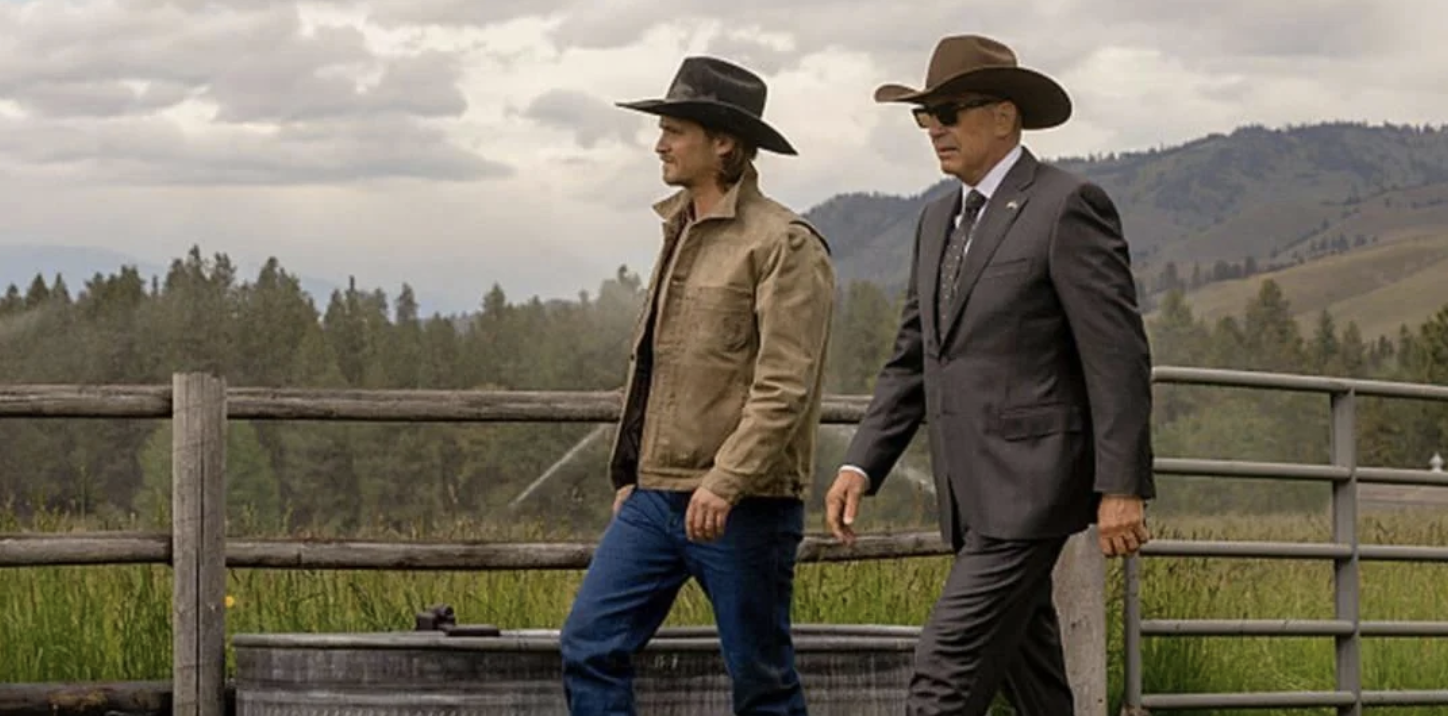
He walked into the bunkhouse and everything changed. Seriously. When Taylor Sheridan cast Ryan Bingham as Walker, he wasn't just adding a musician to the roster. He was injecting a specific kind of tension that the show desperately needed. Fans quickly started calling him the Yellowstone tall drink of water, and honestly, it’s not hard to see why. Between the brim of that dusty hat and the way he carries a guitar like a weapon, Walker became the ultimate antithesis to the hyper-masculine, ultra-violent world of Rip Wheeler.
Most people watch Yellowstone for the land wars or the political maneuvering. But a huge segment of the audience stays for the vibes. Walker is the vibe. He’s the guy who doesn't want to be there but can't seem to leave. That specific blend of "I’m too cool for this" and "I’m literally a branded criminal" created a character archetype that resonates far beyond the screen. It’s about more than just looks. It’s about the soul of the show.
What People Get Wrong About the Yellowstone Tall Drink of Water
There is this massive misconception that Walker is just eye candy. That’s lazy. If you actually pay attention to the writing, Walker represents the conscience of the ranch—or what’s left of it. While Rip and Kayce are out there doing the "dirty work" that John Dutton demands, Walker is the one pointing out how messed up it all is. He’s the mirror.
Ryan Bingham doesn't just play a singer; he is an Oscar and Grammy-winning artist. Bringing that level of authenticity to the role matters. When he sings about death and the weary traveler, he isn’t faking the grit. The show uses his music to underscore the tragedy of the Dutton legacy. He’s the "tall drink of water" because he’s refreshing in a desert of moral decay. But he's also dangerous. Not dangerous in the way Lloyd is with a knife, but dangerous because he refuses to drink the Kool-Aid.
Remember when Rip tried to have him killed? That wasn't just about a girl or a disagreement. It was about the fact that Walker saw the ranch for what it really is: a cult. His survival isn't just a plot point; it’s a testament to the character's resilience. He’s the guy who survives the train station. That alone makes him a legend in the Yellowstone mythos.
The Style That Defined a Character
The "Tall Drink of Water" aesthetic isn't an accident. Costume designer Johnetta Boone did a masterful job of setting Walker apart from the other cowboys. While the rest of the bunkhouse wears heavy carhartt and thick denim, Walker often looks a bit more "tumbleweed chic."
- The Hat: It’s lower, more weathered. It hides his eyes just enough to keep him mysterious.
- The Scarf: Often seen with a wild rag, adding a touch of old-school vaquero flair that feels more artistic than industrial.
- The Lean: Walker doesn't stand straight. He leans. Against fences, against trucks, against the weight of his own past.
This specific look has fueled thousands of Pinterest boards and TikTok edits. It’s a return to the "Lonesome Dove" style of cowboy—the wandering minstrel who happens to be a convict. People aren't just searching for the Yellowstone tall drink of water because they like the actor; they’re searching for that specific brand of rugged, sensitive masculinity that feels increasingly rare in modern media.
The Rivalry That Kept Us Watching
The friction between Walker and Rip Wheeler is the heartbeat of the bunkhouse scenes. It’s visceral. You have Rip, who is the physical embodiment of loyalty, and Walker, who is the embodiment of freedom. They hate each other because they represent what the other can never have. Rip can never be free; Walker can never be truly loyal to a cause that requires blood.
Honestly, the scene where they finally have to work together—or at least stop trying to kill each other—was a turning point for the series. It showed that even in the brutal world of the 6666 and the Yellowstone, there’s room for different kinds of men. When Walker went to the 6666 ranch in Texas, it felt like a reprieve. We got to see him in his element, away from the shadow of the ranch's "darker" duties.
Realism vs. TV Drama
Let's be real for a second. In a real Montana ranching operation, a guy like Walker probably wouldn't last a week if he talked back to the foreman that much. But this is Taylor Sheridan’s world. In this world, the poet gets to live. The "tall drink of water" gets to keep singing his sad songs while the world burns around him.
The inclusion of the 6666 Ranch (The Four Sixes) added a layer of realism that grounded Walker’s character. Ryan Bingham actually has a history with rodeo and ranching life, which is why his movements look natural. He’s not faking the way he saddles a horse. That’s the "E-E-A-T" (Experience, Expertise, Authoritativeness, Trustworthiness) of acting. You can tell when a guy has never touched a cow in his life. Bingham isn't that guy.
Why the Bunkhouse Dynamics Matter
The bunkhouse is where the show breathes. It’s the comic relief and the emotional stakes all rolled into one. Walker’s presence there shifted the chemistry. Before him, it was a bit of a boys' club where everyone followed the rules. Walker broke the rules just by existing.
- He introduced music as a narrative tool. Every time Walker picks up a guitar, the lyrics tell you exactly what’s happening in the subtext of the episode.
- He challenged the "Brand." The Yellowstone brand is a symbol of ownership. Walker wore it like a curse, not a badge of honor.
- He provided a romantic foil. His relationship with Laramie wasn't just a side plot; it was a catalyst for the aging Lloyd to face his own obsolescence.
Watching Lloyd, a veteran cowboy, lose his mind over Walker was one of the most painful and realistic portrayals of jealousy ever put on cable TV. It wasn't just about the girl. It was about the fact that the "tall drink of water" represented the new world, the one that Lloyd didn't understand.
The Impact on Western Fashion and Culture
We have to talk about the "Yellowstone Effect." Since the show blew up, Western wear sales have skyrocketed. But it’s not just about boots. It’s about the vibe. People want the Walker look because it’s effortless. It’s "I just got out of prison but I still look better than you" energy.
Brands like Greeley Hat Works and various high-end denim labels have seen a massive uptick in interest for the specific items seen on screen. But you can't just buy the clothes. The Yellowstone tall drink of water isn't a costume; it’s a demeanor. It’s that slow Texas drawl and the ability to look at a mountain like you’ve seen everything it has to hide.
What’s Next for Walker?
As we head into the final chapters of the Dutton saga, Walker’s fate is one of the biggest question marks. Does he finally ride off into the sunset? Or does the ranch finally claim him like it has so many others?
The beauty of his character is that he’s a survivor. He’s survived the prison system, Rip Wheeler’s wrath, and the grueling labor of a Montana winter. If anyone is going to make it out of this show with their soul intact, it’s probably the guy who never wanted to be there in the first place.
Fans are clamoring for more of him in the potential spin-offs. Whether he ends up permanently at the 6666 or stays as a haunting presence on the Yellowstone, his impact is undeniable. He redefined what a "TV cowboy" looks like in the 21st century. He’s not a hero. He’s not a villain. He’s just a man with a guitar trying to stay out of the dirt.
Actionable Insights for Fans and Aspiring Cowboys
If you're looking to channel that Walker energy or just want to understand the lore better, here’s the move:
- Listen to the Lyrics: Go back and listen to Ryan Bingham’s songs used in the show, like "All Choked Up Again" or "The Weary Kind." They provide more character development than half the dialogue.
- Study the "Wild Rag": If you're into Western fashion, learn how to tie a silk scarf properly. It’s the one accessory that truly defines the Walker look.
- Watch the 6666 Scenes: To see the "Tall Drink of Water" in his most natural element, re-watch the Texas episodes. The cinematography there captures his character's freedom better than the claustrophobic Montana scenes.
- Understand the Brand: Research the history of livestock branding. It makes Walker’s internal conflict much more impactful when you realize the weight of that mark.
Walker changed the game. He proved that you don't have to be the loudest guy in the room to be the most memorable. Sometimes, you just need a hat, a guitar, and the guts to say "no" when everyone else is saying "yes."



