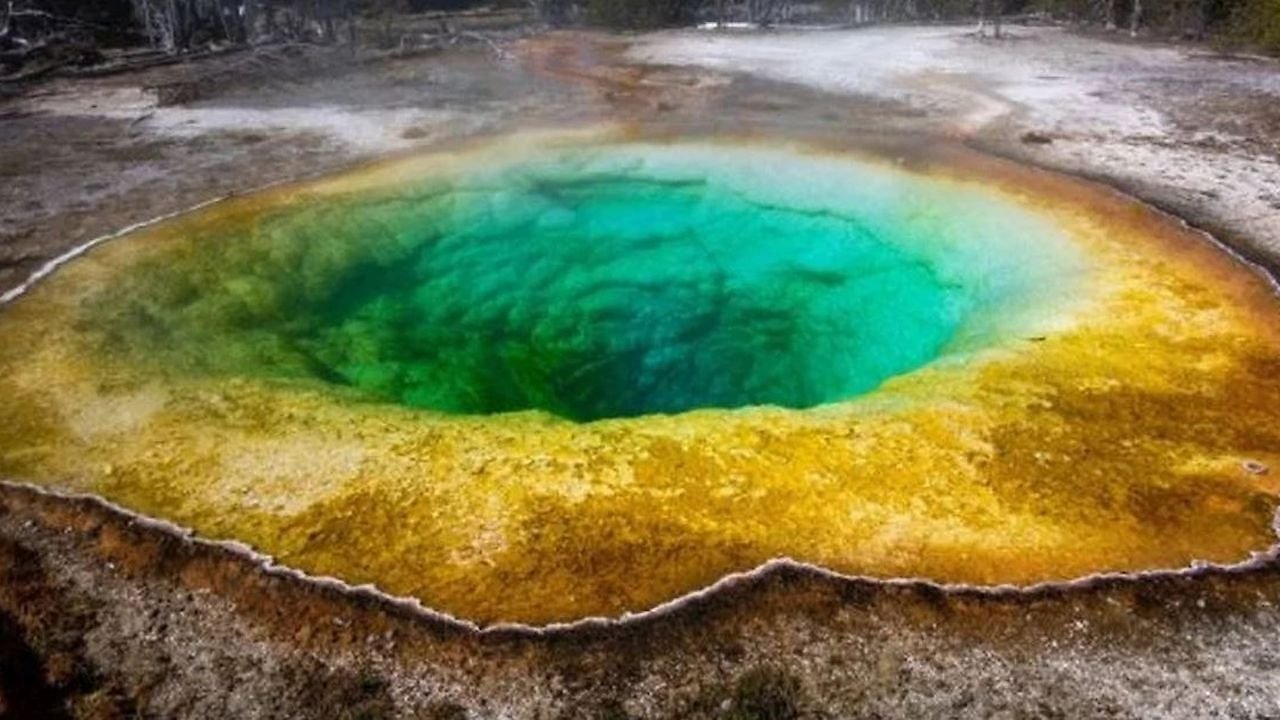
You've probably seen the headlines. Every few months, a blurry satellite photo or a slightly-too-warm thermal pool in Wyoming goes viral, sparking a fresh round of "is this it?" dread. People start talking about a Yellowstone supervolcano American doomsday like it’s a scheduled event on a calendar. It’s scary stuff. We are talking about a geological engine so massive it literally reshapes the continent when it decides to clear its throat.
But here is the thing.
Most of what you read on social media about Yellowstone is, frankly, garbage.
The reality of the Yellowstone Plateau Volcanic Field is much more interesting than a Michael Bay movie script. It is a living, breathing system. It rises and falls by centimeters every year. It breathes out carbon dioxide. It shudders with thousands of tiny earthquakes that nobody even feels. To understand if we are actually facing a "doomsday" scenario, we have to look at the plumbing under the park, not the clickbait in your feed.
What is Actually Happening Under the Geysers?
Scientists from the Yellowstone Volcano Observatory (YVO) spend their entire lives staring at monitors. They aren't seeing a ticking time bomb. Instead, they see a complex system of two massive magma chambers. One is shallow, mostly crystallized rock and mush; the other is deeper, larger, and holds the real heat. For a "super-eruption" to happen, you need a huge amount of mobile, liquid magma. Right now? Most of that rock is "mushy," which is a technical way of saying it’s not ready to blow.
Mike Poland, the scientist-in-charge at YVO, has said repeatedly that the current state of the magma is mostly solid. Think of it like a Slurpee that’s been sitting in the sun—mostly ice crystals with just a little liquid in between. To get an eruption, you need that ratio to flip.
The Reality of a Yellowstone Supervolcano American Doomsday
If the worst-case scenario actually happened—the kind of 1-in-600,000-year event people worry about—it wouldn't just be a big explosion. It would be a continental-scale catastrophe. We are talking about the "Huckleberry Ridge" or "Lava Creek" style events.
The immediate vicinity of the park would be erased by pyroclastic flows. These are essentially avalanches of hot ash and gas moving at hundreds of miles per hour. Anything within 50 to 100 miles? Gone. But the real "doomsday" part for the rest of America isn't the fire. It's the ash.
The Ash Blanket Effect
A massive eruption would vomit trillions of tons of rhyolitic ash into the atmosphere. This stuff isn't like wood ash from a campfire. It is pulverized glass. It’s heavy. It’s abrasive. It’s conductive.
- The Midwest: The "Breadbasket of the World" would be buried under inches—maybe feet—of gray powder. Crops would die instantly.
- The Grid: Ash gets into transformers and short-circuits power grids. Total blackout across the Western and Central US.
- Water: Ash turns reservoirs into a toxic slurry of heavy metals and grit.
This is where the "American doomsday" label comes from. It’s not about the explosion itself; it’s about the total collapse of infrastructure. Without power, water, or food production, the modern United States basically hits a brick wall.
Why the "Overdue" Argument is Total Nonsense
You hear this one a lot: "Yellowstone erupts every 600,000 years, and the last one was 640,000 years ago. We're overdue!"
Geology doesn't work that way. Volcanoes don't have alarm clocks.
The three major eruptions happened 2.1 million, 1.3 million, and 0.64 million years ago. If you do the math, those intervals are wildly different. Using three data points to predict a "schedule" is like watching a bus arrive at 1:00, 3:00, and 7:00 and assuming the next one is coming at exactly 9:00. It's bad math. Furthermore, some geologists believe the hotspot fueling Yellowstone might actually be waning. It’s moving into thicker continental crust, which acts like a heavy lid, making it harder for magma to break through.
The Real Threats (They Aren't What You Think)
While everyone is obsessed with a Yellowstone supervolcano American doomsday, the park is actually trying to kill us in much smaller, more likely ways.
Hydrothermal explosions are the real "local" danger. These happen when water trapped underground flash-steams and blows a hole in the ground. It happened at Biscuit Basin in July 2024. Tourists were running for their lives as rocks the size of Volkswagens were tossed into the air. No magma involved. Just physics.
Then there are the earthquakes. Yellowstone sees 1,000 to 3,000 quakes a year. Most are tiny. But a magnitude 7.0? That could happen tomorrow. In 1959, the Hebgen Lake earthquake (just outside the park) caused a massive landslide that buried a campground and killed 28 people. That is a tangible, documented risk. It’s not "doomsday," but it’s deadly.
Is the Government Hiding Something?
There is a persistent conspiracy theory that the USGS (U.S. Geological Survey) is "turning off" seismographs to hide activity. Honestly, that’s just not how modern science works.
Data from Yellowstone is public. Universities like the University of Utah monitor the sensors in real-time. If the ground was bulging or the temperature was spiking, hundreds of independent scientists across the globe would see the data simultaneously. You can't hide a mountain moving three feet upward.
How to Actually Prepare (Without Going Full Prepper)
Looking at a Yellowstone supervolcano American doomsday scenario can feel paralyzing. If the whole continent is covered in ash, what's a can of beans going to do?
Actually, quite a lot.
The most realistic "disaster" isn't a super-eruption; it's a major earthquake or a regional ash fall from a smaller volcanic event. Preparation for Yellowstone is basically the same as preparation for any other major utility failure.
- N95 Masks: These aren't just for pandemics. If there is ash in the air, you need these to keep from literally breathing in shards of glass.
- Water Filtration: Ash ruins municipal water systems. Having a high-quality gravity filter (like a Sawyer or Berkey) is more important than having a basement full of ammo.
- HEPA Filters: You'll want to seal your house and scrub the air. Ash gets everywhere. Every crack in every window.
- Information Sources: Stop following "End Times" YouTube channels. Follow the Yellowstone Volcano Observatory's monthly updates. They are dry, boring, and filled with data. Boring is good. Boring means nothing is exploding.
The Long View
We live on a restless planet. The Yellowstone hotspot has been active for 17 million years, slowly burning a trail across Idaho into Wyoming. It has seen the rise and fall of countless species. To us, a human life is an eternity. To the volcano, a thousand years is a blink.
The odds of a Yellowstone supervolcano American doomsday happening in your lifetime, your children's lifetime, or even your great-great-great-grandchildren's lifetime are vanishingly small. We are talking about a 0.00014% annual probability. You are significantly more likely to be struck by lightning while winning the powerball.
Instead of worrying about the "Big One," respect the park for what it is: a window into the raw, thermal power of the Earth. It’s a place where the crust is thin and the planet's internal engine is on full display.
Practical Next Steps for the Concerned
If you want to stay informed without the panic, take these specific actions:
- Bookmark the USGS Volcano Hazards Program: Specifically the Yellowstone "Current Status" page. It’s updated daily with seismic counts and ground deformation data.
- Monitor Ground Deformation: Look at GPS data for the "Sour Creek" and "Mallard Lake" resurgent domes. If these start rising by meters instead of millimeters, that’s when scientists will actually start getting worried.
- Understand the "Yellowstone Myth": Read the 2005 USGS paper "Steam Explosions, Earthquakes, and Volcanic Eruptions—What’s in Yellowstone’s Future?" It’s the gold standard for factual risk assessment.
- Focus on Regional Readiness: If you live in the Intermountain West, prepare for a Magnitude 7.0 earthquake. It’s the most statistically probable geological "event" you will face, and the supplies you gather for it will cover you for almost any other volcanic contingency.
The Yellowstone "Doomsday" makes for a great TV show, but the reality is a slow-moving, heavily monitored geological giant that shows no signs of waking up anytime soon. Stay skeptical of the hype, trust the sensors, and keep an N95 mask in your emergency kit just in case the wind blows some dust your way.