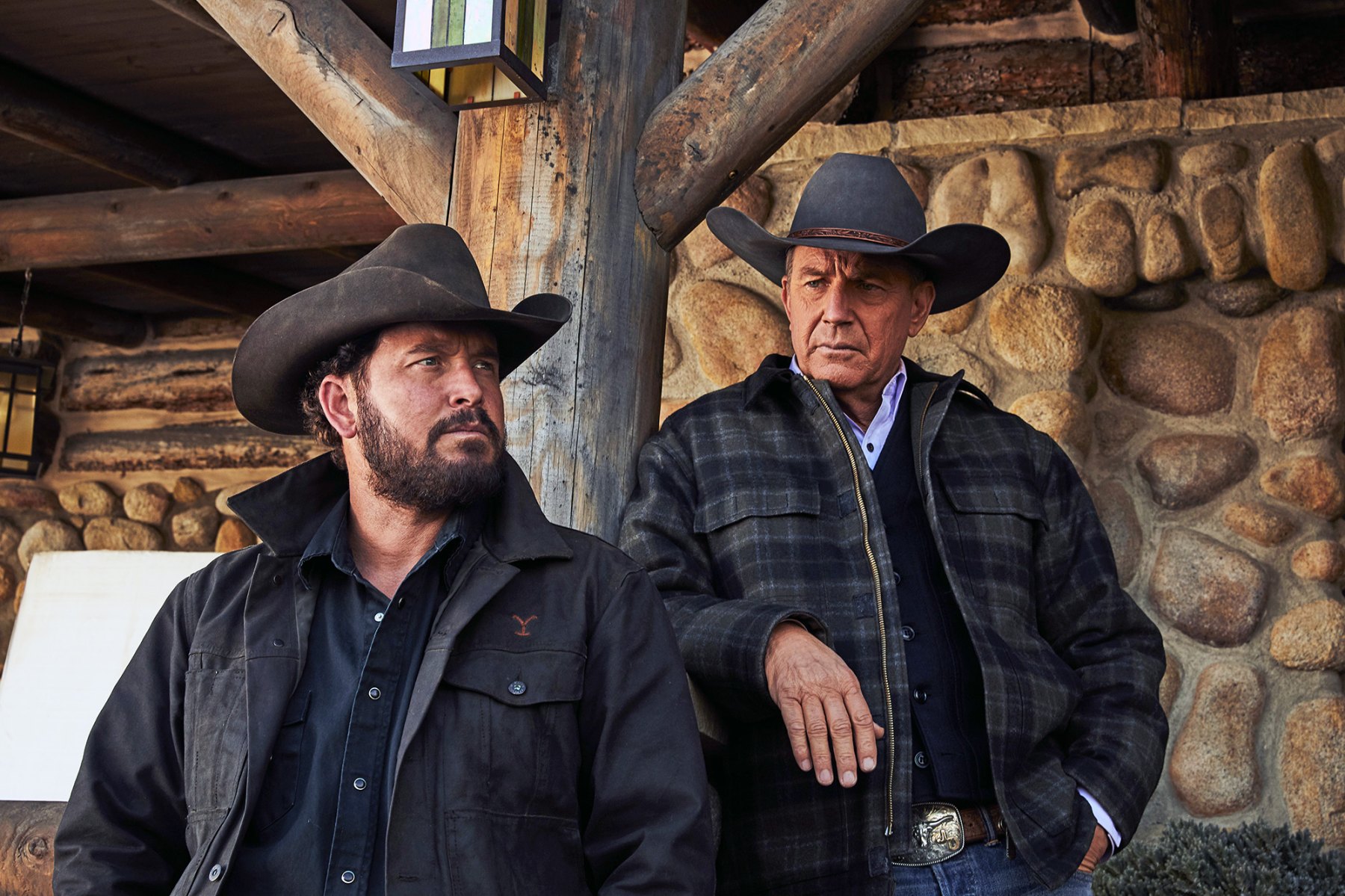
Let’s be real. We all knew the back half of Yellowstone Season 5 was going to be a bit of a mess. Between the high-profile exit of Kevin Costner and the years of production delays, the vibe was already tense. But when the premiere finally dropped, fans weren't just mourning John Dutton; they were scratching their heads. Yellowstone Season 5B confuses viewers with unexplained timeline jumps that feel less like artistic choices and more like a frantic attempt to patch together a story without its lead actor.
It’s jarring. You’re watching Beth and Kayce grapple with the immediate aftermath of their father’s death—a moment that feels like it happened five minutes ago—and then suddenly, the show pivots. We’re in the past. Then we’re in the "present," but the present has shifted. If you felt like you missed an entire episode during a commercial break, you aren't alone. You might also find this related coverage interesting: The Architecture of Attention Capital: Why the Streamer Economy Miscalculates Global Asset Value.
The struggle is that Taylor Sheridan has always played with time, but usually, it’s through those sepia-toned 1883 or 1923 flashbacks that ground the Dutton legacy. This is different. This is structural.
The Costner-Sized Hole in the Timeline
The biggest reason Yellowstone Season 5B confuses viewers with unexplained timeline jumps is the "John Dutton Problem." When Kevin Costner officially left the building, the writers had to figure out how to kill off the sun around which every other character orbits. They chose a "suicide" that was actually a murder, staged by Sarah Atwood and Jamie’s hitmen. As highlighted in recent coverage by Rolling Stone, the implications are worth noting.
But look at how they tell it.
The premiere, "Desire Is All You Need," starts in the immediate, chaotic wake of the discovery at the Governor’s mansion. We see the flashing lights. We see Beth’s raw, unfiltered breakdown. This is the "now." However, the show then drags us back six weeks to show the events leading up to the hit. This isn't inherently bad storytelling, but the transition is clunky. There’s no title card. No "Six Weeks Earlier" in big, bold letters. You just have to figure it out by the fact that John is suddenly alive again and eating breakfast.
Honestly, it feels like the show is gaslighting us. One minute we’re grieving, the next we’re watching political maneuvering that we already know leads to a dead end. It saps the tension.
The pacing is the real victim here. By jumping back to fill in the gaps of how the hit was coordinated, the show halts the momentum of the present-day grief. Fans wanted to see the immediate war between Beth and Jamie. Instead, we got a logistical deep dive into a plot we already saw the conclusion of in the opening scene.
Why the 6666 Ranch Subplot Makes It Worse
If the main Montana plot wasn't dizzying enough, we have the Texas situation. Jimmy Hurdstrom is living his best life at the 6666, and while everyone loves Jimmy, his scenes feel like they belong to a completely different show—and a different year.
Because the production of Season 5 was split by a nearly two-year hiatus, the aging of the actors and the seasonal shifts in the background don't always line up. You’ll see a scene in Montana where the tension is at a boiling point, then cut to Texas where the vibe is "chill cowboy documentary." The temporal disconnect is palpable.
Many viewers have noted on Reddit and X (formerly Twitter) that the Texas scenes feel untethered. Are they happening simultaneously with John’s death? Did they happen months ago? The show doesn't seem to care. It just expects you to keep up. This lack of "anchoring" is exactly why Yellowstone Season 5B confuses viewers with unexplained timeline jumps. When you don't know when a character is, it’s hard to care about what they are doing.
Breaking Down the "Flashback" Fatigue
Let's talk about the young John Dutton scenes. Josh Lucas is great—seriously, he nails the Costner cadence—but his appearances in 5B feel like a desperate safety net.
In previous seasons, flashbacks served to mirror the current conflict. They explained the "why" behind the "what." In Season 5B, they feel like filler used to compensate for the fact that they couldn't film new scenes with the elder Dutton. It’s a bait-and-switch. We want the story to move forward, but Sheridan keeps pulling the emergency brake and steering us into the 1990s.
This creates a "stop-start" rhythm.
- Scene A: High-stakes confrontation in 2024.
- Scene B: 1996 flashback about a fence.
- Scene C: Six weeks ago in 2024.
- Scene D: Back to the "now."
It’s exhausting. And for a show that built its brand on being a "prestige soap opera," the soap is starting to feel a little watered down. The audience is forced to do the mental gymnastics of a script supervisor just to keep the narrative straight.
The Sarah Atwood and Jamie Timeline Knot
The most confusing leap involves the conspiracy itself. Sarah Atwood and Jamie’s "romance" (if you can call it that) moves at a pace that defies logic when interspersed with the Montana statehood plot.
The timeline of the impeachment, the hitman hire, and the eventual discovery of the body doesn't seem to follow a linear week-to-week progression. Some scenes feel like they cover days, others cover hours. When the show jumps from the discovery of the body back to the planning stages, it doesn't just explain the "how"—it muddies the "when."
Specifically, the "hitman for hire" conversation. It’s presented as this shadowy, clandestine meeting, but the show jumps around so much that by the time the trigger is actually pulled, the audience is left wondering if Jamie had any second thoughts or if we just skipped over his conscience entirely. We didn't see the slow burn; we saw the start and the finish with the middle chopped into bits and scattered across the episode.
How to Actually Follow the 5B Timeline
If you’re struggling, you’re not dumb. The show is legitimately messy. But there are some clues you can look for to figure out where you are in the Dutton multiverse.
First, look at Beth’s hair and makeup. It sounds superficial, but Kelly Reilly’s styling is a major tell for which "time" we are in. In the immediate aftermath of John’s death, she’s a wreck—smudged mascara, frantic energy. In the "six weeks earlier" scenes, she’s "Corporate Beth," sharp and composed.
Second, pay attention to the lighting. The "present day" scenes in 5B have a colder, bluer tint, reflecting the mourning period and the winter of the Dutton family. The flashbacks and the "weeks before" scenes tend to have that classic, golden-hour Yellowstone glow.
Third, listen to the dialogue about the ranch's cattle. The move to Texas is the biggest "timer" in the show. If they are talking about moving the herd, you’re likely in the "past" (before the premiere's opening). If the herd is already gone and the house is empty, you're in the grim "now."
Why This Is Happening (The Real-World Reason)
We have to acknowledge the elephant in the room. The reason Yellowstone Season 5B confuses viewers with unexplained timeline jumps isn't just a creative choice; it’s a logistical necessity.
The show was supposed to wrap up differently. When Costner left, scripts had to be thrown out. New scenes had to be written to explain his absence. They had to use whatever footage they had, combined with body doubles and clever camera angles. The result is a "Frankenstein’s Monster" of an edit.
Sheridan is trying to tell a story while also performing surgery on a moving vehicle. The timeline jumps are the stitches. They aren't pretty, and they definitely show, but they are the only thing keeping the narrative from falling apart completely.
What This Means for the Series Finale
As we hurtle toward the end, the big question is whether the timeline will ever converge. Will we get a linear path to the finish line?
It’s unlikely. Yellowstone has transitioned from a linear Western into a fractured memory play. The confusion is part of the experience now. The show is asking you to feel the chaos that the characters feel. When your world is upended—like your father being murdered—time doesn't feel linear. It feels fragmented.
Is that an excuse for poor editing? Maybe not. But it’s the reality of the show we have.
Next Steps for the Perplexed Viewer:
To get the most out of the remaining episodes without losing your mind, try these three things:
- Re-watch the Season 5A Finale: It’s been so long that most people have forgotten exactly where the chess pieces were left. The move to Texas and the initial talk of "quiet quitting" the governorship are essential context for the jumps in 5B.
- Focus on the "Why," Not the "When": Instead of trying to pinpoint the exact date of a scene, ask yourself what piece of information the show is trying to give you. If it’s a flashback to John, it’s usually about the "Dutton Promise." If it’s a jump back to Sarah and Jamie, it’s about the "Betrayal."
- Ignore the 6666 Timeline (For Now): Treat the Texas scenes as a separate entity. They will likely only merge with the main Montana plot in the final moments or in a spin-off. Trying to sync them up will only give you a headache.
The Dutton legacy was never going to end quietly. The timeline jumps are just the latest obstacle in a show that has survived behind-the-scenes drama that is arguably more intense than anything happening on screen. Strap in, pay attention to the lighting, and maybe keep a notepad handy. You’re going to need it.
Actionable Insight: If you're still confused after an episode, check the official Yellowstone "Behind the Story" clips usually released on YouTube or Paramount+. They often explicitly state the timeframe of specific scenes that the actual episodes leave vague. Don't rely on the show to tell you the date; look for the "context clues" in the characters' clothing and the seasonal weather in the background of the shots.



