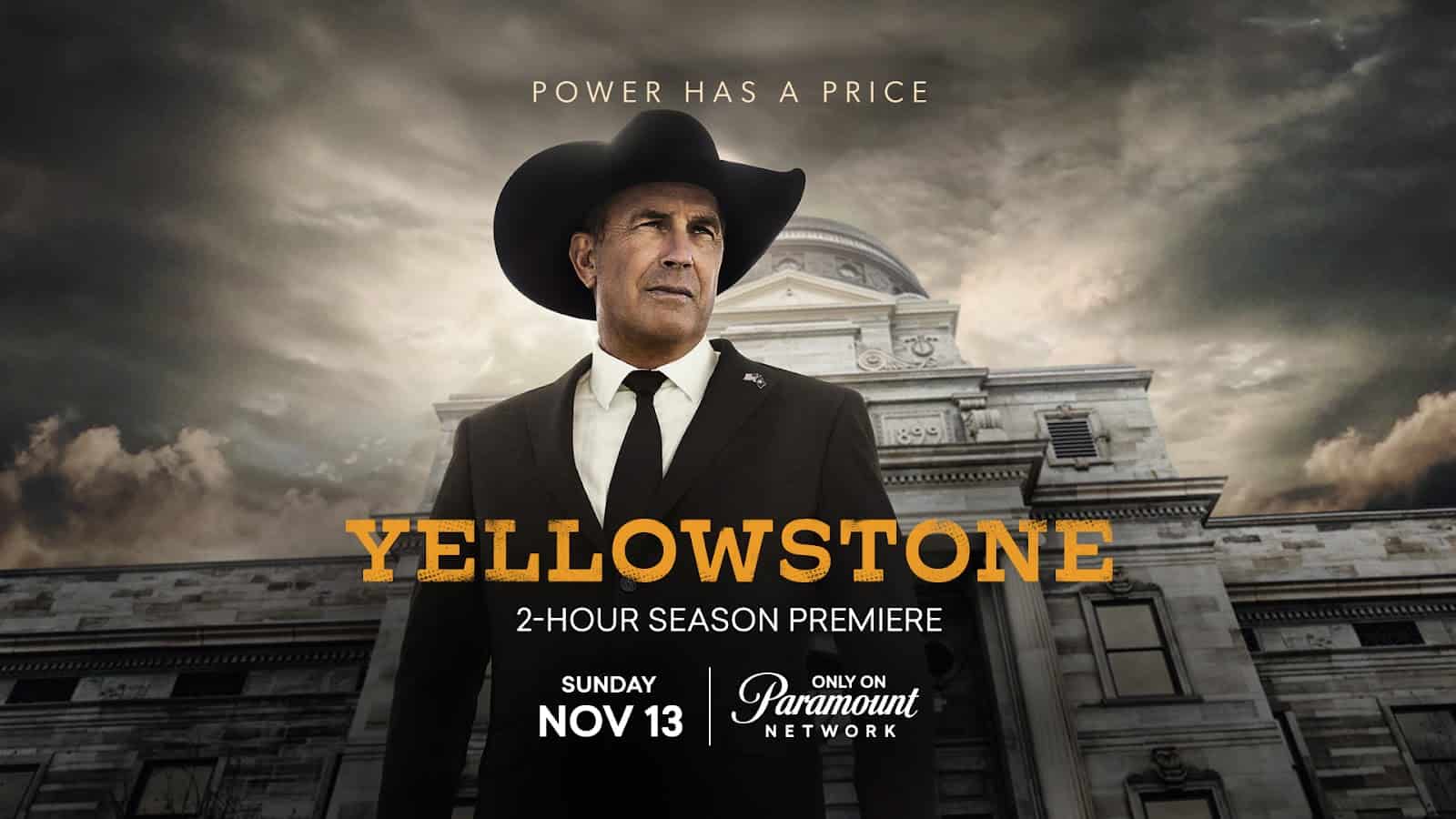
John Dutton is Governor now. That’s where it all starts. If you’ve been keeping up with the chaos in Montana, you know that the episodes in Yellowstone Season 5 haven't exactly followed the "business as usual" blueprint of the previous seasons. It’s messier. It's slower in some parts and breakneck in others. Honestly, the off-screen drama with Kevin Costner leaving the show basically overshadowed the actual plot for a minute there, but when you sit down and watch the episodes, the tension is undeniable.
The fifth season was split into two distinct parts. Part A gave us eight episodes that aired back in late 2022 and early 2023. Then we had the long, agonizing wait—the "Great Drought" of Yellowstone content—before Part B finally arrived to wrap up the Dutton legacy. People were worried. How do you finish a show this massive when your lead actor is off filming a Western epic called Horizon? You pivot. You focus on the kids. You let Beth and Jamie finally, truly, try to destroy each other.
The Political Grind of the Early Episodes
The premiere, "One Hundred Years is Nothing," sets a somber tone. John isn't happy about being Governor. He hates the suits. He hates the red tape. He basically took the job just to kill the airport project and the Market Equities development. It’s a spite-driven administration. You see him taking the oath of office and immediately firing half the staff. It’s peak John Dutton. But it also changes the rhythm of the episodes in Yellowstone Season 5 compared to what we saw in the early years. We spend less time on horseback and more time in wood-panneled offices in Helena.
Some fans felt the pace dragged here. I get it. We want to see Rip Wheeler solving problems with a shovel, not John signing executive orders. But the depth of the world-building is what makes this season feel "final." Taylor Sheridan is leaning hard into the idea that the modern world is closing in on the ranch. It’s not just about land developers anymore; it’s about the soul of the state.
Rainwater’s Struggle and the Broken Treaties
Thomas Rainwater is such a complex character, and this season really tests him. While John is fighting the state government from the inside, Rainwater is facing an internal coup at the Broken Rock Reservation. Angela Blue Thunder is a shark. She sees John’s governorship as a betrayal, even though they’ve had their uneasy alliances in the past.
There’s a specific moment in "The Sting of Wisdom" where the political reality hits home. The wolves. The killing of the tagged wolves from the park by the ranch hands created a massive PR nightmare for the Governor’s office. This isn't just about ranching; it's about federal law, environmental activism, and the optics of a Governor who puts his own ranch first. It’s a smart way to show that even with the "power" of the state, John is still trapped.
The Mid-Season Shift and the Branding
Things pick up once we get back to the ranch. "Watch'em Ride Away" and "The Resilience" bring back that classic Yellowstone feel. We get the branding, the big cattle drive, and the campfire scenes that make the show feel like a love letter to a dying way of life. The cinematography here is gorgeous. You can tell they poured a massive budget into these Montana landscapes.
But beneath the beauty, the cracks are widening. Beth finds out about the "Train Station." That’s a huge turning point. For years, she knew her father was a hard man, but seeing the physical evidence of where the bodies are buried—literally—changes her leverage over Jamie. Or so she thinks. Jamie is smarter this season. He’s cornered, and a cornered Jamie Dutton is a dangerous, pathetic, yet surprisingly capable animal.
The way Sarah Atwood from Market Equities manipulates Jamie is almost painful to watch. She sees his daddy issues from a mile away and uses them like a scalpel. By the time we hit the mid-season finale, "A Knife and No Coin," the battle lines are drawn. Jamie is calling for impeachment. Beth is suggesting "the permanent solution." It’s Shakespearean, honestly.
The Transition to the Final Act
When the episodes in Yellowstone Season 5 returned for Part B, the energy shifted again. We had to deal with the absence of John Dutton. It’s a weird feeling, watching a show where the sun used to revolve around one man, and suddenly he’s gone. But it allows characters like Kayce and Monica to breathe a little more. Their journey through grief—after the loss of their baby earlier in the season—is the emotional anchor that keeps the show from becoming a pure political soap opera.
Kayce has always been the "reluctant heir." In these later episodes, we see him trying to balance the legacy of his name with the needs of his family. Monica, who has every reason to hate the Dutton ranch, finds a strange kind of peace there. It’s a nuanced take on "home" and what we’re willing to forgive to keep it.
- Episode 1: John Dutton becomes Governor.
- Episode 4: The wolf controversy threatens the ranch’s reputation.
- Episode 7: The cattle drive begins, offering a temporary reprieve from politics.
- Episode 9: The aftermath of the power vacuum begins to take shape.
The Brutality of the Beth and Jamie Feud
Let’s talk about that rivalry. Kelly Reilly and Wes Bentley are doing some of their best work here. In the later episodes in Yellowstone Season 5, the gloves are completely off. There’s no more pretending they are a family. Beth is a force of nature, but her blind spot is her hatred for Jamie. She underestimates his desperation.
Jamie’s alliance with Sarah Atwood isn't just about sex or power; it’s about survival. He knows that if he doesn't kill Beth (metaphorically or otherwise), she will definitely kill him. The tension in the courtroom and the backroom deals in Helena make the second half of the season feel like a thriller.
Why Season 5 Hits Differently
This isn't Season 1 where the threat was a guy with a bulldozer. The threats now are internal. It’s the inheritance tax. It’s the changing climate. It’s the fact that Rip and the boys have to move the cattle south to Texas just to keep them alive because of the grass shortage and the disease.
The move to the 6666 Ranch in Texas is a clever narrative device. It connects the flagship show to the broader "Sheridan-verse" and gives Rip a chance to lead in a way he couldn't under John’s shadow. Seeing the bunkhouse crew navigate the Texas heat adds a layer of "fish out of water" humor that the show desperately needs among all the shouting and murder plots.
Realism vs. Drama
Yellowstone has always walked a fine line between being a realistic portrayal of ranching and a wild melodrama. Season 5 leans into the melodrama, but the details of the ranching stay sharp. They use real-life cowboys. They show the actual mechanics of a branding. According to interviews with the cast, including Cole Hauser, the physical toll of filming these episodes is real. They are out there in the elements, doing the work. That authenticity is why people keep coming back, even when the plot gets a little "out there."
The environmental stakes are real, too. The brucellosis threat mentioned in the mid-season episodes is a genuine concern for Montana ranchers. If the cattle get infected by the elk, the whole herd has to be destroyed. That’s not "TV drama"—that’s a literal nightmare for thousands of families in the West. By grounding the show in these types of stakes, the episodes in Yellowstone Season 5 feel weightier than just a show about a rich family.
The Legacy of the Dutton Family
As the series concludes, we're forced to ask: was it worth it? John Dutton spent his entire life—and sacrificed his children’s happiness—to keep a piece of dirt. The episodes reflect that weariness. You see it in the way the characters move. They are tired. Even Rip, who is usually the rock, seems to be feeling the weight of the end.
The show doesn't give easy answers. It doesn't tell you that John was a hero. In many ways, he’s the villain of someone else’s story. But he’s our protagonist, and that’s the trick Taylor Sheridan pulls off. You root for the Duttons even when they are doing objectively terrible things.
Practical Ways to Experience the Season
If you’re looking to dive back in or catch up before the very end, there are a few things to keep in mind. Don't just binge it for the violence. Look at the background details. Look at the way the seasons change in Montana. The production team spent years capturing the specific light of the Big Sky state, and it’s a character in itself.
- Watch the Prequels First: If you haven't seen 1883 and 1923, the stakes of Season 5 won't hit as hard. Knowing what James and Margaret Dutton went through to get that land makes John’s refusal to sell much more understandable.
- Pay Attention to the Music: The soundtrack is a curated list of Americana and Red Dirt country. It’s not just background noise; it’s the heartbeat of the show.
- Track the Legal Moves: Jamie’s legal maneuvers in the later episodes are actually based on real Montana administrative law. It’s a "lawyer show" hidden inside a Western.
The final episodes aren't just about who lives or dies. They are about what remains. The land stays. The people are just passing through. That’s the core message of the episodes in Yellowstone Season 5. It’s a bittersweet ending to a saga that changed how we look at the American West on television.
If you want to truly understand the impact, go back and watch the first episode of the series right after finishing the finale. The transformation of the characters—especially Beth and Kayce—is staggering. They started as fractured people trying to find a way out, and they ended as the hardened guardians of a dying empire. It’s not a happy ending, but it’s an honest one for the world they live in.
To get the most out of your rewatch, focus on the shifting alliances in the bunkhouse. The loyalty of guys like Lloyd and Walker becomes the true moral compass of the show when the family at the top is falling apart. That’s where the heart is. The suits in Helena can argue all they want, but the men and women in the dirt are the ones who define the ranch.
Next Steps for Yellowstone Fans
- Visit the filming locations: Much of the season was filmed around Darby and Missoula, Montana. You can actually visit the Chief Joseph Ranch, which serves as the Dutton home.
- Explore the 6666 connection: Follow the storyline of the Four Sixes ranch in Texas, as it represents the future of the franchise and a different style of ranching.
- Review the historical context: Look into the real-life history of the Yellowstone National Park borders and the tensions between federal land and private ranching to see how much of the show is based on actual regional conflicts.



