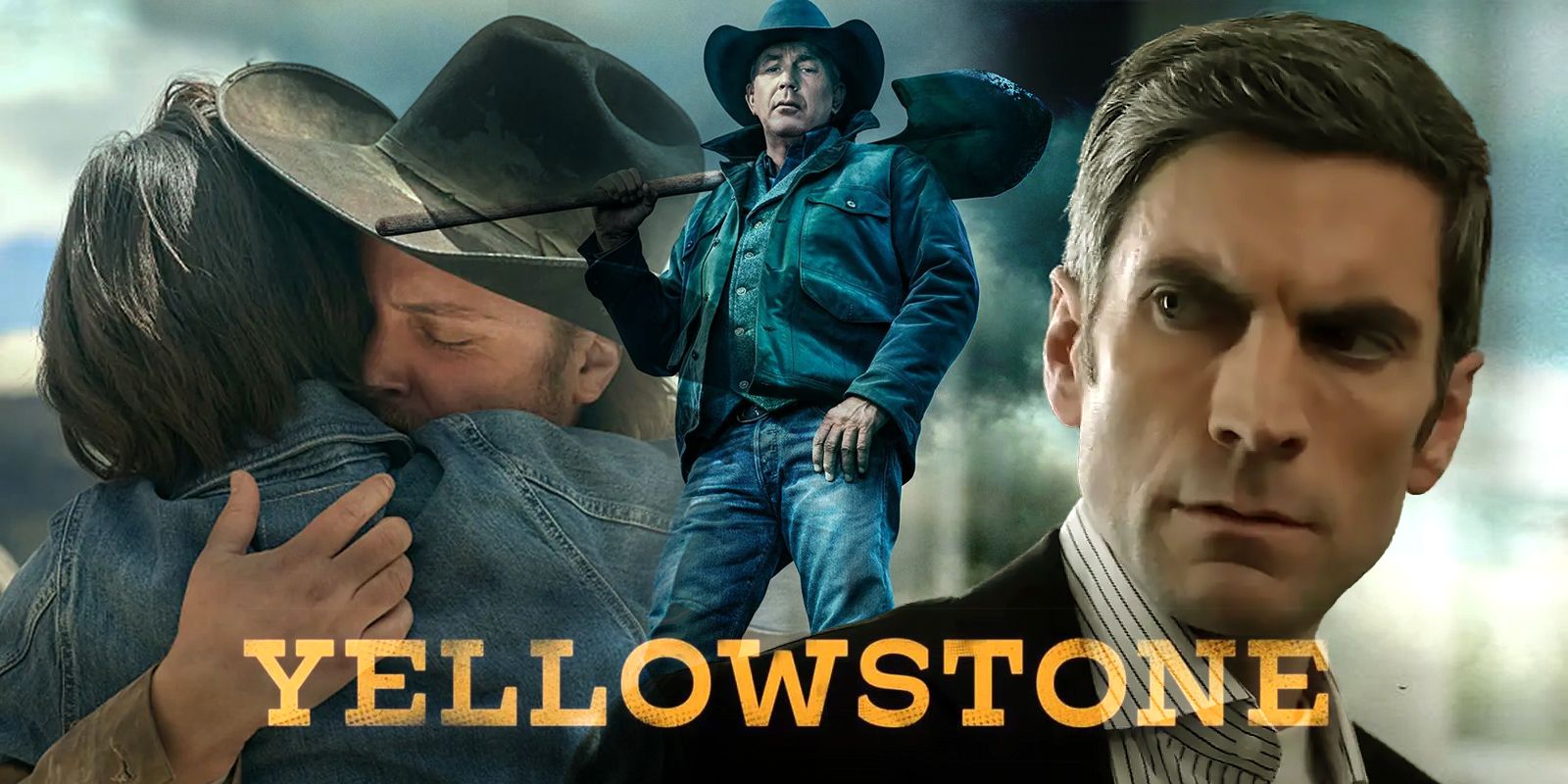
John Dutton is gone. Honestly, it still feels weird saying that out loud, even weeks after the premiere of the second half of the fifth season. If you tuned into Yellowstone Season 5 Episode 10, you already know the vibe has shifted from a slow-burn political thriller to something much more frantic, desperate, and—frankly—divided. This isn't just another chapter of a cowboy soap opera; it’s a high-stakes salvage mission for Taylor Sheridan and the remaining cast.
The episode, titled "The Apocalypse of Change," picks up the pieces of the absolute bombshell dropped in the previous hour. We spent years wondering how the Dutton patriarch would meet his end. We didn't expect it to happen off-screen in a bathroom, framed as a suicide that nobody actually believes was a suicide. By the time the credits roll on episode 10, the ranch isn't just fighting the market or the state—it's fighting its own shadow.
What Actually Went Down in the Dutton Fallout
Let’s get into the weeds of the plot because there’s a lot of noise online about what happened. Sarah Atwood is effectively the puppet master now. She’s playing Jamie like a fiddle, and while Jamie thinks he’s finally the king of the hill, he’s actually just the guy standing on the trapdoor. The tension between Beth and Jamie has moved past the point of sibling rivalry. It's now a blood feud where only one person is likely to walk away.
Kayce is stuck in the middle, as usual. Watching him try to navigate the moral vacuum left by his father is heartbreaking. He’s the soul of the show, but the soul is looking pretty battered these days. The 6666 Ranch subplot also continues to loom in the background, serving as a reminder that while the Yellowstone might be dying, the "cowboy way" is trying to find a new home elsewhere.
Why Yellowstone Season 5 Episode 10 Feels Different Than Everything Before It
The pacing is the first thing you’ll notice. For years, Yellowstone was criticized for being too slow, for spending twenty minutes watching people move cattle without a single line of dialogue. Episode 10 flips that. It’s dense. It’s talky. It feels like everyone is trying to say everything they need to say before the whole thing burns down.
There’s a specific scene with Rip that really anchors the episode. Cole Hauser plays Rip with this quiet, vibrating rage that keeps the show from spinning off into total melodrama. When he looks at the ranch now, he isn't just looking at land. He’s looking at a graveyard. That’s the subtext of the entire hour: how do you protect a legacy when the person who defined that legacy is a memory?
Critics like those at The Hollywood Reporter and Variety have pointed out the logistical nightmare of filming this season. You can see it in the framing. There are a lot of tight close-ups. A lot of scenes where characters are isolated. It reflects the behind-the-scenes reality of a production that had to pivot mid-stride after the high-profile departure of its lead actor.
The Jamie and Sarah Problem
Many fans are frustrated with Jamie. I get it. He’s easy to hate. But in episode 10, his desperation reaches a peak that is actually quite tragic. He’s a man who has never belonged anywhere, and Sarah Atwood (played with delicious venom by Dawn Olivieri) is the only person giving him a sense of purpose—even if that purpose is the destruction of his family.
Is he the villain? Or is he the victim of a father who never loved him and a sister who wants him dead? The show doesn't give you an easy answer. That’s the nuance that keeps people coming back despite the off-screen drama.
The Technical Shift: Visuals and Sound
The cinematography remains top-tier. Even if the plot feels rushed to some, the Montana landscape is still the biggest star of the show. The way the light hits the valley in the opening shots of episode 10 is breathtaking. It provides a sharp contrast to the ugly, backroom dealings happening in Helena.
The score by Brian Tyler and Breton Vivian is doing a lot of heavy lifting here too. It’s more somber. The triumphant "cowboy" themes are muted, replaced by strings that feel like a funeral march. If you listen closely to the transition between the scene at the Governor’s office and the return to the bunkhouse, the music tells you everything you need to know: the old world is dead.
Misconceptions About the "Suicide" Plotline
Let’s clear something up. A lot of viewers on Reddit and Twitter were convinced that the suicide was a fake-out and John Dutton would reappear. That’s not happening. The production has been very clear. Kevin Costner is out. Episode 10 reinforces this by leaning heavily into the investigation—or lack thereof—conducted by the authorities.
- The "Professional" Hit: The episode hints that the security footage was tampered with by professionals. This isn't just a corporate takeover; it’s a sanctioned assassination disguised as a tragedy.
- Beth’s Intuition: Beth’s refusal to accept the official story isn't just grief. It’s her understanding of her father’s character. She knows he’d never go out that way.
- The Legal Loophole: Jamie using his office to stifle the investigation is the ultimate betrayal. It’s the moment he officially crosses the Rubicon.
Basically, if you were holding out hope for a miracle return, episode 10 is the cold water in your face.
The Bunkhouse Dynamics
While the heavy hitters are fighting in the capital, the bunkhouse provides the "real" Yellowstone experience. Walker, Teeter, and the rest of the crew are dealing with the reality that their lives are tied to a sinking ship. There’s a camaraderie there that feels more authentic than the Shakespearean drama happening in the main house.
Teeter, specifically, gets a few lines in this episode that remind us why the ranch matters. It’s not about the money. It’s about a place for people who don’t fit anywhere else. When the ranch goes, these people don't just lose a job; they lose their identity.
What Most People Get Wrong About Taylor Sheridan’s Writing in Season 5
There’s a narrative that the show has "lost its way." I disagree. I think the show is finally being honest about its themes. Yellowstone has always been about the end of an era. We’ve been watching a slow-motion car crash for five seasons, and episode 10 is the moment of impact.
Sheridan isn't writing a fairy tale where the cowboys ride off into the sunset. He’s writing a tragedy about the cost of holding onto the past. The writing in this episode is sharp, biting, and incredibly cynical. It reflects a world where the "good guys" are just as violent as the "bad guys," and the only difference is the color of their hat.
Real-World Context: The 2026 Perspective
Looking at this from the vantage point of early 2026, the legacy of Yellowstone is solidified. It changed how television looks at the American West. Episode 10 is a pivotal moment in that legacy because it proves the show can survive—and even thrive—by leaning into its darker impulses.
The viewership numbers for this block of episodes have remained astronomical, proving that the audience is more invested in the world of the Duttons than in any single actor. It’s a testament to the brand Sheridan built.
Actionable Insights for Fans and Viewers
If you’re caught up on Yellowstone Season 5 Episode 10, there are a few things you should do to get the most out of the remaining episodes.
Watch the Prequels (Again) Go back and watch 1883 and 1923. The events in episode 10 carry so much more weight when you remember the sacrifices James and Margaret Dutton made to get this land. The "7th generation" prophecy mentioned in 1883 is looming larger than ever. It adds a layer of cosmic fate to the current destruction.
Pay Attention to the Legal Jargon The battle for the ranch is now happening in courtrooms and legislative sessions. Keep an eye on the "Conservation Easement" talk. It sounds boring, but it’s actually the primary weapon Beth is using to try and save the land from Jamie’s development plans.
Monitor the 6666 Spinoff News The scenes in Texas aren't just filler. They are setting the stage for the next phase of the franchise. Jimmy’s arc is the blueprint for how the Yellowstone universe continues after the main show ends.
Look at the Symbols Note the recurring imagery of fire and wolves in this episode. Sheridan uses these as symbols for the encroaching modern world and the predatory nature of capitalism. When a character mentions the "wolves at the door," they aren't talking about animals.
The show is hurtling toward a conclusion that will likely satisfy no one and haunt everyone. That’s the beauty of it. You don't watch Yellowstone for a happy ending; you watch it to see how people fight when they know they’ve already lost. Episode 10 is the beginning of that final, desperate stand.
Prepare for a finale that doesn't just end the story but burns the book. The stakes have never been higher, and the ranch has never been closer to disappearing into the history books. Keep your eyes on Beth; she’s the only one with enough gasoline to make sure the fire is seen from space.



