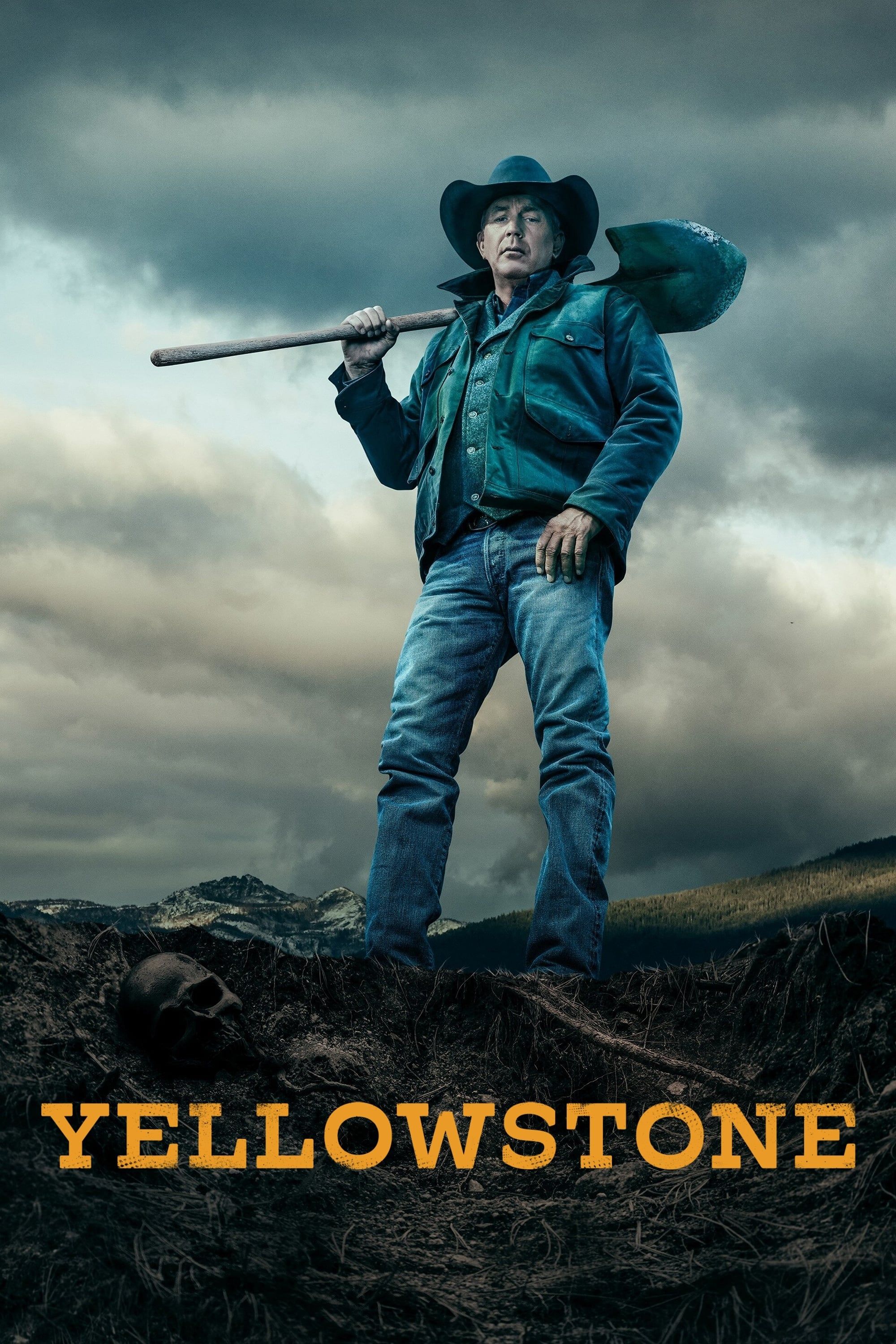
Season 3 of Yellowstone wasn't just another run of episodes; it was the moment the show transitioned from a popular cable drama into a legitimate cultural phenomenon. If you’re looking back at the season 3 Yellowstone cast, you’re basically looking at the peak of the Dutton family’s power before the walls started closing in. It’s the year we got Josh Holloway’s Roarke Morris—a villain who felt dangerously different from the Beck brothers—and the year Beth Dutton finally met her match in a boardroom.
Honestly, the chemistry this year was electric. You had the core heavy hitters like Kevin Costner, Kelly Reilly, and Cole Hauser, but the peripheral characters really started to breathe. It’s also the season where the stakes stopped being about "land" in a general sense and started being about the literal survival of every person on that call sheet.
The Core Players: Why the Duttons Felt Different in Season 3
At the center of it all is Kevin Costner as John Dutton. By season 3, Costner had fully inhabited the role of the weary patriarch. He wasn't just fighting developers anymore; he was fighting time. You see it in his eyes during those quiet scenes with Tate. Costner’s performance in season 3 is arguably his most nuanced because he’s playing a man who realizes his children might not be capable of carrying the torch he’s been burning his life down to hold.
Then there’s Beth. Kelly Reilly. What is there to say that hasn't been said? In season 3, Reilly takes Beth to a place of vulnerability we hadn't seen. The backstory involving Jamie and the clinic—that gut-wrenching reveal—changed how every fan viewed her "insanity." It wasn't just randomness. It was trauma. Her scenes with Wes Bentley (Jamie Dutton) in season 3 are some of the most uncomfortable, high-voltage acting moments in modern television history. Bentley plays Jamie with this sniveling, desperate energy that makes you hate him and pity him simultaneously. It’s a hard tightrope to walk.
The New Blood: Roarke Morris and Angela Blue Thunder
Every great season needs a foil. Enter Josh Holloway.
Coming off Lost, Holloway brought a certain "cool" factor to the season 3 Yellowstone cast. As Roarke Morris, he wasn't a thug. He was a hedge fund manager with a fly rod. He represented the "New West"—people who don't want to kill you with a gun, but want to buy your legacy out from under you and turn it into a ski resort. His back-and-forth with Beth provided the intellectual sparring the show needed.
Then you have Q'orianka Kilcher as Angela Blue Thunder. She was a revelation. She brought a sharp, razor-edged political savvy to the Broken Rock side of the story. She wasn't just helping Rainwater; she was pushing him to be more ruthless. Kilcher’s presence added a layer of internal Native American politics that made the fight for the valley feel much more three-dimensional.
The Bunkhouse Crew: The Heartbeat of the Show
You can't talk about the cast without the guys (and girls) in the bunkhouse. This is where the show gets its soul. Forbis Smith (Lloyd), Jefferson White (Jimmy), and Denim Richards (Colby) are the anchors.
In season 3, we also got more of Jen Landon as Teeter. Let’s be real: Teeter is a fan favorite for a reason. Her accent is nearly indecipherable, her energy is chaotic, and she added a much-needed levity to a show that can sometimes get a bit too "brooding cowboy" for its own good. Watching her pursue Colby was one of the few genuinely sweet (and hilarious) subplots in a season defined by assassination attempts.
- Forrie J. Smith (Lloyd Pierce): The veteran who keeps the peace. Smith is a real-life cowboy, and it shows.
- Jefferson White (Jimmy Hurdstrom): The perennial screw-up who we can’t help but root for. His injury in the rodeo circuit this season was a major turning point for his character’s growth.
- Ian Bohen (Ryan): Often the most level-headed of the group, Bohen provides that steady hand in the bunkhouse.
- Hassie Harrison (Laramie): Her arrival as a barrel racer caused quite a stir, particularly between Lloyd and Walker.
That Explosive Finale: Who Survived?
The ending of season 3 is legendary. It’s the "Who Shot J.R.?" of our generation. When the credits rolled on the finale, the lives of John, Kayce, and Beth were all hanging by a thread.
John was shot on the side of the road while helping a woman change a tire. Kayce was pinned down in his office behind a desk. Beth’s office was literally blown up. The season 3 Yellowstone cast list basically became a "who’s who" of potential casualties.
The brilliance of the casting here is how much the audience cared. If people didn't love Rip Wheeler (Cole Hauser), the scene where he’s frantically trying to reach Beth wouldn't have worked. Hauser has turned Rip into the ultimate "sensitive tough guy." He’s a killer, sure, but he’s a killer who loves his wife and his boss with a terrifyingly pure devotion.
The Departure of the Beck Brothers and the Rise of Market Equities
While the Beck brothers were the primary antagonists of season 2, season 3 shifted gears. This changed the cast dynamic significantly. We moved away from the gritty, local criminal element and into the world of high-stakes corporate takeover. This required actors who could deliver monologues about "eminent domain" and "land valuation" with as much menace as someone holding a shotgun.
Karen Pittman as Willa Hayes was a perfect example of this. She brought a cold, corporate efficiency to the screen. Watching her and Roarke Morris plot the downfall of the Duttons made the threat feel existential rather than just physical. They weren't just trying to kill John; they were trying to erase him.
Behind the Scenes: The Realism Factor
One reason this cast works so well is the "Cowboy Camp" creator Taylor Sheridan puts them through.
They don't just show up and say lines. They ride. They rope. They live on these ranches.
When you see Luke Grimes (Kayce Dutton) on a horse, it looks natural. He’s not a Hollywood actor pretending to be a rancher; he’s an actor who has put in the hours to look like he belongs in that saddle. That authenticity is why the show resonates so deeply with audiences in mid-America. It’s a respect for the craft of ranching that usually gets mocked or ignored by mainstream media.
The Significance of Season 3 in the Larger Narrative
Looking back from where we are now, season 3 was the "point of no return."
It’s where the family fracture became permanent. Jamie finding out he was adopted—and his subsequent meeting with his biological father, Garrett Randall (played by the always-creepy Will Patton)—set the stage for the Shakespearean tragedy that followed. Will Patton’s addition to the cast was a masterstroke. He has this way of speaking that makes your skin crawl, providing a dark mirror to John Dutton’s brand of fatherhood.
- John Dutton: The defender of the old ways.
- Garrett Randall: The man who wants to burn it all down.
- Jamie Dutton: The man caught between two fathers, belonging to neither.
Fact-Checking the Season 3 Casting Rumors
There were always rumors about Kevin Costner leaving, even back then. But in season 3, he was fully committed. The rumors actually helped the show’s tension. People genuinely thought he might die in that finale.
Another misconception is that Taylor Sheridan (the creator) only plays Travis because he wants to show off his riding skills. While he is a professional reining horse competitor, his character serves a specific purpose: he’s the bridge between the gritty reality of the ranch and the high-dollar world of horse performance.
What You Should Do Next
If you’re revisiting the series or jumping in for the first time, pay close attention to the background players in the bunkhouse during season 3. Characters like Teeter and Colby get their first real "moment" here, and it pays off massively in later seasons.
- Watch for the subtle shifts in Jamie: His wardrobe and his posture change the moment he learns about his adoption. It’s a masterclass in physical acting by Wes Bentley.
- Track the Market Equities timeline: The legal moves they make in season 3 are actually based on real-world Montana land-use laws and "easements," which adds a layer of terrifying realism to their villainy.
- Re-watch the Beth and Rip scenes: This is the season their relationship solidifies. It’s the calm before the literal storm of the finale.
To truly understand the weight of the season 3 Yellowstone cast, you have to look at how many of these characters became household names after this specific block of episodes. It was the year the "Yellowstone effect" took over the world.
If you want to dive deeper into the lore, look up the real-life ranch where they film—the Chief Joseph Ranch in Darby, Montana. Many of the "extras" you see in the background are actual ranch hands and locals, which is why the atmosphere feels so thick you could cut it with a knife. Now, go back and watch that finale again. Knowing who survives and who doesn't makes those final ten minutes even more stressful.



