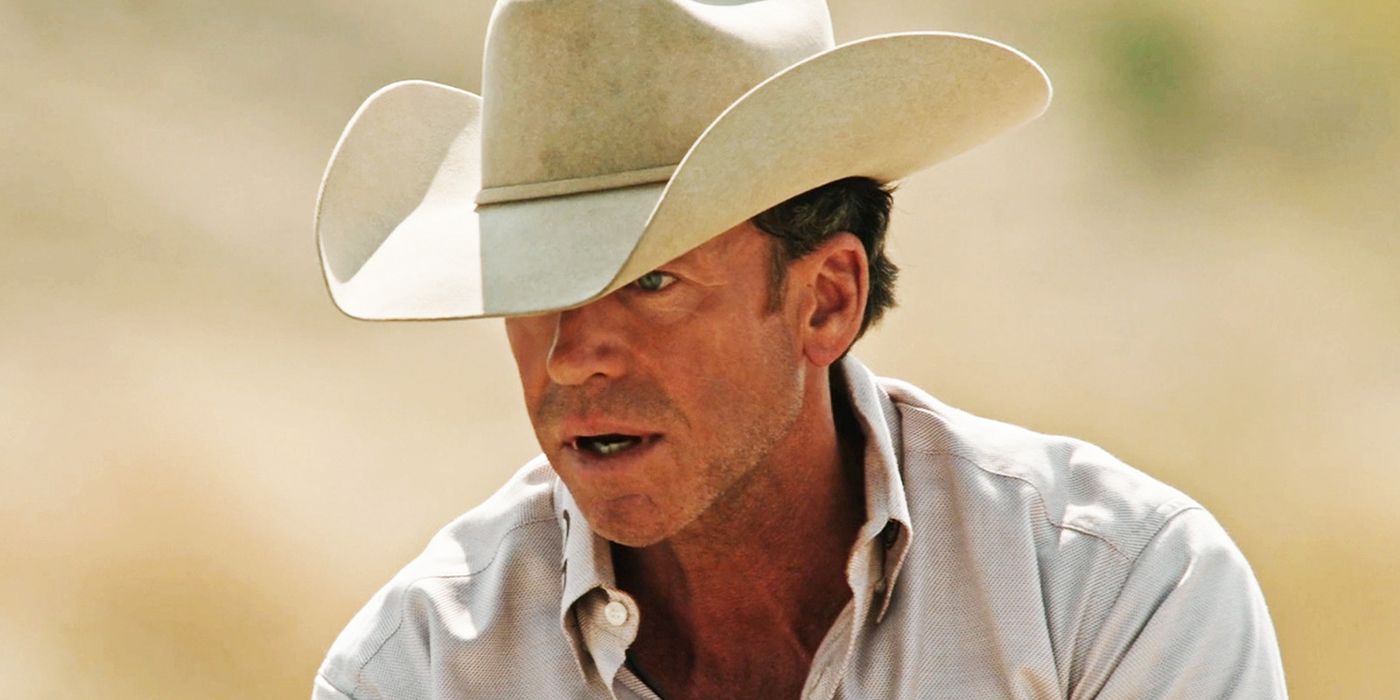
John Dutton is a man who would rather burn his own house down than let someone else decorate the living room. That’s the vibe. When we look back at the Yellowstone season 1 episodes, it’s easy to forget how much of a slow-burn powder keg Taylor Sheridan actually built. Most people came for Kevin Costner. They stayed because they realized the show wasn't just a western; it was a Shakespearean tragedy with more dirt and expensive whiskey.
The pilot, "Daybreak," is essentially a movie. It's 90 minutes of pure world-building that tells us everything we need to know about the Dutton family's toxicity. We see the ranch—a massive, beautiful, terrifying kingdom—and we see the people trying to take it. There's Dan Jenkins, the developer who thinks he can just buy a view, and Rainwater, who wants the land back for the Broken Rock Reservation. Honestly, the conflict is baked into the soil. If you liked this piece, you might want to check out: this related article.
The Blood Debt in Yellowstone Season 1 Episodes
Most shows wait a few seasons to kill off a main character. Yellowstone did it in episode one. Lee Dutton's death changed the entire trajectory of the series. If Lee lives, Kayce stays in the background. But because Lee dies in that chaotic cattle dispute, the family dynamic shifts instantly. It’s brutal.
The fallout from that death dominates the next few hours of television. In episode two, "Kill the Messenger," we see the lengths John will go to cover up the mess. It's not just about grief; it's about survival. You've got Beth Dutton returning to the ranch like a human wrecking ball. Kelly Reilly plays her with this jagged, desperate energy that makes it hard to look away. She isn't just "tough." She's a person who has decided that if she can't be loved, she will at least be feared. For another angle on this story, check out the recent coverage from E! News.
Why Everyone Misunderstands Jamie and Beth
People love to debate who the villain is in the Dutton family. Usually, they point at Jamie. But if you re-watch the Yellowstone season 1 episodes carefully, you see a guy who is desperately trying to be the "good son" in a family that hates "good." Jamie is a lawyer. He uses words and papers. John wants a soldier.
The tension between Jamie and Beth in "The Long Ride Home" and "The Coming Home" is palpable. It’s not just sibling rivalry. It’s a fundamental disagreement on how to exist in the world. Beth sees Jamie as a coward because he follows the rules of the "civilized" world. Meanwhile, Kayce is out there just trying to be a father while the ghost of his brother hangs over every decision he makes.
It’s messy. Really messy.
The Branding and the Bond
One of the most controversial parts of the show is the "Y" brand. In episode three, "No Good Horses," we start to see what that brand actually means. It’s not just a logo. It’s a mark of ownership. It’s a cult, basically. You're either in or you're out, and if you're in, you're in forever.
Rip Wheeler is the heart of this. Cole Hauser turned what could have been a generic "tough guy" role into something deeply sympathetic. He’s the orphan John took in, and he’s more loyal than the actual Dutton children. His relationship with Beth starts as a spark here that eventually becomes the emotional anchor of the entire franchise. Without the foundation laid in these early episodes, the later seasons wouldn't have nearly as much weight.
The Rainwater and Jenkins Alliance
In the middle of the season, specifically during "The Unravelling: Part 1," we see the outsiders start to coordinate. This is where the show gets smart. It’s not just "cowboys vs. Indians" or "ranchers vs. developers." It’s about power.
Thomas Rainwater, played by Gil Birmingham, is a fascinating foil to John Dutton. They are two sides of the same coin. Both believe the land belongs to them by right of history and blood. Dan Jenkins is just a guy with a checkbook who realizes too late that Montana doesn't care about his money. The scene where Rip and the crew "relocate" a bear to scare Jenkins is classic Taylor Sheridan—absurd, terrifying, and weirdly grounded in the reality of the characters.
Surprising Details You Probably Forgot
- The Dinosaur Bones: Remember the subplot with the dinosaur skeleton on Kayce’s land? It felt like it was going to be a huge plot point, then it just... wasn't. It served more as a metaphor for the history buried under the Montana soil.
- The Hospital Scene: John Dutton has colon cancer in season 1. He thinks he's dying. That’s why he’s so desperate to secure the ranch. Later, we find out it was an ulcer, but that initial "death sentence" is what drives his most ruthless actions in the early episodes.
- Monica's Conflict: Kelsey Asbille's character, Monica, is often the moral compass, but in season 1, she's trapped between her husband’s family and her own people. It’s a lonely place to be.
Technical Prowess and the Montana Landscape
You can't talk about Yellowstone season 1 episodes without mentioning the cinematography. Ben Richardson shot the pilot, and he made the ranch look like a character itself. The scale is massive. When you see the wide shots of the Bitterroot Valley, you understand why John Dutton is willing to kill for it. It’s beautiful, but it’s a harsh beauty.
The music by Brian Tyler also sets the tone perfectly. It’s haunting and grand. It tells you that even when the characters are winning, they’re losing something of their souls. The pacing in the first season is actually much tighter than in some of the later years. There’s a sense of urgency because the walls are closing in on the ranch from every side.
What Really Happened in the Season 1 Finale?
The finale, "The Unravelling: Part 2," doesn't end with a big shootout. Instead, it ends with a series of tactical moves. John realizes his children are his greatest weakness and his greatest strength. Jamie decides to run for Attorney General against his father's wishes, which sets up years of betrayal.
Kayce finally accepts his place on the ranch, but at a massive cost to his marriage. The ending isn't "happy." It’s a temporary ceasefire in a war that is never going to end. It leaves you feeling a bit hollow, which is exactly the point. The Duttons won the battle, but the war is just getting started.
Actionable Insights for Your Next Rewatch
If you're going back to watch the first season, or if you're a newcomer trying to figure out what the hype is about, keep these things in mind:
- Watch the Background: Pay attention to the "branded" men in the bunkhouse. Their stories often mirror the main family's struggles in subtle ways.
- Focus on the Legalities: The show spends a lot of time on land rights and eminent domain. It sounds boring, but it's the actual weapon used against the Duttons.
- Track the Trauma: Almost every "crazy" thing Beth does can be traced back to the flashback in "No Good Horses" where her mother dies. It’s the key to her character.
- Notice the Silence: Some of the best moments in season 1 have no dialogue. John sitting on his porch, Kayce looking at the horizon—these are the moments where the show breathes.
The reality is that Yellowstone succeeded because it tapped into a specific American anxiety about losing your legacy. Whether you like the Duttons or hate them, you can't help but watch them fight. Season 1 was the blueprint, and honestly, it’s still some of the best television the show has ever produced.
Next Steps for Fans
- Verify the Timeline: Compare the flashbacks in season 1 with the events of the prequel series 1883 and 1923 to see how the "land debt" was formed.
- Audit the Character Arcs: Look at Kayce’s transition from an outcast to the heir apparent; it's the most consistent growth in the series.
- Contextualize the Conflict: Research real-world land disputes in Montana to see how Sheridan grounded the fictional drama in actual regional tensions.



