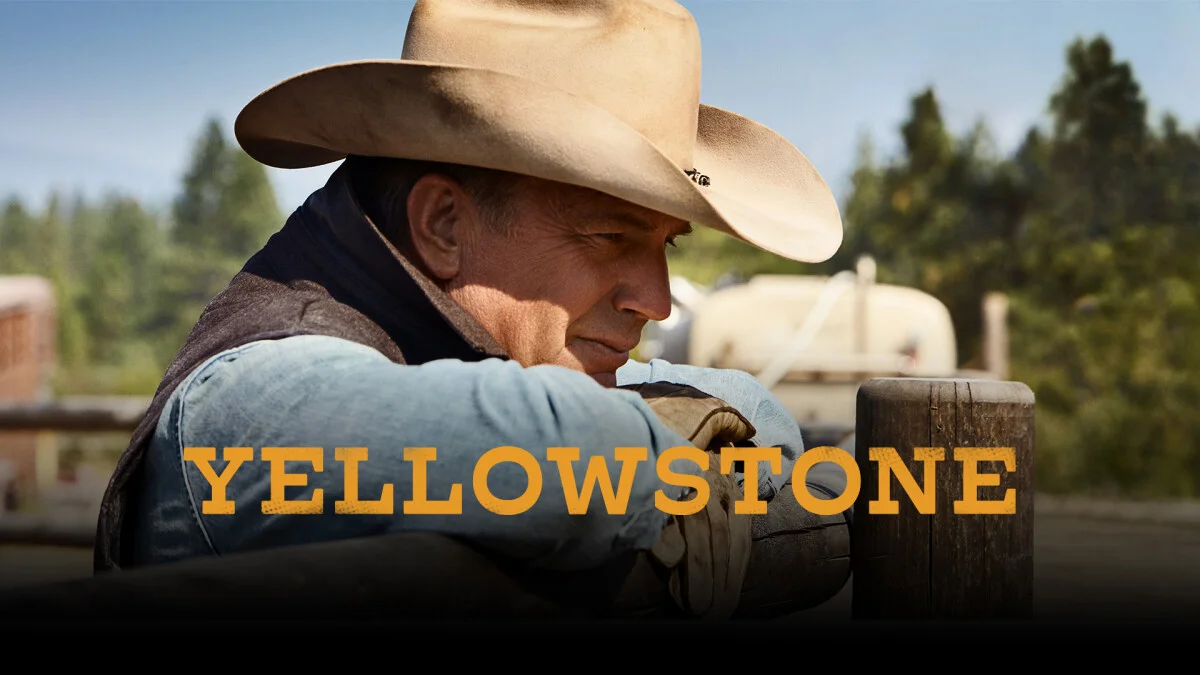
It starts with a burial. Most shows wait a few seasons before they start digging holes in the dirt for main characters, but Taylor Sheridan isn't most writers. By the time we hit Yellowstone Season 1 Episode 3, the gloss of the "modern western" has already started to peel away, revealing something much more nihilistic underneath. This episode, titled "No Good Horses," is where the Dutton family's internal rot stops being a subtext and becomes the actual plot. Honestly, it's the moment the audience realizes John Dutton isn't just a rancher protecting his land; he’s a man presiding over a slow-motion car crash.
The episode opens with a flashback. We go back to 1997. It’s the day Evelyn Dutton died. If you’ve been paying attention to Beth’s erratic behavior, this is the "aha" moment. It’s brutal. It’s messy. It’s the kind of trauma that explains why a person grows up to use a corporate merger like a blunt-force weapon. Seeing a young Beth (played by Kylie Rogers) struggle with her horse, only for her mother to fall and be crushed, is the definitive origin story for the black hole that is the Dutton sibling dynamic.
The Ghost of Evelyn Dutton
Most people think Yellowstone is about land rights or cows. It’s not. It’s about a dead woman. Yellowstone Season 1 Episode 3 centers on the anniversary of Evelyn’s death, and the weight of that absence is felt in every frame. Kayce is back on the ranch, sort of, but he's still a pariah. Jamie is trying to be the "good son" but failing because John only respects men who smell like manure and gunpowder.
Evelyn's death wasn't just an accident; it was the catalyst for John’s emotional shutdown. He blames Beth. Beth blames herself. The show doesn't hand-hold you through this—it just lets the resentment simmer. You see it in the way John looks at Beth. There’s love there, sure, but it’s buried under layers of "you killed the only person I ever truly cared about." It’s harsh. It’s probably unfair. But that’s the world Sheridan built.
Kayce and the Cost of Secrets
While the family is mourning, Kayce is busy digging himself into a hole. Literally and figuratively. He finds the remains of a person on the reservation. This sub-plot with the "white man's" law versus "tribal" law is where the show gets its teeth. We see Kayce dealing with the fallout of the shootout from the pilot. He’s a guy who just wants to be left alone with his wife and son, but the universe—and his father—won't allow it.
The tension between the Broken Rock Reservation and the Yellowstone ranch is the heartbeat of this episode. Rainwater is a sophisticated antagonist. He isn't a "villain" in the cartoon sense. He’s a man trying to reclaim what was stolen. In Yellowstone Season 1 Episode 3, we start to see that the Duttons aren't the heroes. They’re the incumbents. They’re the ones holding onto a crumbling empire with bloody fingernails.
There's a specific scene where Kayce and Monica are discussing their future. It’s quiet. It feels real. Monica knows that being adjacent to the Dutton name is a death sentence, even if Kayce won't admit it yet. The writing here varies between short, clipped dialogue and long, sweeping shots of the Montana wilderness that make the characters look like ants. It's effective.
The Politics of the Valley
Jamie is the punching bag of the family. Let's be real. In this episode, he’s trying to navigate the political landscape to protect the ranch’s interests, but he gets zero respect for it. He’s the "suit." John views Jamie’s legal maneuvering as a necessary evil, whereas he views Rip Wheeler’s violence as a necessary virtue. That distinction is everything.
Speaking of Rip, this is where we see his loyalty harden. He’s the enforcer. If John says "jump," Rip is already mid-air. The relationship between Rip and Beth also starts to show its jagged edges here. It’s not a romance; it’s two broken people trying to find a reason not to break further. It’s dark stuff, honestly. You've got these beautiful vistas of the Bitterroot Valley contrasted with people who are essentially soul-dead.
What Most People Get Wrong About Episode 3
A lot of casual viewers think this episode is "filler" because there isn't a massive shootout in the final five minutes. They're wrong. This is the structural integrity of the entire series. Without the 1997 flashback, Beth is just a caricature of a "boss babe." With it, she’s a tragedy. Without the burial of the bones on the reservation, the legal battle with Rainwater has no stakes.
This episode also sets up the "long game" for the developer, Dan Jenkins. He’s the outsider. The Californian. The guy who thinks he can buy Montana. Watching the Duttons interact with him is like watching a pack of wolves interact with a golden retriever. Jenkins thinks he’s playing chess. The Duttons are playing "who can survive the winter."
Key Details You Might Have Missed:
- The horse Beth was riding in the flashback. It wasn't a "bad" horse; she was just scared. That fear killed her mother.
- The way John refuses to sit at the dinner table. He can't face the empty chair.
- The subtle nod to the "Brand." We start to see how deep the cult-like loyalty of the ranch hands goes.
The Practical Reality of the Yellowstone Ranch
If you look at the ranch from a business perspective—which the show occasionally forgets to do—the Duttons are in a nightmare scenario. High overhead, declining beef prices, and a massive tax bill. Yellowstone Season 1 Episode 3 shows that the family is fighting a war on four fronts: the government, the developers, the reservation, and themselves.
John’s refusal to sell even a sliver of the land is his fatal flaw. It’s the "King Lear" of the West. He’d rather see his children burn than see a condo on his horizon. It’s a stubbornness that is both admirable and completely insane. Most real-life ranchers in Montana would have sold out to a tech billionaire years ago. But John isn't a businessman. He’s a king without a crown.
Real-World Context
For those who don't live in the West, the tensions depicted between the ranch and the reservation are based on decades of actual legal and social friction. According to reports from the Montana Budget & Policy Center, land use and water rights are the primary drivers of conflict in these regions. Sheridan captures this by making the land itself a character. It's not just dirt; it's a legacy.
The episode title, "No Good Horses," refers to a line about how there are no good horses, just horses that haven't bucked you yet. It's a metaphor for the characters. Everyone in this show is one bad day away from a total collapse.
The Impact of the Ending
By the end of the hour, we’re left with Kayce and the secret of the bodies he’s buried. The secret is the tether that pulls him back to the ranch. He can’t run away to the reservation anymore because he’s brought the "Dutton curse" with him. He’s a killer now. Just like his father. Just like his brother Lee was.
The episode doesn't wrap things up with a neat little bow. It leaves you feeling slightly greasy. It’s a slow burn that pays off by grounding the high-stakes drama in personal failure. If the pilot was the "hook," then Episode 3 is the "sinker." It drags the audience down into the mud with the characters.
Actionable Insights for the Viewer:
- Pay attention to the color palette. Notice how the 1997 flashbacks are saturated with warmer, golden tones, making the present day look colder and more clinical.
- Watch Beth’s eyes. Kelly Reilly does incredible work here. In the flashback, she’s wide-eyed and terrified. In the present, her eyes are like flint.
- Track the "Bone" subplot. This isn't a one-off. The remains Kayce finds will have ripples that last for seasons.
- Research the filming locations. Most of this was shot in Utah (ironically) for Season 1, before moving to Montana. The geography matters.
Understanding the nuance of this episode is key to enjoying the rest of the series. It’s the foundation. If you skip the emotional beats of "No Good Horses," the later seasons' explosions won't mean a thing. You have to care about why they’re fighting, not just that they’re fighting. The Duttons are a dying breed, and this episode is their first real eulogy.



