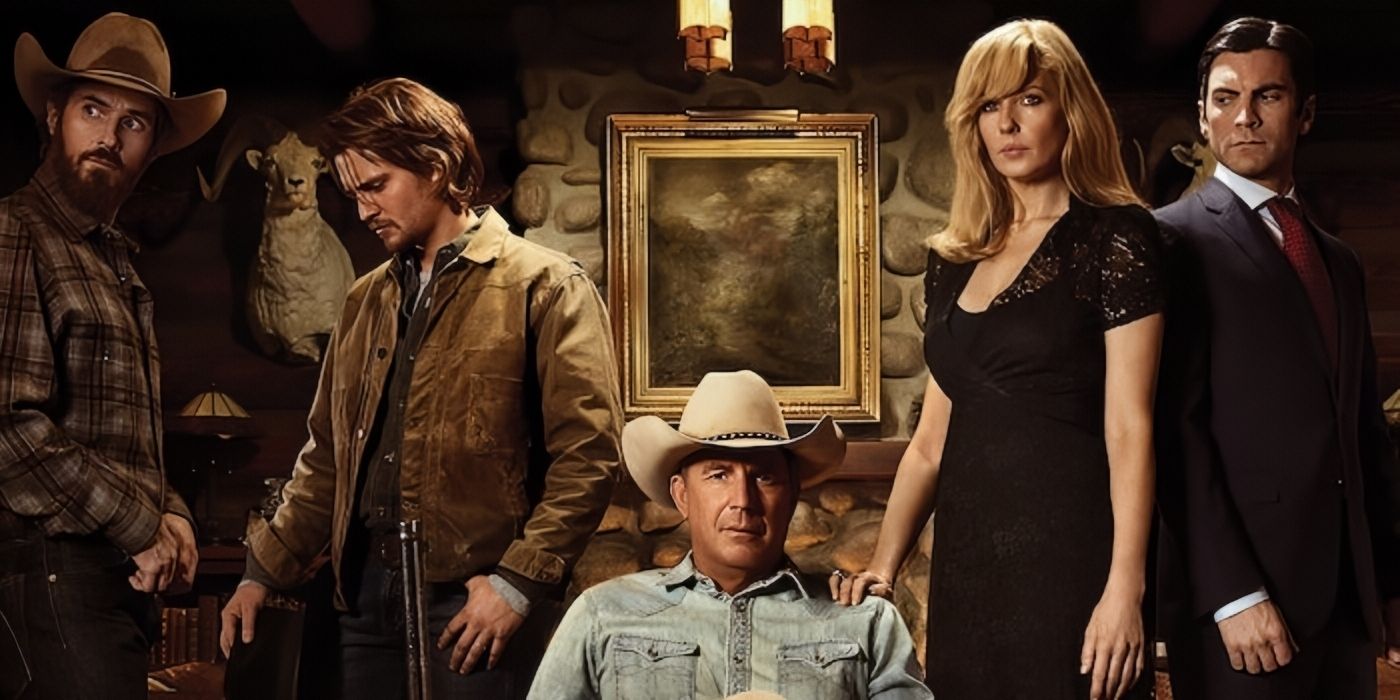
If you’ve been following the Taylor Sheridan universe from the jump, you know that Yellowstone season 1 ep 4 is where the training wheels finally come off. This is the episode, titled "The Long Black Train," where we stop pretending the Duttons are just a family of rugged ranchers trying to save their heritage. Honestly? They’re monsters. But they’re monsters we can't stop watching. By the time the credits roll on this specific hour of television, the moral compass of the show has been smashed into about a hundred pieces.
It’s brutal.
We see John Dutton, played with that gravel-voiced intensity by Kevin Costner, start to realize that his legacy is leaking through his fingers like sand. It’s not just about the land anymore. It's about who he has to destroy to keep it. Most people remember the big shootouts from the pilot, but this episode is much more insidious. It focuses on the psychological toll of the "Brand." You know, that literal searing of skin that marks you as property of the ranch. If you thought that was just a cool cowboy tradition, "The Long Black Train" is here to tell you that you're dead wrong. It’s a death sentence.
Jimmy, the Brand, and the Reality of No Return
Jimmy Hurdstrom is basically the audience surrogate in these early episodes. He’s a screw-up. He’s out of his depth. In Yellowstone season 1 ep 4, we see him struggling with the physical reality of what it means to be a branded man. There’s a scene where he’s taped to a horse to learn how to ride. It’s hilarious in a dark, twisted way, but it also highlights the absolute lack of autonomy these workers have.
When you get that Y on your chest, you don't get to quit. You don't get to have a "bad day" and put in your two weeks' notice.
The episode introduces the concept of the "Long Black Train," which is ranch-speak for being taken out to the middle of nowhere and executed because you know too much. This isn't a spoiler; it’s the central tension of the episode. We see Fred, a ranch hand who makes the mistake of picking a fight with Jimmy, get "fired." But in the world of the Yellowstone, being fired doesn't mean a severance package. It means Lloyd takes you to the Wyoming border and ensures you never speak again. It's cold. It's calculated. It’s exactly why this show became a juggernaut—it’s a Western, sure, but it’s actually a mob movie set in the mountains.
Beth Dutton’s Descent into Chaos
While the men are busy burying bodies and taping meth-heads to horses, Beth is out here doing what she does best: psychological warfare. This episode gives us a deeper look at her relationship with Dan Jenkins. She’s not just trying to stop his development project. She wants to unmake him as a man.
There’s a sequence at a real estate event where she basically uses her sexuality and her intellect as a scalpel. It's uncomfortable to watch. Kelly Reilly plays Beth with this vibrating energy, like she’s a bomb that’s already exploded but the sound hasn't reached you yet. She’s grieving her mother, she’s hating her father, and she’s taking it out on anyone who looks like they have a 401k. It’s fascinating because, in any other show, she’d be the villain. Here, she’s just the only person being honest about how cruel the world is.
Kayce and the Weight of the Reservation
The B-plot of Yellowstone season 1 ep 4 is perhaps the most tragic. Kayce Dutton is stuck between two worlds, and neither of them wants him. He’s living on the Broken Rock Reservation with Monica and Tate, trying to distance himself from John’s shadow. But the land won’t let him.
He finds a literal dinosaur skeleton on his property.
Think about the symbolism there for a second. The Duttons are fighting over the surface of the earth, but underneath, there are ghosts and fossils of things that were much bigger and more powerful than them. When the "authorities" try to claim the bones, it sparks a conflict that reminds us that the Reservation has its own laws and its own pain. Kayce is a man of violence who wants to be a man of peace. But as we see in this episode, when he encounters a predator—human or otherwise—his instinct is to kill. He can’t turn it off. It’s in the blood.
The Cinematography of Desolation
We have to talk about the visuals. Ben Richardson, the cinematographer, treats the Montana landscape like a character that’s actively trying to kill the cast. In this episode, the wide shots aren't just "pretty." They’re lonely. When you see the ranch hands riding across those vast plains, they look tiny. It underscores the theme that the land is eternal and the people are temporary.
The lighting in the bunkhouse scenes is claustrophobic. It smells like old leather, sweat, and regret. You can almost feel the grit in the air. This contrast between the infinite sky and the cramped, violent lives of the characters is what gives the show its texture. It’s not "prestige TV" because it has a big budget; it’s prestige because it knows how to use a shadow to tell you a character is lying.
What Most People Get Wrong About This Episode
A lot of casual viewers think Yellowstone season 1 ep 4 is just "filler" before the bigger battles. They’re wrong. This is the structural foundation of the whole series. Without the "Long Black Train" concept introduced here, the stakes of the later seasons don’t make sense. You have to understand that the Dutton Ranch is a cult.
- The Brand isn't a badge of honor; it's a shackle.
- John Dutton isn't a hero; he's a king who will sacrifice his knights to keep his crown.
- The "enemy" isn't just the developers; it's the passage of time.
If you watch closely, you'll see Rip Wheeler—played by Cole Hauser—functioning as the High Priest of this cult. He’s the one who enforces the rules. He’s the one who makes sure the "train" keeps running. His loyalty to John is total, which makes him the most dangerous man on the property. In this episode, we see the first real glimpses of how Rip manages the younger guys, and it’s pure intimidation.
The Turning Point for Tate and John
There’s a softer moment in the episode where John takes his grandson, Tate, out to the river. It’s one of the few times we see John acting like a human being instead of a general. But even then, there’s an edge to it. He’s teaching the boy how to survive, but he’s also indoctrinating him. He’s planting the seeds of "this is yours, and you must fight for it."
It’s heartbreaking because you know what that fight will cost Tate. You’ve seen what it cost Lee (who is already dead), what it’s costing Jamie (who is losing his soul in the legal system), and what it’s doing to Beth. John loves his grandson, but his love is inseparable from his obsession with the ranch. It’s a poisoned gift.
Why "The Long Black Train" Still Matters in 2026
Looking back at this episode years later, it’s wild to see how many threads started here. The tension between the ranch and the reservation, the internal rot of the Dutton family, and the literal bodies buried in the woods—it all traces back to this hour.
If you’re rewatching, pay attention to the dialogue between Lloyd and Walker. Walker is the newcomer, the ex-con who just wants to play his guitar and do his job. He represents the "normal" person who gets sucked into this vortex. His reaction to the things he sees on the ranch is the reaction we should have. But the show is so good at making us root for the Duttons that we almost forget how insane their world is.
Actionable Insights for Your Next Rewatch
To truly appreciate the depth of Yellowstone season 1 ep 4, you should look for these specific details:
- Watch the Brandings: Notice how the camera lingers on the scars. It’s not just makeup; it’s a narrative device to show who is "in" and who is "out."
- Listen to the Silence: This episode uses a lot of ambient noise—wind, hooves, the crackle of a fire. It builds a sense of dread that dialogue can't reach.
- The Dinosaur Subplot: Don’t ignore Kayce and the bones. It’s a metaphor for the fact that everyone in this show is fighting over a graveyard.
- Rip’s Eyes: Cole Hauser does a lot of acting without saying a word. In this episode, watch how he looks at the men who aren't branded. It’s pure disdain.
The episode doesn't end with a cliffhanger in the traditional sense. It ends with a feeling. A cold, sinking realization that once you enter the world of the Yellowstone, there is only one way out. And that way out usually involves a long ride to a dark place where the tracks end.
The Duttons have won this round, but the cost of winning is starting to accumulate. You can see it in John’s face as he sits by the fire. He’s saved the land for another day, but he’s losing the people he saved it for. That’s the true tragedy of the show, and it’s never more apparent than it is right here in episode four.
If you’re diving back into the series, keep an eye on how the power dynamics shift between Rip and Kayce during the "training" scenes. It sets the stage for years of conflict. The ranch demands everything, and as "The Long Black Train" proves, it usually gets it.
To get the most out of your Yellowstone experience, focus on the character arcs rather than just the action beats. Pay close attention to the background characters in the bunkhouse; they often mirror the main family's struggles in ways that are easy to miss on a first watch. Compare the "justice" meted out on the ranch to the legal battles Jamie handles in the city to see the show's commentary on the breakdown of the rule of law. Finally, track the recurring theme of "the price of legacy" to understand why John Dutton makes the increasingly desperate choices that define the later seasons.



