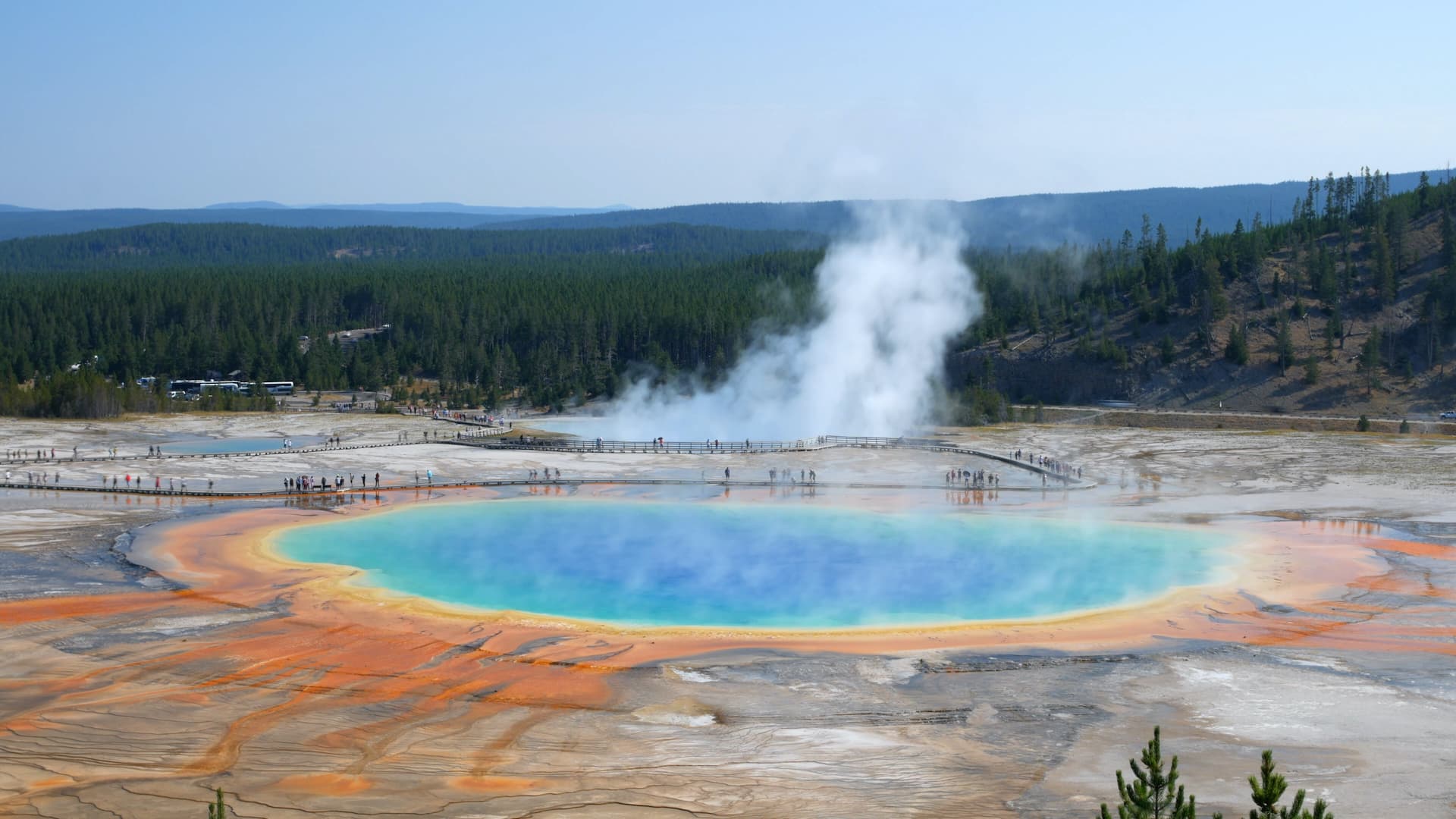
Yellowstone is massive. Honestly, it’s not even a "park" in the way most people think—it's a 2.2-million-acre volcanic plateau that could swallow some small countries whole. If you pick the wrong base camp, you’ll spend six hours a day staring at the bumper of a rental SUV instead of watching a grizzly sow and her cubs in the Lamar Valley. Figuring out Yellowstone National Park where to stay is basically a high-stakes puzzle of geography and timing. You’ve got to decide if you want the rustic, creaky charm of a historic lodge or the freedom of a gateway town where the WiFi actually works.
Most visitors make a classic mistake. They book a hotel in West Yellowstone or Gardiner and think they’ll just "see the park" from there. It’s doable, sure. But the "Grand Loop" road is shaped like a giant figure eight. If you stay on the outside, you’re constantly commuting. It's like living in the suburbs of a city where the only highway has a 35 mph speed limit and the occasional bison-induced gridlock.
The Inside Track: Historic Lodges and Log Cabin Fever
Staying inside the park boundaries is the "holy grail" for a reason. You wake up, smell the sulfur and pine, and you’re already there. No gates, no lines.
The Old Faithful Inn is the heavy hitter here. It’s a National Historic Landmark, built in 1903 with local logs and rhyolite. It’s magnificent. It’s also loud. If you’re looking for a silent, sterile hotel room, this isn't it. The walls are thin, and the "Old House" rooms often have shared bathrooms down the hall. But sitting on that second-floor balcony with a huckleberry margarita while the geyser blows? That’s the stuff you remember when you’re eighty.
If you want something a bit more refined, the Lake Yellowstone Hotel is the "Grand Old Lady" of the park. It’s bright yellow, sits right on the water, and feels like a Gatsby-era summer retreat. It’s much quieter than the Old Faithful area. The downside? It’s a haul to get anywhere else. Yellowstone’s speed limits are strictly enforced by the National Park Service, and for good reason—wildlife is everywhere. You aren't zipping from the Lake Hotel to Mammoth Hot Springs in twenty minutes. It’s more like ninety.
Canyon Lodge: The Strategic Sweet Spot
If you look at a map, Canyon Lodge & Cabins is basically the bullseye. It sits right near the Grand Canyon of the Yellowstone.
Why stay here? Accessibility.
Because it’s located near the "hub" of the figure-eight road system, you can pivot north to the Lamar Valley or south toward the geyser basins with relative ease. The accommodations here were recently overhauled. They’re more "modern motel" than "rustic cabin," which some purists hate, but your back might thank you for the decent mattresses.
The Gateway Towns: Comfort vs. Commute
West Yellowstone, Montana, is the busiest gateway. It’s basically a frontier town turned tourist mecca.
You’ve got options here. Places like the Kelly Inn or the Gray Wolf Inn offer the kind of amenities you won't find inside the park: air conditioning, indoor pools, and fast internet. This matters if you’re traveling with kids who need to burn off energy or if you’re a digital nomad trying to attend a Zoom call between hikes.
The trade-off is the West Entrance gate. In July, that line can be an hour deep by 9:00 AM. If you stay in "West," you have to be an early riser. If you’re not through that gate by 7:30 AM, you’ve already lost the morning.
Gardiner is different. It’s at the North Entrance, right under the Roosevelt Arch. It feels a bit more rugged, a bit more authentic. It’s the best place to stay if your primary goal is wildlife spotting in the Northern Range. The Mammoth Hot Springs Hotel is just inside the gate from Gardiner, and the resident elk herd basically treats the hotel lawn like their personal salad bar.
Silver Gate and Cooke City: The "Quiet" Entrances
Looking for something more rugged? Go to the Northeast Entrance.
Silver Gate and Cooke City are tiny. Like, "no cell service" tiny. But they sit at the doorstep of the Lamar Valley, which is often called the Serengeti of North America. If you are a serious wolf-watcher or photographer, this is your spot. You’ll save hours of driving every morning. The Log Cabin Resort or the Silver Gate Lodging offer that "middle of nowhere" vibe that people crave but rarely actually find.
The Camping Reality Check
Don't just assume you can roll up with a tent and find a spot. Yellowstone’s campgrounds fill up months in advance.
Madison Campground is the most popular because it’s central. It’s near the Madison River, which is world-class for fly fishing. However, if you want peace and quiet, Slough Creek in the north is the winner. It’s primitive. No hookups. No showers. Just you, the stars, and the sound of wolves howling in the distance.
If you're bringing an RV, Fishing Bridge is your only option for full hookups inside the park. It was recently renovated, but let’s be honest: it’s essentially a parking lot for big rigs. You stay there for the convenience, not the "wilderness" feel.
Misconceptions About Yellowstone Lodging
People think "National Park Lodge" means luxury. It doesn't.
Outside of the Lake Hotel, most park accommodations are functional at best. You are paying for the location. There are no TVs in the rooms. Most don't have air conditioning. In August, those cabins can get stuffy. In June, they can stay freezing.
Another big one: "I'll just find a spot nearby if everything is booked."
Nope.
The areas surrounding Yellowstone are national forests or private ranch land. There aren't many "nearby" spots that aren't already established towns. If you don't have a reservation, you might end up driving two hours to Bozeman or Cody just to find a pillow to lay your head on.
The Cody Factor
Cody, Wyoming, is a cool town. It was founded by Buffalo Bill Cody and has an incredible nightly rodeo. But it is an hour and fifteen minutes from the East Entrance. Once you get through the gate, you still have to drive over Sylvan Pass to get to the actual "stuff" people want to see.
Is Cody worth it? For the history, yes. For a daily commute into the park? Absolutely not.
Weather and Seasonal Closures
Yellowstone has two seasons: Winter and July.
Okay, that’s an exaggeration, but the road closures are real. Most park lodges start opening in late April or May and shut down by early October. If you visit in late September, you’re hitting the "sweet spot" of the elk rut (lots of bugling and drama) and fewer crowds, but half the dining options might already be closed for the season.
In winter, the only way to stay inside the park is at Mammoth Hot Springs or the Old Faithful Snow Lodge. You can't drive your car to Old Faithful in January. You have to take a specialized over-snow vehicle called a snowcoach. It’s an expensive, surreal, and beautiful experience, but it requires a totally different level of planning.
Strategic Tips for Your Stay
Booking Yellowstone is a sport.
- The 13-Month Rule: Reservations for Xanterra (the park's primary lodging concessionaire) open on the 5th of each month for the same month the following year. If you want a specific room at the Old Faithful Inn for July 2027, you need to be on the website the moment it opens in July 2026.
- The Stalking Method: People cancel all the time. If you didn't get a room, check the website daily. Or even hourly. Spots open up constantly as people's plans change.
- Split Your Stay: This is the pro move. Spend two nights at Old Faithful to see the geysers, then move to Canyon or Roosevelt for two nights to see the canyon and the northern wildlife. You’ll save yourself a minimum of four hours of driving over the course of the week.
- Pack for Everything: I’ve seen it snow on the Fourth of July at Dunraven Pass. No matter where you stay, bring layers.
Actionable Next Steps
Start by grabbing a map and circling the three things you want to see most. If it's Old Faithful, Grand Prismatic, and the geyser basins, focus your search on the Old Faithful area or West Yellowstone. If it’s wolves, bears, and the canyon, look at Canyon Lodge, Roosevelt Lodge, or Gardiner.
Check the official Yellowstone National Park Lodging site immediately to see what's left. If it's all "Sold Out," don't panic. Set a bookmark and check it every morning while you drink your coffee.
If you’re traveling with a large group or pets, skip the park lodges entirely and look for a VRBO in Wapiti or West Yellowstone. Most park lodges don't allow pets and have strict occupancy limits that make "squeezing in" impossible.
Finally, download the NPS Yellowstone app and toggle the "offline use" setting before you arrive. Once you're in the park, your cell signal will vanish, and you’ll need those maps to find your way back to wherever you decided to stay.